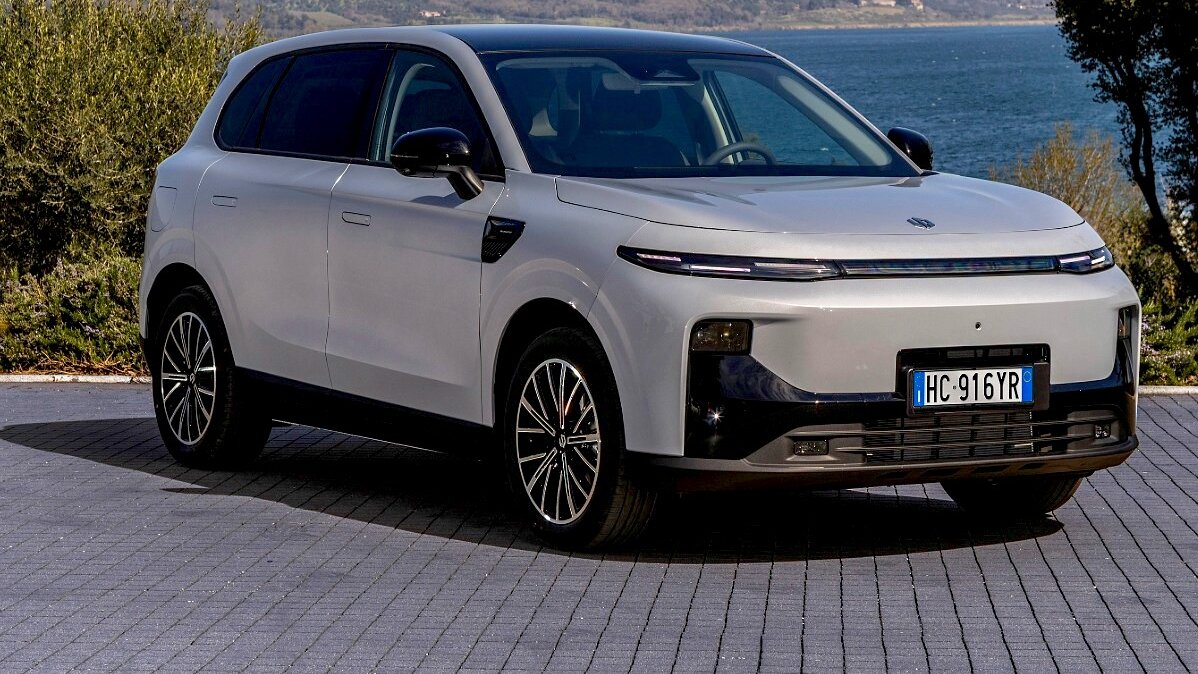
The global shift toward affordable electric mobility is entering a new phase as Stellantis leverages its partnership with Chinese EV maker Leapmotor to challenge the dominance of premium-priced vehicles. At the center of this strategy is the Leapmotor A10, a compact electric SUV designed to bring modern technology and efficiency to a broader demographic of drivers, including those in European markets like Switzerland.
Officially launched in China on March 26, 2026, in Jinhua, the A10 represents the first model built on Leapmotor’s all-new A-platform according to Stellantis Media. While it is branded as the A10 in its home market, the vehicle will be marketed in Europe under the name B03X. This strategic rebranding accompanies a broader effort to integrate Chinese EV innovation with European production and distribution networks.
The vehicle’s appeal lies in its positioning as a “new-age” affordable EV. In China, the A10 entered the market with a starting price of 96,580 yuan, which is approximately $9,500 as reported by Electrek. By combining a chunky crossover body style with a competitive price point, Stellantis aims to attract younger buyers who require a practical, tech-forward vehicle without the prohibitive costs often associated with electric SUVs.
For the European market, the B03X (A10) is part of a larger rollout that includes the Leapmotor B10, a 4.52-metre-long battery-electric SUV. This expansion is backed by a significant industrial commitment: Stellantis has confirmed that production for Leapmotor models will take place in Spain, specifically at the plant in Figueruelas near Zaragoza via Electrive.
Technical Specifications and Performance of the Leapmotor A10
The Leapmotor A10 is engineered for urban efficiency and “zippy” performance, mirroring the characteristics of classic compact cars but with a fully electric powertrain. The vehicle is powered by a single electric motor driving the front wheels, with two available output options: 70 kW (approximately 95 hp) or 90 kW (approximately 125 hp) per Electrek.
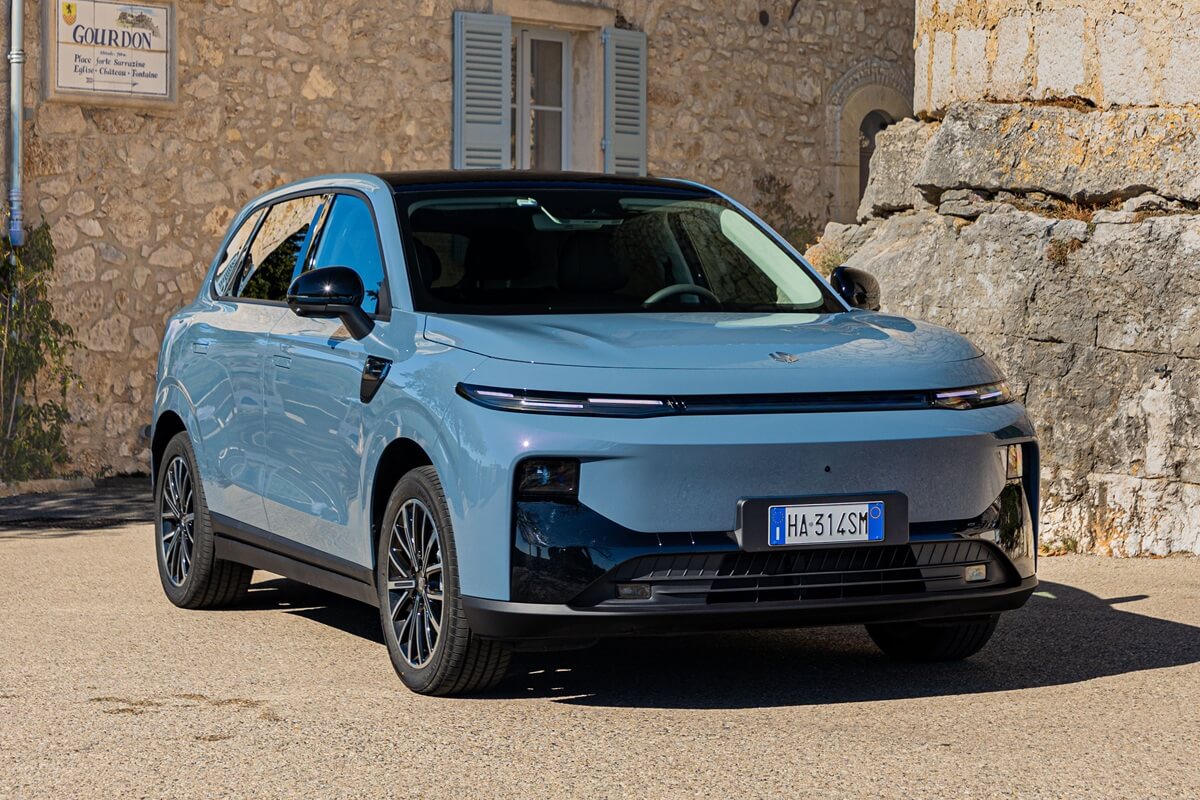
Both motor options deliver 150 Nm (approximately 110 lb-ft) of instant torque from 0 rpm, providing the rapid acceleration necessary for city driving. To support this performance, the A10 is equipped with a 53 kWh battery pack, which provides a range of over 500 km (approximately 310 miles) according to Electrek. This range is particularly relevant for drivers in regions like Switzerland, where the ability to traverse mountainous terrain or commute between cities without frequent charging stops is a primary concern.
Charging infrastructure compatibility is handled via DC fast charging, supporting up to 100 kW. While This represents lower than some high-finish EV records, it allows the relatively small battery to charge from 30% to 80% in approximately 15 minutes as detailed by Electrek.
Key Technical Summary
| Feature | Specification |
|---|---|
| Motor Output | 70 kW (~95 hp) or 90 kW (~125 hp) |
| Torque | 150 Nm (~110 lb-ft) |
| Battery Capacity | 53 kWh |
| Range | Over 500 km (~310 miles) |
| DC Fast Charging | Up to 100 kW (30% to 80% in ~15 mins) |
| Drive Type | Front-Wheel Drive (FWD) |
European Expansion and the Spanish Production Hub
The transition of the A10 from a Chinese domestic product to the European B03X is supported by a localized manufacturing strategy. Stellantis CEO Antonio Filosa has officially confirmed that production of Leapmotor vehicles will begin in Spain in the second half of 2026 via Electrive. The first model to be manufactured at the Figueruelas plant near Zaragoza will be the Leapmotor B10.
The supply chain for these vehicles is already being established. Lieder Automotive—a joint venture between China’s Duoli Technology and the Basque supplier Fagor Ederlan—is scheduled to begin producing chassis components in July 2026 according to Electrive. This ensures that the vehicles are not merely imported but are integrated into the European industrial ecosystem.
Following the B10, other models are expected to join the Spanish production line. According to Ding Yongfei, Leapmotor’s Global Quality Director, the A10 (B03X), A05, and B05 are all set to be produced in Figueruelas starting in 2027 via Electrive.
Strategic Market Positioning: Why it Matters
The introduction of the A10/B03X represents a shift in the EV market. For years, the “affordable EV” segment has been underserved in Europe, with many models remaining prohibitively expensive for young professionals or first-time buyers. By utilizing a Chinese partner’s platform, Stellantis can offer a vehicle that combines competitive pricing with the reliability and service network of a global automotive giant.
This strategy is further bolstered by the opening of the Leapmotor European Innovation Center in Munich, Germany, on March 23, 2026 via Stellantis Media. Located in the Schwabing-Freimann district, this center is designed to house global design and engineering talent, ensuring that the vehicles are tailored to European preferences and regulatory standards.
The B10 Hybrid EV also plays a role in this transition, serving as a bridge for consumers not yet ready to go fully electric. Leapmotor hosted an international media drive for the B10 Hybrid EV in Rome from March 23 to 31, 2026, showcasing its performance on the scenic roads around Bracciano Lake according to Stellantis Media. This hybrid offering, alongside the fully electric A10/B03X, allows Stellantis to cover multiple consumer needs within a single brand ecosystem.
The Path Forward for Leapmotor in Europe
As Leapmotor continues to grow, its market position is strengthening. The company recently confirmed its status as the No. 1 brand among EV startups in 2025, maintaining robust growth into early 2026, including the delivery of 50,029 vehicles in March 2026 alone via Stellantis Media.
For the consumer, the “what happens next” revolves around the official European launch dates and pricing for the B03X. While the Chinese price point is remarkably low, European pricing will likely be adjusted for local taxes, safety certifications, and the costs of European production. However, the goal remains to provide a modern, unpretentious, and affordable electric crossover that can compete with both traditional combustion cars and existing EVs.
The next confirmed checkpoint for this rollout is the start of component production at Lieder Automotive in July 2026, followed by the broader start of vehicle manufacturing in Spain during the second half of 2026 via Electrive.
Do you think the B03X can disrupt the European compact SUV market? Share your thoughts in the comments below or share this analysis with your network.
Keep reading