
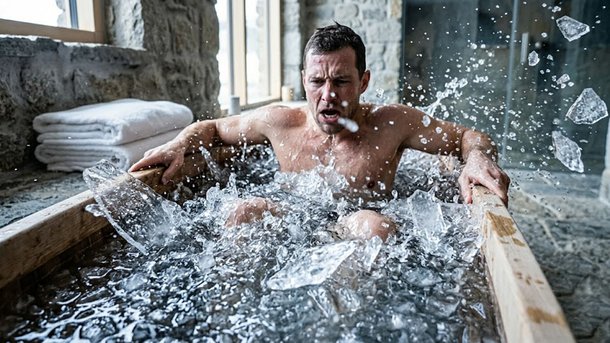
Jack Dorsey, the co-founder of Twitter (now X), begins each day with a ritual that sounds more like an endurance test than a morning routine: plunging into water chilled to 3°C. This practice, shared by other high-profile figures like Ray Dalio of Bridgewater Associates, is not merely about waking up. According to recent reporting, This proves a deliberate biological strategy designed to trigger a sustained dopamine release that outperforms common stimulants like chocolate or caffeine.
The core claim behind this icy ritual is that cold water immersion at or below 14°C can elevate dopamine levels in the brain by up to 2.5 times baseline, a surge comparable to the effects of certain stimulant medications but with significantly longer duration. This assertion traces back to a 2000 study published in the European Journal of Applied Physiology, which measured neurochemical responses to cold exposure in human subjects. The study found that dopamine concentrations rose sharply and remained elevated for several hours after immersion, offering a prolonged state of alertness and motivation without the crash associated with caffeine or sugar.
What distinguishes this dopamine boost from fleeting pleasures is its sustainability. While eating chocolate or drinking coffee may produce a sharp but short-lived spike in reward neurotransmitters, cold-induced dopamine release has been observed to persist for three hours or more. This extended window allows individuals like Dorsey and Dalio to maintain sharp cognitive function and emotional resilience throughout the morning, framing the discomfort not as punishment but as a tool for mental dominance.
Andrew Huberman, a neuroscientist at Stanford University School of Medicine, has publicly discussed the science behind such practices, noting that deliberate cold exposure acts as a controlled stressor that strengthens mental fortitude over time. In interviews and lectures, Huberman has explained that the initial shock triggers a sympathetic nervous system response, but repeated exposure leads to adaptive changes that improve stress tolerance and focus. He has emphasized that the key is consistency and safety—gradual adaptation to avoid shock or hypothermia.
For Dorsey, the practice is explicitly tied to mental resilience. He has described cold immersion as “the most powerful training for building mental toughness,” framing it as a daily choice to reject comfort in favor of agency. This mindset aligns with broader trends among executives and athletes who leverage discomfort-based routines—such as fasting, intense exercise, or meditation—to cultivate discipline and clarity in high-pressure environments.
The physiological mechanism involves more than just dopamine. Cold immersion also stimulates the release of norepinephrine, a hormone and neurotransmitter involved in attention, focus, and mood regulation. Studies have shown that norepinephrine can increase by two to three times during cold exposure, contributing to heightened vigilance and reduced inflammation. These combined neurochemical effects may explain why users report feeling both energized and calm after a cold plunge—a state sometimes described as “alert tranquility.”
Safety considerations are essential. Medical experts caution that sudden immersion in very cold water can pose risks, particularly for individuals with cardiovascular conditions. The cold shock response can cause an involuntary gasp, spike in blood pressure, and irregular heart rhythm. Experts recommend gradual acclimatization, starting with cooler showers before progressing to full immersion, and never practicing alone. Water temperature should be monitored, and sessions limited to a few minutes to avoid hypothermia.
The trend of deliberate cold exposure has grown beyond Silicon Valley executives, influencing wellness culture at large. From cryotherapy chambers to ice bath franchises, the market for cold-based recovery and performance tools has expanded significantly. Though, experts distinguish between clinical cryotherapy—used in medical settings for inflammation reduction—and recreational or performance-oriented cold immersion, which lacks standardized protocols and long-term safety data.
While anecdotal endorsements from prominent figures have fueled public interest, researchers call for more rigorous, long-term studies on the cognitive and mental health outcomes of routine cold exposure. Most existing data comes from short-term laboratory studies or compact observational cohorts. Questions remain about optimal frequency, duration, and temperature for specific goals such as anxiety reduction, focus enhancement, or mood regulation.
For now, the practice remains a personal experiment for many, guided by individual tolerance and perceived benefit. Those who adopt it often report improved sleep quality, increased energy levels, and a greater sense of accomplishment—effects that may stem not only from neurochemistry but from the psychological impact of overcoming discomfort.
As interest in neuroscience-backed performance strategies continues to grow, routines like Dorsey’s ice plunge serve as a vivid illustration of how biology can be harnessed—not through pharmaceuticals, but through disciplined engagement with environmental stressors. Whether it becomes a widespread habit or remains a niche practice among high achievers, the science suggests that discomfort, when managed wisely, can be a powerful catalyst for mental clarity.
For readers interested in exploring the research behind cold exposure and dopamine regulation, the 2000 European Journal of Applied Physiology study remains a foundational reference. Additional insights can be found in lectures and publications by neuroscientists like Andrew Huberman, who continue to investigate how deliberate environmental challenges influence brain function and resilience.
What small discomfort are you willing to embrace each morning to sharpen your focus and strengthen your mind? Share your experiences or questions in the comments below, and consider sharing this article with anyone curious about the science of peak performance.