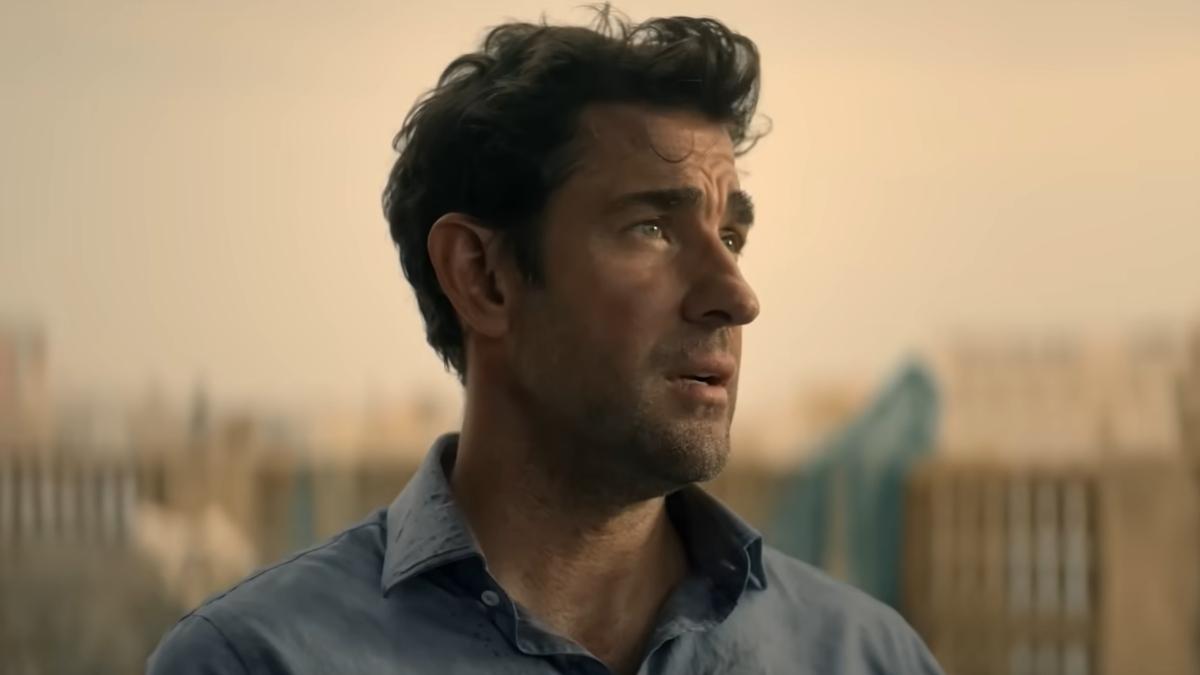
As a veteran of the entertainment beat here in Los Angeles, I have seen the “Jack Ryan” franchise evolve through various iterations, from the silver screen’s blockbuster adaptations to the high-stakes television drama that recently concluded its run on Amazon Prime Video. The character, originally birthed from the literary imagination of Tom Clancy, has become a staple of modern espionage fiction. However, the latest cinematic venture, Jack Ryan: Ghost War, arrives at a moment where audiences are increasingly discerning about the “by-the-numbers” thriller format. While the film attempts to pull its protagonist out of a settled civilian life into a web of international intrigue, it often feels more like a functional procedural than a pulse-pounding cinematic event.
John Krasinski, having anchored the character for years in the streaming space, brings a familiar, grounded intensity to the role. Yet, even his dedicated performance cannot entirely mask the structural fatigue present in this globe-trotting actioner. In an era where spy thrillers are pushing boundaries in both narrative complexity and technical execution, Ghost War feels tethered to a playbook that feels increasingly antiquated. For those looking for a deep dive into the evolution of this franchise, you can explore the official history of the Tom Clancy’s Jack Ryan series on its primary distribution platform.
The Challenge of Keeping a Classic Relevant
The core tension of any Jack Ryan story is the transition from desk-bound intelligence analyst to field-ready operative. In Ghost War, the script leans heavily on this trope, forcing the protagonist back into the fray to address a burgeoning conspiracy. While the stakes are ostensibly global, the execution often feels localized to a series of checklist action beats. We see the classic hallmarks: the clandestine meetings in rain-slicked European capitals, the rapid-fire technical jargon and the inevitable betrayal from within the intelligence community. However, the film struggles to imbue these elements with the urgency required to make them feel new.

Krasinski’s portrayal remains consistent with his previous work—stoic, intelligent, and perpetually burdened by the weight of global stability. But when the plot mechanics are this predictable, even the most charismatic lead begins to fade into the background. The film functions, certainly. the pacing is brisk enough to satisfy a casual weekend viewer, but it lacks the visceral impact that defines the genre’s best entries. It is a reminder that in the crowded landscape of contemporary action cinema, a recognizable name is rarely enough to sustain a compelling narrative.
Production Values and Technical Execution
Visually, Ghost War is polished, adhering to the high production standards one would expect from a major studio release. The cinematography captures the scale of the international settings with competence, and the sound design provides the necessary punch for the film’s set pieces. Yet, there is a sense of “functionalism” here that permeates every frame. The camera work, while professional, rarely takes risks, and the editing, while clean, lacks the rhythmic tension needed to elevate the film’s slower moments.

the production environment for these types of films has shifted significantly over the last decade. As documented by the Screen Actors Guild-American Federation of Television and Radio Artists (SAG-AFTRA), the requirements for large-scale action productions involve rigorous safety and stunt coordination standards that have become the industry baseline. While Ghost War meets these professional mandates, it rarely transcends them. The film is a product of a sophisticated machine, but it lacks the soul of a project driven by a singular, daring vision.
Key Takeaways for the Discerning Viewer
- Performance: John Krasinski remains a stable lead, though the script offers him little room to evolve the character beyond familiar beats.
- Narrative: The plot follows a traditional “conspiracy thriller” arc, prioritizing established genre tropes over innovative storytelling.
- Pacing: While the film maintains a steady momentum, it lacks the peaks of tension that define the upper echelon of the genre.
- Verdict: A serviceable watch for genre enthusiasts, though it ultimately feels like a routine entry in a storied franchise.
Looking Ahead: The Future of the Clancy Universe
As we move past the release of Ghost War, the question remains: where does Jack Ryan go from here? The character has proven to be incredibly durable, surviving decades of geopolitical shifts and changing audience tastes. Whether the franchise requires a complete tonal reset or a move toward more character-focused, intimate storytelling remains to be seen. Industry observers are keeping a close eye on the major trade publications for any official word on potential sequels or spin-offs currently in development.

For now, Ghost War stands as a testament to the longevity of the brand but also serves as a cautionary tale about the dangers of relying on formula. As an editor who has covered this industry for over 15 years, I believe there is still a place for the classic spy thriller, but it must be willing to take risks. Until the next official update from the production studio, audiences are left with this functional, if unremarkable, addition to the canon. What are your thoughts on the direction of the franchise? Join the conversation in the comments section below and share your take on the current state of the spy thriller genre.
Related reading