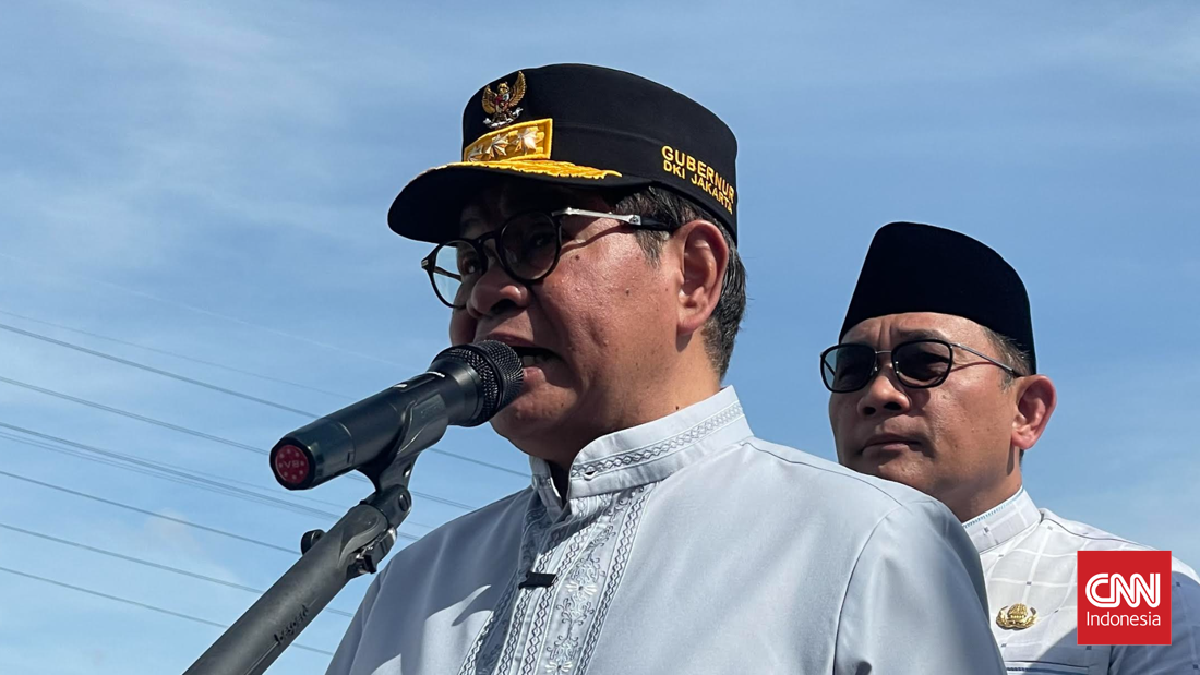
Jakarta Governor Pramono Anung has taken decisive action against several local officials in East Jakarta after it was discovered that citizen complaints on the city’s official reporting application, JAKI, were being answered with artificial intelligence (AI) generated images. The scandal has sparked a wider conversation about the integrity of public service and the misuse of emerging technology within government administration.
The primary target of these sanctions is the head of the Kalisari sub-district, known as the Lurah. On Wednesday, April 15, 2026, Governor Pramono officially relieved the Lurah of Kalisari, identified as Siti Nur Hasanah, from her position following the discovery of AI-edited photos used to resolve reports. The governor emphasized that the move was not a permanent termination of employment but a form of administrative “guidance” or pembinaan.
Beyond the sub-district head, the crackdown extended to other senior staff. The head of the Economic Development section (Kasi Ekonomi Pembangunan) and the head of the Government section (Kasi Pemerintahan) in Kalisari were also relieved of their duties as part of a broader effort to improve service quality. Three personnel from the Public Infrastructure and Facilities Handling unit (PPSU) received First Warning Letters (SP1) for their roles in uploading the manipulated imagery.
The incident has been described by the Governor as a significant blow to the city’s image. Speaking at the Taman Ismail Marzuki (TIM) in Central Jakarta, Pramono stated that the act of providing “sloppy” solutions to community grievances—specifically using AI to fake the completion of tasks—was an unacceptable breach of public trust.
The JAKI Scandal: AI Manipulation in Public Service
The JAKI application is designed to be a transparent bridge between Jakarta residents and the provincial government, allowing citizens to report issues such as waste, road damage, or flooding. The system relies on “before and after” photo evidence to verify that a reported problem has been solved. In the Kalisari case, officials allegedly bypassed actual fieldwork by using AI tools to edit “after” photos, making it appear as though the reported issues had been rectified when they had not.

Governor Pramono Anung expressed deep disappointment over the incident, noting that such actions “truly tarnish the face of Jakarta.” He asserted that there is no room for such behavior to be repeated in the city’s administration during his press briefing on April 15. The use of AI to fabricate results is seen not just as a technical failure, but as a failure of integrity among civil servants (ASN).
The Governor clarified the distinction between being “relieved of duty” (dibebastugaskan) and being fired. By removing the officials from their specific leadership roles, the provincial government intends to place them through a process of rehabilitation, and guidance. Pramono stated, “I also do not want to destroy someone’s career. After they are guided to become better, we will deliver them the opportunity to contribute better in the future” according to reports from DetikNews.
Administrative Sanctions and Personnel Impact
The scale of the disciplinary action reflects the gravity of the offense. The following table summarizes the sanctions imposed on the personnel involved in the Kalisari AI photo incident:
| Official/Role | Sanction | Status |
|---|---|---|
| Lurah Kalisari (Siti Nur Hasanah) | Relieved of Duty | Under Guidance (Pembinaan) |
| Kasi Ekonomi Pembangunan | Relieved of Duty | Under Guidance (Pembinaan) |
| Kasi Pemerintahan | Relieved of Duty | Under Guidance (Pembinaan) |
| 3 PPSU Personnel | SP1 (First Warning Letter) | Retained with Final Warning |
For the three PPSU workers, the SP1 serves as a critical warning. While they were allowed to retain their jobs, the Governor described this as a “last chance” for those who wish to continue working for the city as reported by Kompas. This tiered approach to punishment—removing leaders from their posts while giving lower-level staff a warning—suggests that the administration views the lack of oversight by the Lurah and Section Heads as a primary failure.
Systemic Implications for Jakarta’s Governance
The fallout from the Kalisari incident has prompted the DKI Jakarta government to re-evaluate how it monitors the JAKI system. The ease with which AI can now generate realistic images poses a new challenge for digital governance. When officials can simulate the completion of a task without ever leaving their office, the entire mechanism of digital accountability is compromised.
The Governor’s response indicates a shift toward stricter verification processes. By removing the officials, the administration is sending a signal that digital “shortcuts” will be met with professional consequences. The focus on “pembinaan” (guidance) suggests that the government wants to correct the culture of the civil service rather than simply purging staff, though the immediate removal from power is intended to restore public confidence in the transparency of the JAKI app.
This incident is not isolated in the eyes of the administration. Governor Pramono acknowledged that this was not the first case of its kind, noting that some of the perpetrators involved were repeat offenders as stated during his remarks at TIM. This suggests a systemic issue where the pressure to show “resolved” tickets in the app may have incentivized officials to manipulate data rather than solve the actual physical problems reported by citizens.
The next step for the provincial government involves a broader evaluation of the PPSU workers and the systems used to upload reports. Governor Pramono has indicated plans to gather PPSU personnel at the city hall (Balkot) to address these integrity issues and ensure that the “before-after” reporting remains an honest reflection of function performed on the ground.
As the city moves forward, the focus remains on the rehabilitation of the affected ASN and the implementation of more robust verification tools to prevent the use of generative AI in official government reporting. Further updates on the status of the relieved officials are expected following the completion of their guidance period.
Do you feel AI should be banned entirely from government reporting, or is better oversight the answer? Share your thoughts in the comments below.
Related reading