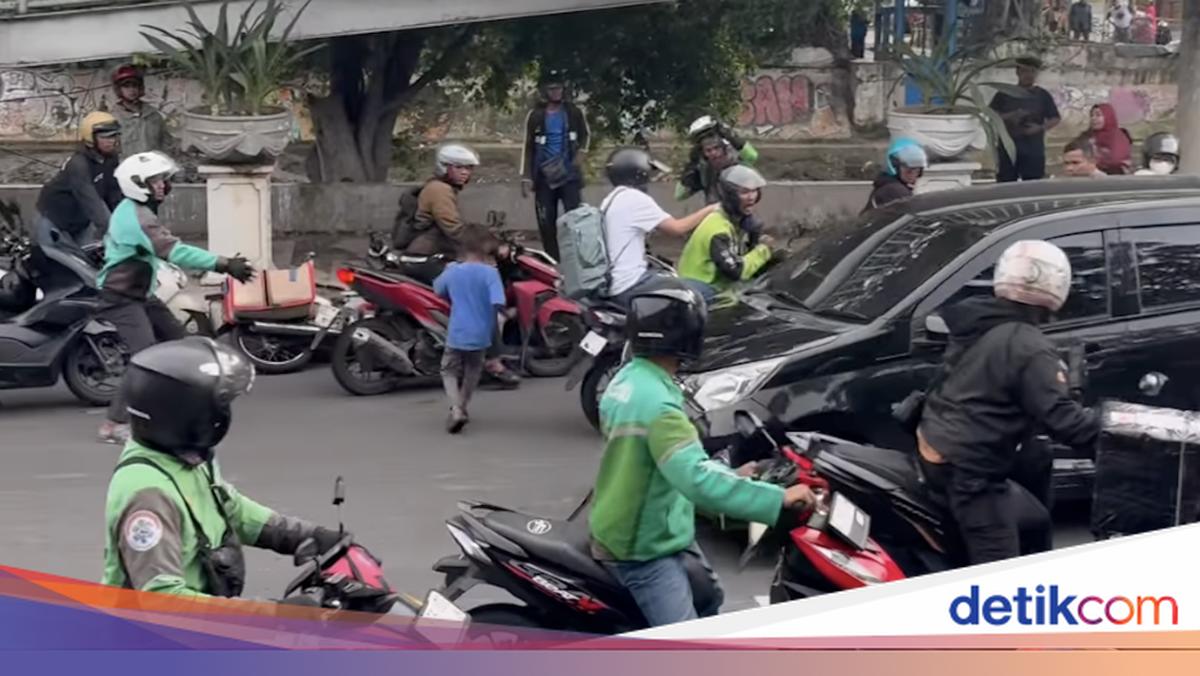
Jakarta – Concerns are growing over a pattern of reckless driving involving drivers of Japan’s Light Commercial Vehicle (LCV) class cars, commonly known as *Kei* cars, in Indonesia. Recent incidents, including a high-profile case in central Jakarta, have sparked debate about the factors contributing to this behavior and the potential risks to public safety. The incidents raise questions about driver training, vehicle suitability, and the increasing prevalence of these vehicles on Indonesian roads.
On Wednesday, February 25, 2026, a 24-year-old man, identified only by his initials HM, was arrested by Jakarta Central Police after leading authorities on a chaotic chase through the city’s streets in a black Toyota Calya. According to reports, HM drove against traffic, narrowly avoiding collisions with other vehicles and pedestrians. The vehicle, bearing license plate D 1640 AHB, was ultimately stopped after becoming surrounded by citizens and police.
Reckless Pursuit and Arrest
The incident began as police attempted to pull over the Toyota Calya on Jalan Gunung Sahari near Lapangan Banteng. Instead of complying, the driver accelerated, proceeding south against the flow of traffic. Police reports detail a winding route taken by the vehicle, including turns onto Jalan Gunung Sahari IV, Jalan Bungur Besar Raya, and Jalan Gn Sahari V, consistently driving in the wrong direction. The pursuit culminated near Hotel Bintang Baru, where the driver attempted to turn around before being cornered.
Following the arrest, Hafiz Mahendra, 25, was officially named as a suspect in the case, as reported by Kompas.com. Initial investigations revealed more than just reckless driving; authorities discovered a cache of weapons and multiple license plates within the vehicle.
Weapons and Multiple License Plates Discovered
A search of the Toyota Calya uncovered four sets of different license plates, a toy gun, and two bladed weapons – a machete and a dagger. According to Kombes Pol Komarudin, Director of Traffic at the Polda Metro Jaya, the discovery elevated the case beyond a simple traffic violation, prompting involvement from the Jakarta Central Police Criminal Investigation Unit to explore potential criminal intent. The presence of multiple license plates suggests a possible attempt to evade identification or conceal illegal activities.
“We found four pairs of license plates, a toy gun, and two bladed weapons, a machete and a dagger,” Komarudin stated on February 26, 2026. “We are currently investigating the motive behind this, and the suspect is undergoing intensive questioning by the Criminal Investigation Unit.”
The LCGC Phenomenon and Driver Experience
The incidents involving the Toyota Calya have reignited a discussion about the increasing number of Light Commercial Vehicles (LCGCs) on Indonesian roads and the potential correlation with erratic driving behavior. LCGCs, designed as affordable transportation options, have become increasingly popular, particularly among ride-hailing drivers. Some experts suggest that a significant number of LCGC drivers are new to driving four-wheeled vehicles, transitioning from motorcycles, and may not have fully adapted to the different handling characteristics and traffic rules.
Sony Susmana, Director of Training at Safety Defensive Consultant Indonesia (SDCI), posits that drivers transitioning from motorcycles often carry over unsafe habits. “Many of these drivers are new to cars, but they’ve grown up riding motorcycles in Indonesia, where navigating traffic often requires aggressive maneuvers,” Susmana explained. “What might be acceptable on a motorcycle – swerving to avoid obstacles – is far more dangerous in a car.” He further noted that the rise of LCGCs used for ride-hailing services has contributed to an influx of less experienced drivers on the roads.
The Role of Ride-Hailing Services
The increasing use of LCGCs by ride-hailing services is a key factor in this discussion. Whereas providing affordable transportation options, it has too led to a surge in drivers with limited experience. The pressure to maximize earnings can also contribute to risky driving behavior, such as speeding and ignoring traffic regulations. However, not all ride-hailing drivers exhibit reckless behavior, and many prioritize safety and adherence to traffic laws.
Safety Recommendations and Legal Consequences
Experts emphasize the importance of comprehensive driver education and adherence to traffic regulations. Susmana stresses the demand for drivers, particularly those new to cars, to cultivate ethical driving habits, understand traffic laws, and commit to continuous learning. “Drivers must check their mirrors, use turn signals, and ensure the road is clear before changing lanes,” he advises. “If unsure, they should pull over to the side of the road and use hazard lights while consulting navigation apps.”
The legal consequences for reckless driving in Indonesia are severe. Hafiz Mahendra now faces charges related to his actions on February 25th, and could face significant penalties, including imprisonment and fines. Kompas.com reports that the investigation is ongoing, and further charges may be filed depending on the findings of the Criminal Investigation Unit.
Key Takeaways
- Recent incidents highlight a concerning trend of reckless driving involving LCGC vehicles in Jakarta.
- The arrest of Hafiz Mahendra revealed the presence of weapons and multiple license plates in his vehicle, suggesting potential criminal intent.
- Experts believe that a lack of experience among new drivers, particularly those transitioning from motorcycles, contributes to the problem.
- Increased driver education and stricter enforcement of traffic laws are crucial to improving road safety.
- The use of LCGCs by ride-hailing services has increased the number of less experienced drivers on the roads.
Authorities are continuing to investigate the circumstances surrounding the February 25th incident and are working to determine if there are any broader patterns of reckless behavior among LCGC drivers. The Jakarta Central Police have not yet released a timeline for the completion of their investigation. Readers are encouraged to share their experiences and perspectives on road safety in the comments below.
Keep reading