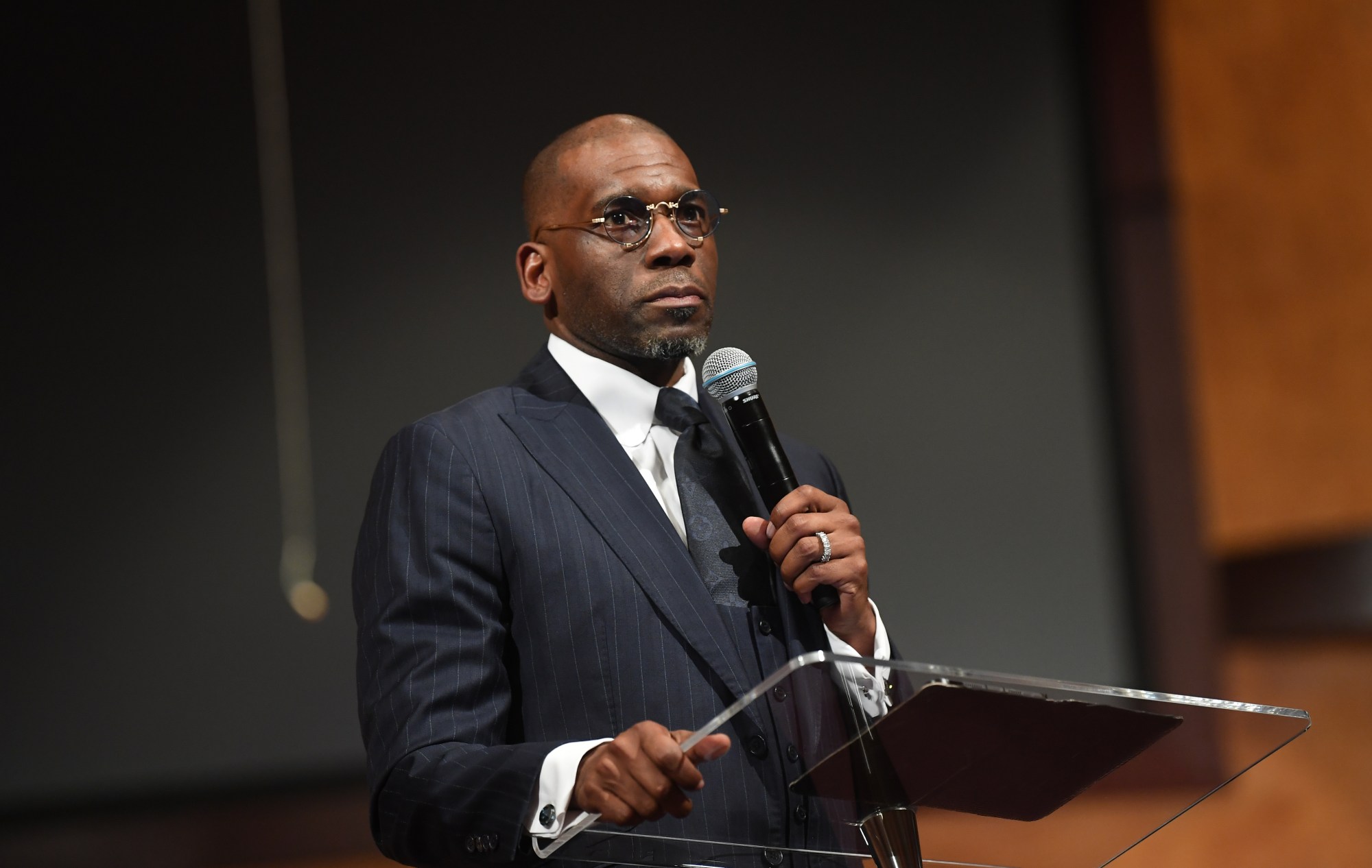
Pastor Jamal Bryant, the senior leader of New Birth Missionary Baptist Church, has called for a targeted economic boycott of Asian-owned businesses, citing a need for Black economic independence following a viral social media exchange. The call to action, which Bryant shared on his digital platforms, encourages his followers to test the economic autonomy of the Black community in response to claims that specific minority-owned enterprises do not rely on Black consumer spending for their survival.
This initiative represents a significant escalation in ongoing debates regarding the “Black dollar” and the circulation of capital within African American communities. Bryant’s position follows a wave of online discourse sparked by a viral video from an Asian content creator, who argued that Black consumers are overly reliant on Asian-owned service providers—including beauty supply stores, dry cleaners, and electronics retailers—while asserting that these businesses remain stable regardless of Black patronage. “Welp you heard it from them ….they said they don’t need our money and that we can’t survive without them! Yall wanna test his theory?” Bryant wrote in a post shared via his social media channels.
The Context of Economic Protest
The call for a boycott is not the first instance of economic activism led by the New Birth Missionary Baptist Church pastor. Bryant recently concluded a year-long campaign against Target, which he characterized as a “Target fast.” According to Bryant, the protest was intended to leverage the collective purchasing power of his congregation to influence corporate policy. He reported that the movement successfully secured three of four primary demands related to diversity and equity commitments from the retail corporation.
:max_bytes(150000):strip_icc():focal(1557x0:1559x2)/Jamal-Bryant-Karri-Turner-Bryant-010225-b3963eb1a13b4d629962b10b34dbdbcc.jpg "The Context of Economic Protest")
Economic withdrawal as a tool for social protest has gained renewed traction in recent years, particularly following high-profile legal cases. In 2023, the acquittal of Chikei Rick Chow in South Carolina served as a major flashpoint for activists. Chow, a convenience store owner, had been charged in the shooting death of 14-year-old Cyrus Carmack-Belton, an incident that prompted widespread calls for boycotts of businesses perceived as hostile to the Black community. According to reports from the South Carolina Attorney General’s office, the case concluded following a jury trial where the defense argued self-defense, a verdict that left many community organizers seeking alternative avenues for redress, including the systematic redirection of consumer spending.
Building Infrastructure Over Boycotts
While Bryant’s call to action has gained attention, other prominent figures in the activist community are advocating for a focus on long-term sustainability rather than solely on divestment. Rapper and activist Mysonne has publicly emphasized that boycotting, while a potent form of expression, must be paired with the active development of Black-owned institutions. The emphasis, according to this perspective, should remain on the capitalization of Black-owned banks and the expansion of retail chains owned by Black entrepreneurs to ensure that wealth remains within the community.
This dialogue touches on broader, systemic barriers that frequently hinder Black entrepreneurship. Data from the U.S. Census Bureau’s Annual Business Survey indicates that while Black-owned businesses are growing in number, they often face significant disparities in access to venture capital and traditional bank lending compared to their counterparts. The current debate highlights a tension between the immediate impulse to withhold capital from businesses perceived as dismissive of Black consumers and the long-term objective of creating a self-sustaining economic ecosystem.
Public Reaction and Future Implications
The proposal has met with mixed reactions from both the public and social commentators. Critics argue that broad-based boycotts against specific ethnic groups risk deepening racial divisions and may negatively impact individual business owners who are not involved in the original viral discourse. Conversely, supporters of the initiative argue that the boycott is a necessary “test” of economic power, asserting that the Black community must demonstrate its ability to influence the marketplace to be taken seriously by external retailers.
As the conversation continues to gain momentum on social media platforms, the focus is shifting toward how these sentiments will translate into tangible economic behavior. There is no scheduled date for an official end to the proposed boycott, nor has there been a formal statement from major retail associations regarding the potential impact. Community members seeking further updates or information on local economic development initiatives are encouraged to monitor announcements from the New Birth Missionary Baptist Church or participate in local business forums dedicated to economic equity. The effectiveness of this campaign will likely be measured by shifts in local consumer patterns and the subsequent growth—or stagnation—of local, minority-owned business sectors in the coming fiscal quarters.