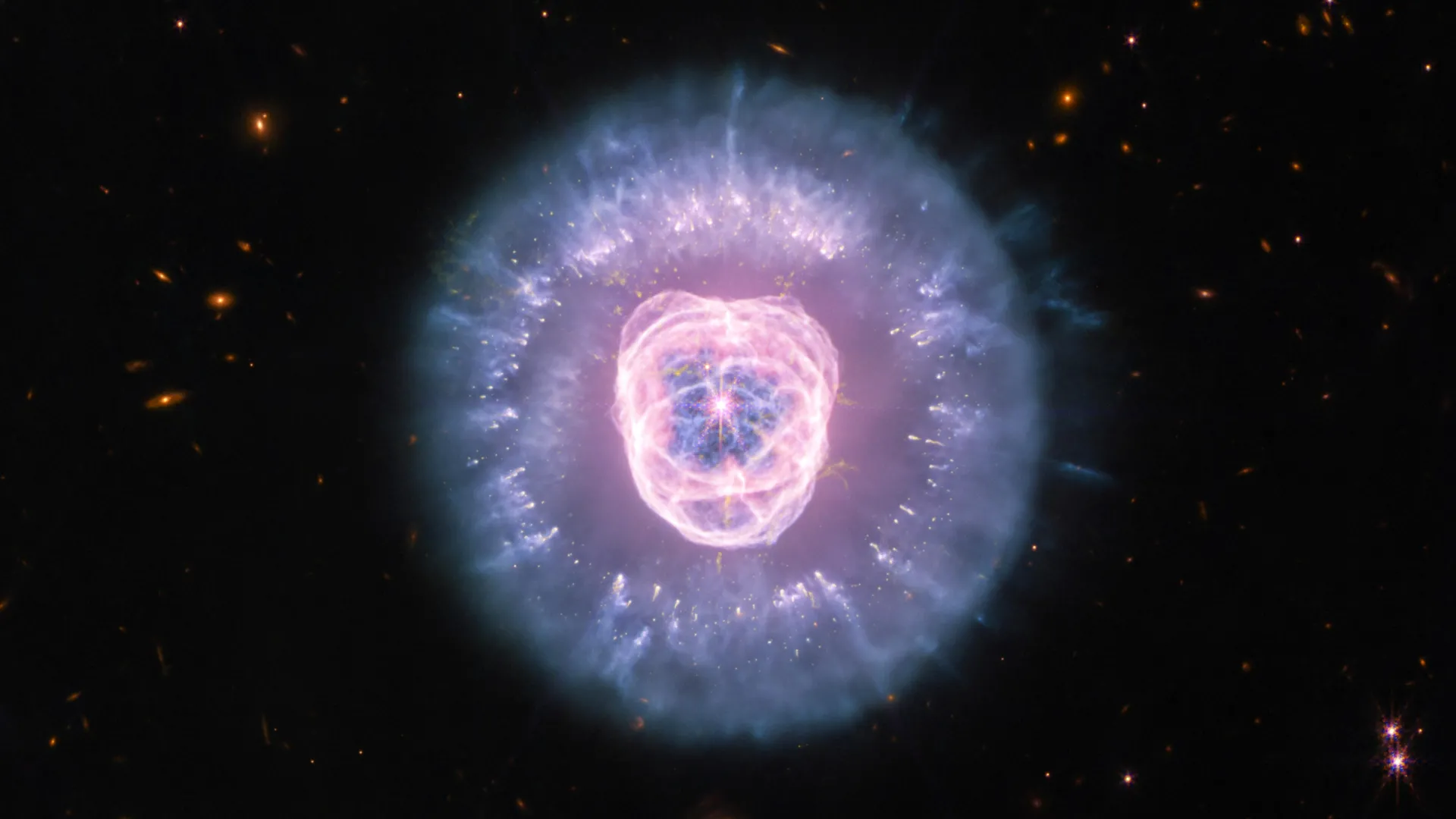
The James Webb Space Telescope (JWST) has captured new, high-resolution infrared images of NGC 2392, a planetary nebula located approximately 6,000 light-years from Earth in the constellation Gemini. Commonly known as the Lion Nebula, the cosmic object is the shrunken core of a dying star surrounded by expanding gas and dust. These new observations provide a clearer and more detailed view than previous imaging, highlighting features such as a haze of ionized gas and compact clumps of dust.
Infrared Vision and Instrument Capabilities
To capture the nebula, the James Webb Space Telescope utilized two primary instruments: the Near Infrared Camera (NIRCam), which measures light in the near-infrared spectrum, and the Mid-Infrared Instrument (MIRI), which captures longer infrared wavelengths. While the resulting images may appear similar to those taken in visible light, the infrared capabilities allow astronomers to see details that were previously unavailable.
The project is an international partnership involving the Canadian Space Agency (CSA), the European Space Agency (ESA), and NASA.
The Lifecycle of a Lower-Mass Star
The structure of the Lion Nebula is driven by the remains of a lower-mass star. When a lower-mass star can no longer support itself through nuclear reactions in its core, it becomes unstable and pulsates, shedding its outer layers into space.
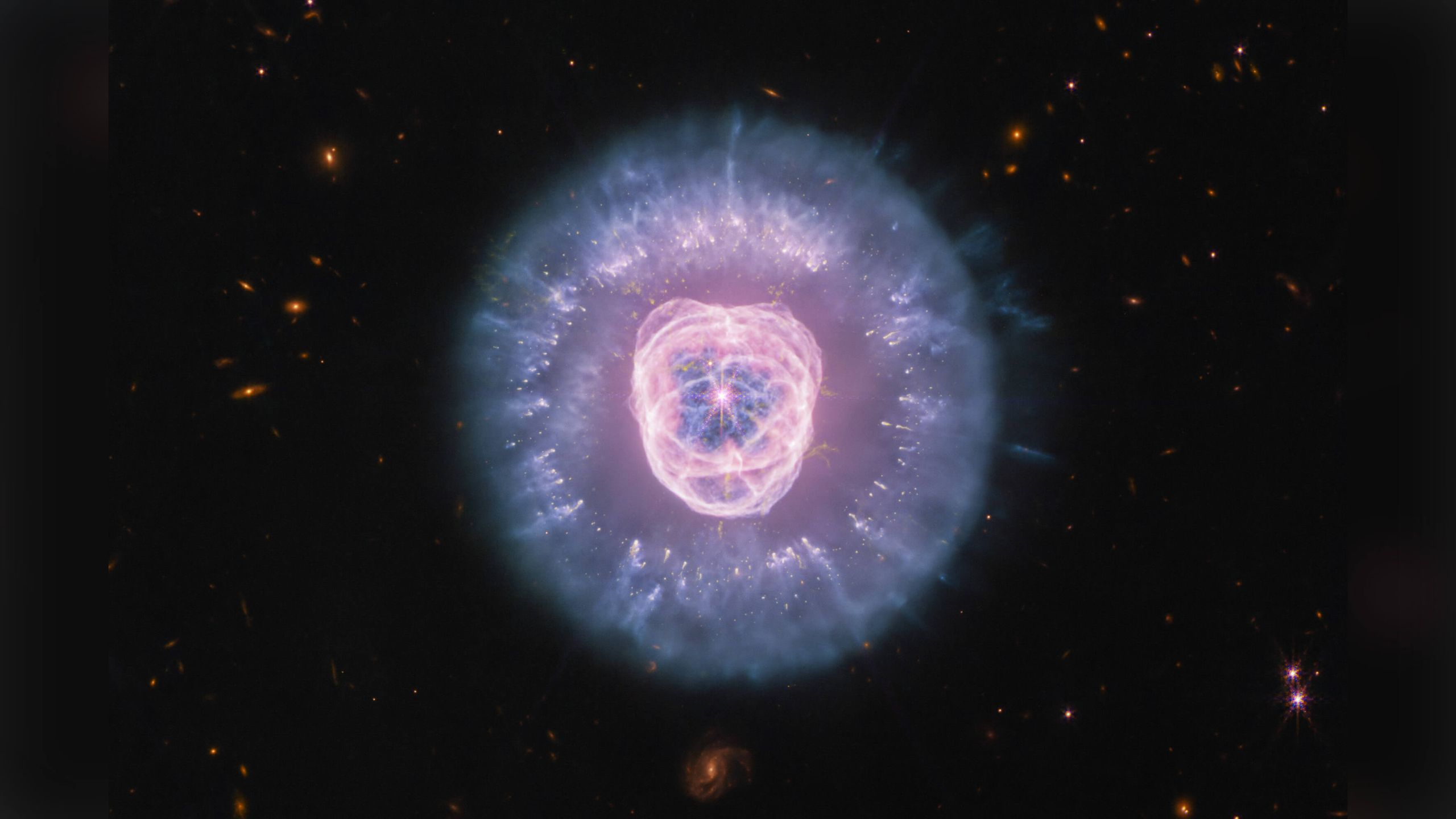
These expelled layers create expanding shells of gas and dust, forming a planetary nebula. This stage of stellar evolution is responsible for producing much of the observable dust in the universe. Once the outer layers are driven away by radiation, an extremely hot stellar core remains, known as a white dwarf.
Anatomy of the “Cosmic Lion”
The nebula’s distinctive appearance, which led to its nickname, is powered by the radiation and energy of the central white dwarf. The various components of the “lion” include:
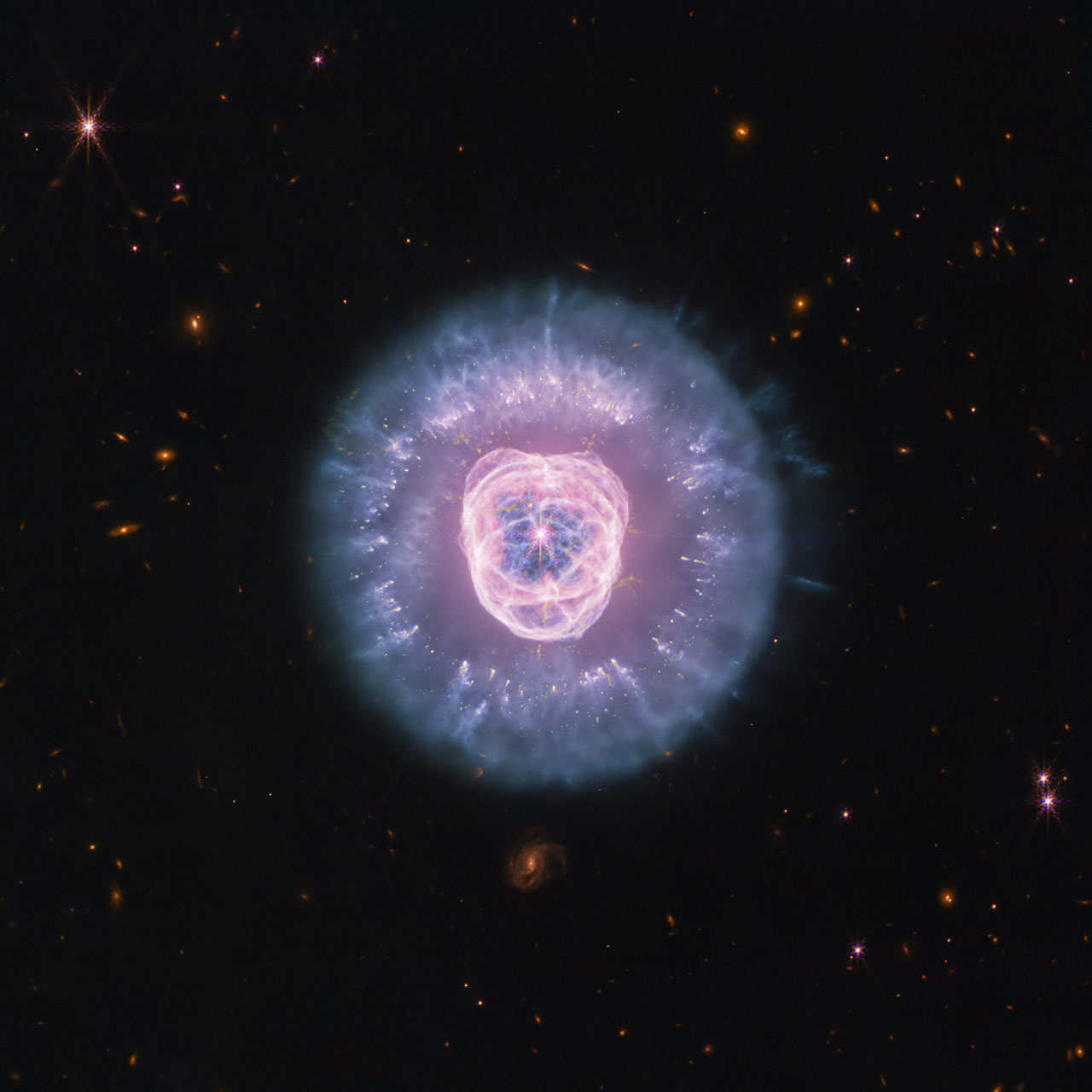
- The Nose: The central stellar remnant, a white dwarf, appears as a small button nose at the center of the activity.
- The Face: The white dwarf is oxygen-rich and “cooks” the nebula from within, creating an expanding bubble of ionized gas that forms the lion’s face.
- The Mane: The mane corresponds to the inner region of a dust shell illuminated by the central star. It contains compact clumps of dust and structures resembling comet-like tails or tufts of hair.
These dense clumps of dust in the mane are significant because they have withstood the radiation from the stellar core and serve to shield material located behind them. As the bubble of ionized gas grows, it sweeps outward and destroys dust in its path. Astronomers are currently studying why this gas forms the complicated arrangements of shells and rings frequently seen in planetary nebulae.
Historical Context and Future Dispersion
The object was first discovered in 1787 by astronomer William Herschel and was historically referred to as the Eskimo Nebula.
While the current images effectively freeze the nebula in a single moment, the structure continues to change as gas and dust migrate away from the stellar core. NASA notes that it has taken several thousand years for the nebula to reach its current shape. Astronomers estimate that the Lion Nebula will eventually disperse in approximately 10,000 years, a duration the agency describes as a relatively short period in astronomical terms.
Related reading