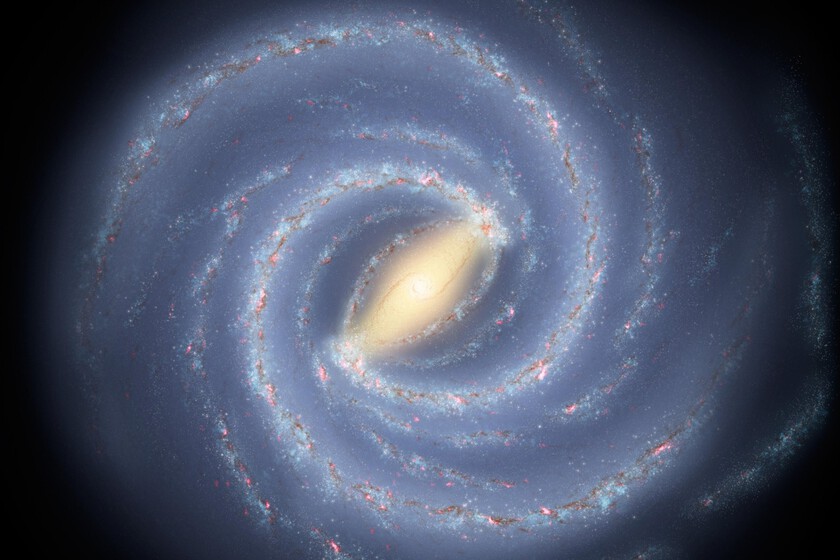
The James Webb Space Telescope (JWST) has once again fundamentally altered our understanding of the early universe, identifying a structural feature in a distant galaxy that current cosmological models struggle to explain. By capturing high-resolution infrared imagery of the early cosmos, the observatory has revealed the presence of a stellar bar in a galaxy existing when the universe was significantly younger and more gas-rich than previously thought possible. This discovery challenges established theories regarding how galaxies evolve and assemble their complex structures over time.
As a technology editor, I often look at the engineering marvel that is the JWST—a triumph of human ingenuity launched into orbit in December 2021—as a tool that does more than just photograph distant lights. it acts as a time machine. The identification of this barred spiral structure in a primitive galaxy, detailed in research published in Nature, suggests that the internal dynamics of galaxy formation may occur much faster than our existing simulations have predicted. The telescope, a joint project involving NASA, the European Space Agency (ESA), and the Canadian Space Agency (CSA), continues to provide data that forces astrophysicists to reconsider the “standard model” of galaxy evolution.
Rethinking Galactic Evolution
For years, the prevailing consensus in extragalactic astronomy held that barred spirals—galaxies with a central “bar” of stars—were late-stage evolutionary features. These structures typically emerge as galaxies mature, stabilize, and develop the complex gravitational interactions necessary to funnel gas toward their centers, fueling star formation. Finding such a feature in a galaxy as it existed merely a few billion years after the Big Bang, as noted by researchers utilizing the James Webb Space Telescope’s Near-Infrared Camera (NIRCam), suggests that the universe was “growing up” much faster than previously estimated.
The galaxy in question, EGS-23205, displays a clear barred structure that contradicts the expected chaotic, irregular, or “clumpy” morphologies of the early universe. According to data analyzed by the research team, this stellar bar spans a significant distance, effectively acting as a mechanism to transport gas into the galactic core. This movement of mass is critical, as it accelerates the formation of new stars and influences the growth of the central supermassive black hole. The discovery forces a pivot in our understanding of how quickly dark matter halos and baryonic matter can organize into ordered systems.
The Technical Significance of NIRCam
The ability to observe these structures is directly tied to the JWST’s unique technical specifications. Unlike the Hubble Space Telescope, which primarily observes in visible and ultraviolet light, the JWST is optimized for the near- and mid-infrared spectrum. This is essential because the light from the most distant, ancient galaxies has been “redshifted”—stretched by the expansion of the universe—out of the visible range and into the infrared.
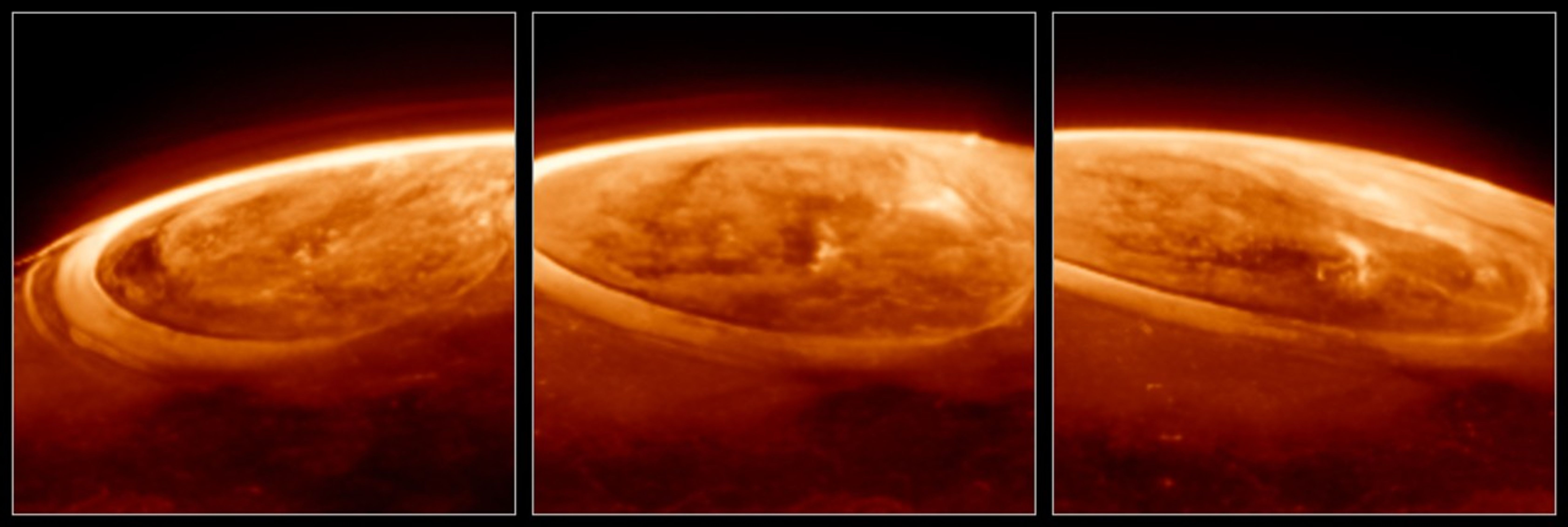
The NIRCam instrument, which captures the high-resolution imagery required to resolve these distant bars, allows astronomers to peer through the thick dust clouds that obscure star formation in younger, more volatile galaxies. By bypassing this obscuration, the telescope provides a clear view of the underlying stellar skeletal structure. This capability is not just a leap in optical engineering; This proves a fundamental shift in our ability to conduct observational cosmology, turning what was once theoretical speculation into empirical data.
Key Takeaways from Recent Observations
- Accelerated Formation: The discovery indicates that mature galactic structures can form much earlier in the universe’s timeline than previous models allowed.
- Dynamic Gas Transport: The presence of a stellar bar confirms that efficient gas-funneling mechanisms were operational in the early universe, likely fueling rapid starburst events.
- Instrumental Precision: The JWST’s NIRCam and MIRI instruments are providing the necessary resolution to distinguish between irregular primordial galaxies and those with organized, large-scale structures.
- Model Revision: Cosmologists are now tasked with updating simulations to account for the speed at which gravity can organize matter into stable barred spirals in high-redshift environments.
What Happens Next?
The scientific community is currently in a phase of intensive follow-up observation. While the identification of EGS-23205 was a landmark moment, it serves as a “first of many” case study. Astronomers are now using the JWST’s extended observation cycles to survey larger swaths of the sky, looking for additional examples of mature structures in the early universe. The goal is to determine whether EGS-23205 is an anomaly or evidence of a more widespread, yet previously invisible, population of evolved galaxies.
As we continue to receive data from the telescope, One can expect further refinements to our timeline of the early universe. Every new image confirms that the cosmos is far more complex, and perhaps more efficient at building structure, than we dared to imagine a decade ago. We invite our readers to share their thoughts on these findings in the comments section below, and look forward to reporting on the next major update from the mission’s ongoing primary science operations.
Keep reading