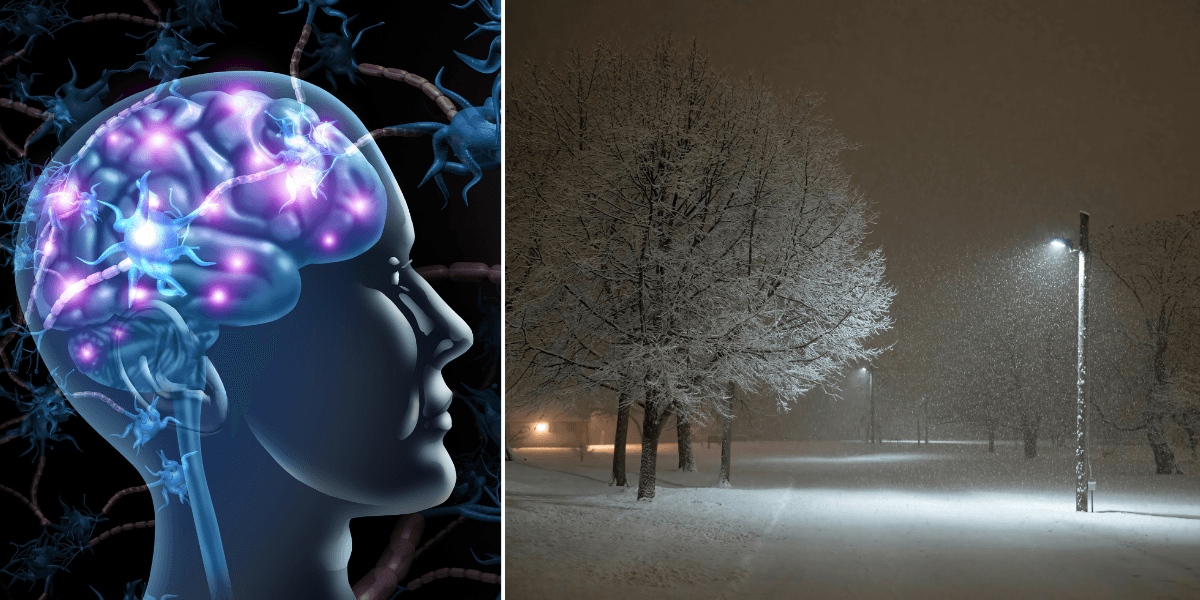
How Winter Impacts Your Brain, Memory, and Relationships
As the festive lights fade and January settles in, a sense of heaviness can descend. In the Northern Hemisphere, the shortest day has passed, but the dark months stretch ahead. Increasingly, research suggests this isn’t simply a feeling; our behaviors and decision-making processes actually shift with the seasons. These seasonal changes impact not only our mood but also cognitive functions and even our social interactions, prompting a deeper look into the science of winter’s influence on the human experience.
A comprehensive scientific review published in the journal Perspectives on Psychological Science details how seasons can affect everything from emotional wellbeing to intelligence and social engagement. The interplay between daylight, our internal biological clocks, and neurochemical processes creates a complex landscape of seasonal variation in human behavior. Understanding these mechanisms is crucial for navigating the challenges and maximizing the potential benefits of the winter months.
The Link Between Winter and Mood Disorders
The connection between winter months and the onset of depression, specifically Seasonal Affective Disorder (SAD), is well-established. SAD is characterized by persistent low mood, fatigue, increased appetite, and a need for more sleep. The National Institute of Mental Health (NIMH) estimates that SAD affects approximately 5% of the U.S. Population, with a higher prevalence in women and individuals living further from the equator. However, even those who don’t meet the full diagnostic criteria for SAD can experience what’s often referred to as the “winter blues,” a milder form of seasonal mood disturbance.
Research analyzing social media activity provides further insight into this phenomenon. A large-scale study from Cornell University, analyzing 509 million social media posts across 84 countries, found that language used online became less positive as daylight hours decreased. The study, published in Science, suggests a correlation between reduced sunlight and a shift towards more negative emotional expression.
One key explanation for these seasonal mood changes lies in the disruption of our circadian rhythm – our internal biological clock – caused by reduced light exposure. This disruption impacts neurotransmitters linked to mood regulation, such as serotonin and melatonin. Serotonin, often called the “happy chemical,” plays a vital role in regulating mood, sleep, and appetite. Reduced sunlight can lead to lower serotonin levels, contributing to feelings of sadness and lethargy. Conversely, melatonin, a hormone that regulates sleep, is produced in greater quantities in darkness, potentially leading to increased sleepiness and feelings of sluggishness during the winter months.
Light therapy, involving exposure to bright artificial light, has been explored as a potential treatment for SAD. However, a 2019 Cochrane review found limited evidence to support its apply as a preventative treatment. Even as light therapy can be effective for some individuals, its efficacy as a proactive measure to prevent SAD remains uncertain. The review emphasized the need for further research to determine optimal light intensity, duration, and timing for preventative use.
Beyond Mood: Cognitive Function and Social Behavior
The impact of winter extends beyond emotional wellbeing, influencing cognitive function and social behavior. Studies suggest that cognitive performance, particularly in areas requiring sustained attention and complex problem-solving, may decline during the darker months. This could be linked to the disruption of circadian rhythms and the resulting impact on brain function. Research indicates that individuals may experience slower reaction times and reduced accuracy on cognitive tasks during winter.
Social behavior also appears to be affected. The Cornell University study, which analyzed social media language, also revealed a decrease in social interaction during winter months. People tend to use more self-focused language and less language related to social activities. This could be attributed to a combination of factors, including reduced motivation to socialize due to lower mood, increased risk of illness (like the flu or common cold), and the practical challenges of winter weather.
The Role of Perspective and Cultural Adaptation
Interestingly, individual responses to winter vary significantly. Research by health psychologist Kari Leibowitz, in collaboration with Joar Vittersø at the University of Tromsø, highlights the importance of perspective. Their work demonstrates that Norwegians with a more positive outlook on winter report higher levels of life satisfaction during the dark months. This suggests that cultural attitudes and individual beliefs can play a significant role in mitigating the negative effects of seasonal changes.
The concept of “friluftsliv” – a Norwegian philosophy emphasizing the value of spending time in nature – may contribute to this positive adaptation. Embracing outdoor activities, even in challenging weather conditions, can promote physical and mental wellbeing. Similarly, cultures with strong traditions surrounding winter celebrations and social gatherings may experience less negative impact from the season.
The Broader Context: Climate Change and Seasonal Rhythms
The discussion around seasonal changes takes on added urgency in the context of climate change. Recent reports indicate that January 2025 was the warmest January on record globally, exceeding expectations and raising concerns about the accelerating pace of climate change. According to the European Copernicus climate service, January 2025 was 0.1°C warmer than the previous record, despite expectations of a cooling trend due to the shift away from El Niño conditions. This unexpected warmth raises questions about how altered seasonal patterns might further impact human health and wellbeing.
Scientists are still working to fully understand the complex interplay between climate change and seasonal rhythms. Gavin Schmidt, director of NASA’s Goddard Institute for Space Studies, notes that while increasing greenhouse gas emissions are the primary driver of global warming, the specifics of recent temperature anomalies require further investigation. The disruption of established seasonal patterns could have far-reaching consequences, affecting everything from agricultural yields to the spread of infectious diseases.
The interplay between seasonal changes and human health is a complex and evolving field of study. While the winter months can present challenges to our mood, cognitive function, and social behavior, understanding the underlying mechanisms and adopting proactive strategies can help us navigate these changes and maintain wellbeing. Cultivating a positive mindset, prioritizing self-care, and embracing the unique aspects of the season can all contribute to a healthier and more fulfilling winter experience.
Researchers continue to investigate the long-term effects of climate change on seasonal patterns and their impact on human health. Further studies are needed to develop effective interventions and strategies to mitigate the negative consequences of altered seasonal rhythms. The next major report from the Intergovernmental Panel on Climate Change (IPCC), scheduled for release in late 2026, is expected to provide further insights into these critical issues.
Key Takeaways:
- Seasonal changes significantly impact mood, cognitive function, and social behavior.
- Reduced sunlight disrupts circadian rhythms and affects neurotransmitter levels, contributing to SAD and the “winter blues.”
- Cultural attitudes and individual perspectives play a role in adapting to winter.
- Climate change is altering seasonal patterns, potentially exacerbating the challenges associated with winter.
- Prioritizing self-care, embracing outdoor activities, and maintaining social connections can help mitigate the negative effects of winter.
Do you have experiences with seasonal changes affecting your wellbeing? Share your thoughts and strategies in the comments below. And please, share this article with anyone who might identify it helpful.
Worth a look