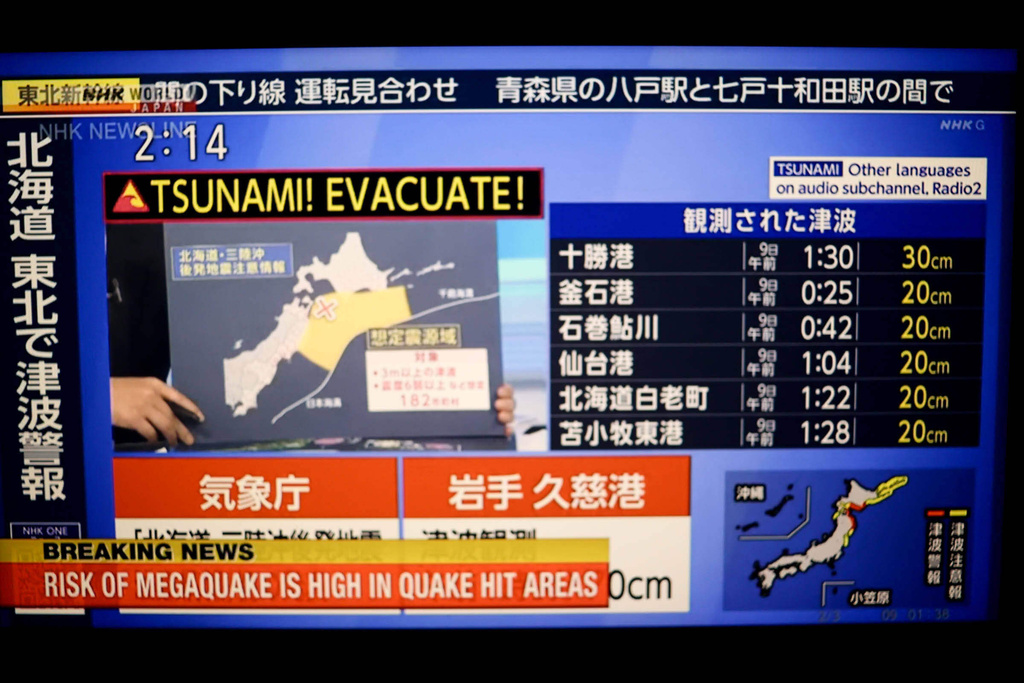
Powerful Earthquake Strikes Northern Japan,Triggering Tsunami Warnings and Aftershock Concerns
Tokyo,Japan – A significant 7.5 magnitude earthquake struck off the coast of northern Japan late Monday, prompting tsunami advisories, injuring over two dozen people, and raising concerns about potential aftershocks and even a larger, more devastating event. the quake, centered approximately 80 kilometers (50 miles) off the coast of Aomori prefecture, serves as a stark reminder of Japan’s vulnerability too seismic activity and the importance of ongoing disaster preparedness.
Immediate Impacts and Response
The earthquake, which occurred at 11:15 p.m. local time (1415 GMT), rattled communities across the region. Initial reports indicate a tsunami of up to 70 centimeters (28 inches) impacted coastal areas, especially Kuji port in Iwate prefecture, with waves reaching 50 centimeters in other locations. While the tsunami advisory has since been downgraded, authorities continue to urge vigilance.
As of Tuesday morning, the Fire and Disaster Management Agency reports 23 injuries, including one serious case. Injuries were largely attributed to falling debris, with incidents reported in hotels in Hachinohe and a vehicle falling into a sinkhole in the Tohoku region. Approximately 800 homes experienced power outages, and transportation networks were disrupted, leading to the suspension of Shinkansen bullet trains and local rail lines in affected areas. Around 200 passengers were stranded overnight at New Chitose Airport in Hokkaido.
The Japanese government has mobilized a thorough response.Chief Cabinet Secretary Minoru Kihara has urged residents in coastal areas to seek higher ground and heed official advisories. An emergency task force,led by Prime Minister Sanae Takaichi,has been established to assess the full extent of the damage and coordinate relief efforts. “We are putting people’s lives first and doing everything we can,” Prime Minister Takaichi stated. Defense Minister Shinjiro Koizumi has deployed 18 helicopters for damage assessment, and approximately 480 residents are currently sheltered at Hachinohe air Base.
Nuclear Safety and Ongoing Monitoring
A critical aspect of Japan’s disaster response is the monitoring of its nuclear facilities. Following the earthquake, all nuclear power plants in the region initiated safety checks. While a minor water spill – approximately 450 liters (118 gallons) – occurred at the rokkasho fuel reprocessing plant in Aomori from a spent fuel cooling area, authorities confirmed the water level remained within safe operating parameters and posed no immediate threat. This incident underscores the rigorous safety protocols in place, born from the lessons learned from the 2011 Fukushima disaster.
Elevated Risk of Aftershocks and a Potential Megaquake
The Japan Meteorological Agency (JMA) is not only focused on immediate damage assessment but also on the potential for future seismic activity. The agency initially estimated the quake’s magnitude at 7.6, later revising it to 7.5. More concerningly, the JMA has warned of a heightened risk of aftershocks in the coming days, including the possibility of a magnitude 8-level earthquake and associated tsunami.
Satoshi Harada,an official with the JMA’s earthquake and volcano division,emphasized the need for continued preparedness. “You need to prepare, assuming that a disaster like that could happen again,” he cautioned, referencing the devastating 2011 earthquake and tsunami that claimed nearly 20,000 lives and triggered the Fukushima Daiichi nuclear disaster. the JMA has issued a caution to 182 municipalities along Japan’s northeastern coast, from Chiba to Hokkaido, urging residents to review and reinforce their emergency preparedness plans.
A Region Prepared, Yet Vigilant
Japan is one of the most earthquake-prone countries in the world, and its infrastructure and emergency response systems are designed to mitigate the impact of these events. However, the recent earthquake serves as a powerful reminder of the unpredictable nature of seismic activity and the importance of ongoing vigilance.
Nobuo Yamada, a convenience store owner in Hachinohe, described the quake as “the biggest shaking” he had ever experienced, but noted with relief that power lines in his area remained operational. This sentiment – a blend of fear and resilience – encapsulates the spirit of communities across northern Japan as they navigate the aftermath of this latest earthquake and prepare for the possibility of further tremors.
Staying Informed
Residents in the affected areas are urged to stay informed through official channels, including the Japan Meteorological Agency ([https://wwwjma[https://wwwjma[https://wwwjma[https://wwwjma
Worth a look