Japan’s New HTV-X Cargo Ship Successfully Reaches the International Space Station
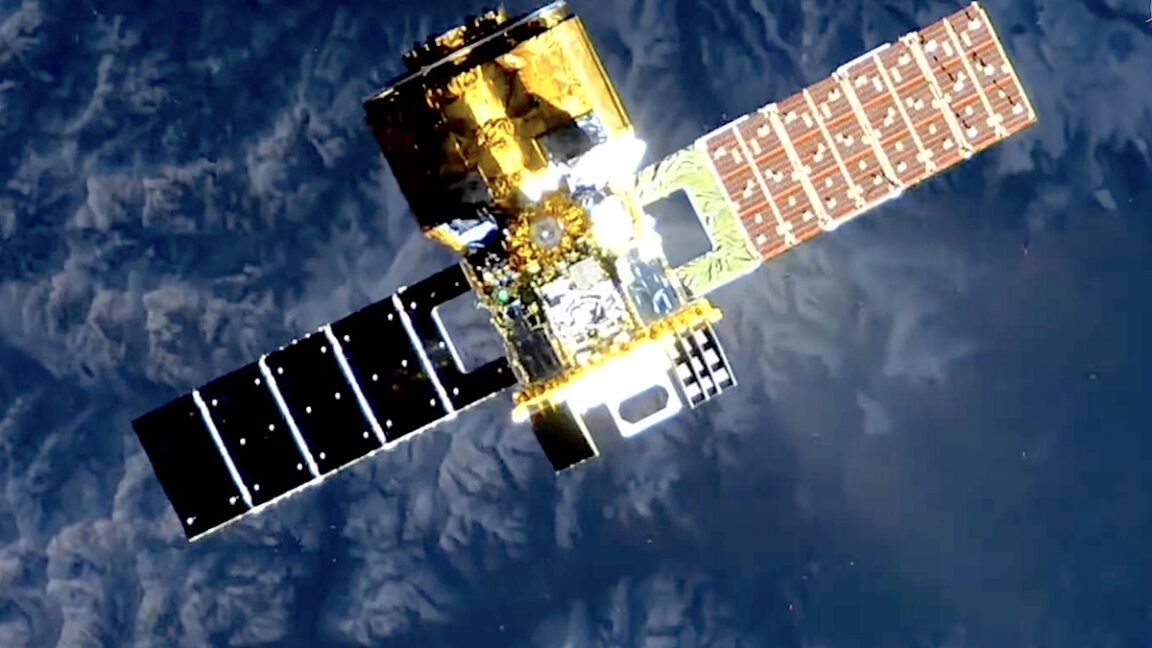
Japan has bolstered its commitment to the International Space Station (ISS) with the successful arrival of its new HTV-X cargo spacecraft. The uncrewed vehicle docked with the ISS at 11:58 am EDT (15:58 UTC) on Wednesday, marking a significant upgrade to Japan’s resupply capabilities. This achievement follows a precise three-adn-a-half-day journey from its launch pad on Tanegashima Island in southern Japan.
A New Era of Resupply
The HTV-X launched aboard Japan’s H3 rocket, representing a crucial shift from the previously utilized H-II launcher family. Both the H3 rocket and the HTV-X spacecraft are products of Mitsubishi Heavy Industries, showcasing Japanese engineering prowess. This mission signifies more than just a delivery; its a demonstration of advanced technology and a reliable partnership in space exploration.
The spacecraft efficiently deployed its power-generating solar panels once in orbit. This design is a key improvement over its predecessor, the HTV, which had solar panels directly mounted on the spacecraft’s body. Furthermore, the HTV-X’s updated computers, navigation systems, and propulsion all performed flawlessly, ensuring an on-schedule arrival at the ISS.
NASA officials lauded the mission’s execution. A NASA spokesperson described the HTV-X’s first flight as “flawless,” highlighting the precision and reliability of the new system.
Enhanced Capabilities for Increased Support
The HTV-X, measuring 26 feet (8 meters) in length, is slightly more compact than the HTV. However, don’t let the size fool you. It boasts a significantly increased cargo capacity.
Here’s a breakdown of the HTV-X’s enhanced capabilities:
* Pressurized Cargo: Can carry over 9,000 pounds (4.1 metric tons) – a 25% increase over the HTV.
* External Cargo: Offers a similar boost in capacity for transporting spares and scientific instruments for mounting on the ISS exterior.
These improvements allow for more efficient delivery of essential supplies, research equipment, and vital components to the orbiting laboratory. You can expect more impactful scientific endeavors and smoother station operations as a result.
Beyond the ISS: Looking Towards the Lunar Gateway
Japan’s contributions to the ISS extend beyond simply providing supplies. These resupply missions help offset NASA’s operating costs for the research lab. Looking ahead,Japanese officials envision the HTV-X playing a vital role in future space endeavors.
Specifically, the HTV-X is being considered for logistical support to the Lunar Gateway, a planned mini-space station orbiting the Moon. This demonstrates Japan’s long-term commitment to space exploration and its willingness to contribute to enterprising international projects.
Future Missions and Automated Docking
Currently, at least three more HTV-X missions are planned to support the ISS and fulfill Japan’s financial obligations. Tentative plans exist for a fourth and fifth launch before 2030, further solidifying Japan’s role in maintaining the station.
the second HTV-X mission will be notably noteworthy. It will attempt Japan’s first automated docking with the ISS. Successfully achieving this milestone is crucial, as it’s a prerequisite for any future HTV-X missions supporting the Lunar Gateway. This advancement will pave the way for more complex and autonomous resupply operations in deep space.
Ultimately,the successful deployment of the HTV-X represents a significant step forward for Japan’s space program and a valuable contribution to international space exploration.
Related reading