
Argentine President Javier Milei asserted that recent economic data has exposed the “lies” of previous administrations, claiming that his government’s fiscal policies are beginning to stabilize the nation’s economy. While Milei focused on the potential for a recovery in domestic consumption, official data from the National Institute of Statistics and Census (INDEC) recorded a 5.1% contraction in Argentina’s gross domestic product (GDP) for the first quarter of 2024 compared to the same period in 2023.
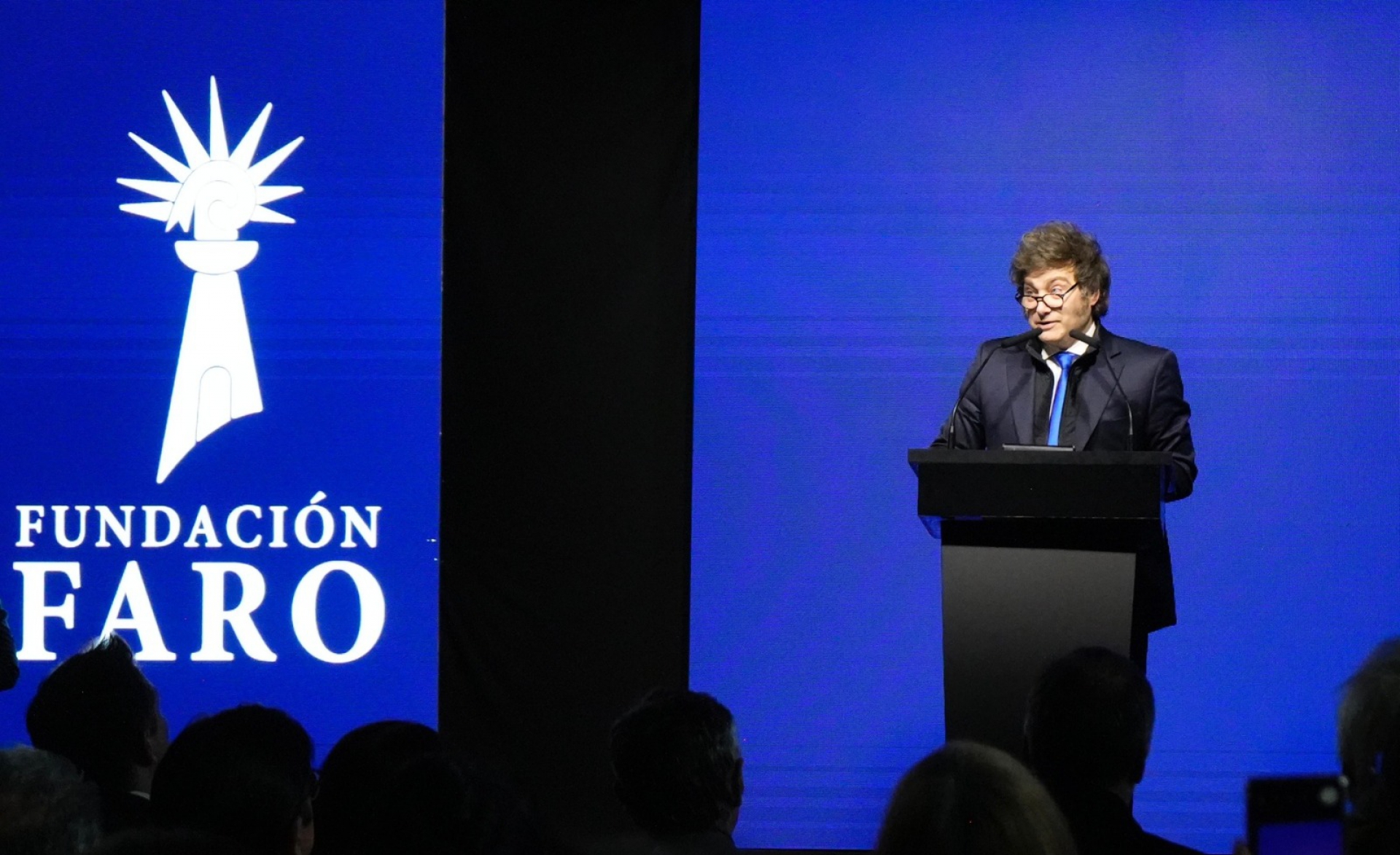
Speaking at an event hosted by the Fundación Faro, Milei used the economic indicators to challenge the narratives of political opponents and the press. He argued that the current period of economic adjustment is a necessary precursor to a “take-off” in consumer activity, a transition he believes is now imminent as the government maintains a strict fiscal surplus.
The President’s remarks come at a critical juncture for the administration, which has implemented a “shock therapy” approach to combat hyperinflation and chronic deficit spending. This strategy has resulted in significant short-term economic contraction but has also led to the first consecutive months of fiscal surplus seen in years, according to reports from the Argentine Ministry of Economy.
Argentine Economic Indicators: Contraction vs. Recovery Projections
The discrepancy between the President’s optimistic rhetoric and the official statistical reality highlights the complex state of the Argentine economy. According to the latest reports from INDEC, the 5.1% decline in GDP during the first quarter of 2024 reflects a deep recession driven by reduced public spending and a sharp drop in domestic consumption. This contraction follows a period of intense volatility and high inflation that characterized the transition of power in December 2023.
Despite the quarterly contraction, Milei has pointed to specific monthly trends to support his claim that the “lies” of the past have been debunked. The President’s narrative focuses on the stabilization of macroeconomic variables, such as the slowing rate of monthly inflation and the government’s ability to maintain a zero-deficit budget. He suggested that the current economic pain is a temporary phase required to rebuild the country’s foundations.
Economic analysts have noted that while the quarterly figures are negative, the administration is banking on a “V-shaped” recovery. This theory posits that once inflation is brought under control and the exchange rate stabilizes, the suppressed demand of the Argentine population will drive a rapid increase in economic activity. However, the timing of this “take-off” remains a subject of intense debate among economists in Buenos Aires.
Political Friction: Milei’s Confrontation with Congress and Media
During his address, Milei directed sharp criticism toward the Argentine Congress and the mainstream media, accusing them of attempting to sabotage his economic program. He characterized the actions of the political opposition as an effort to “destroy” the country’s potential for growth. In one instance, he described the political maneuvering of the past as a “true orgy” aimed at undermining Argentine stability.

The President also targeted the press, specifically journalists who have questioned the social costs of his austerity measures. Milei argued that much of the media coverage is ideologically driven by the left and seeks to obscure the progress being made in fiscal discipline. This rhetorical style has increased tensions between the Casa Rosada and various media outlets, which have reported extensively on the rising poverty levels resulting from the “ajuste” (adjustment).
The administration has bolstered its communication strategy by utilizing the Presidential Spokesperson, Manuel Adorni, to counter opposition narratives. This move is part of a broader effort to centralize the government’s message and frame the economic struggle as a moral battle between “liberty” and “collectivism.”
The “Shock” Strategy: Analyzing the Impact on Domestic Consumption
The central pillar of Milei’s economic plan is the reduction of the fiscal deficit through massive cuts in public spending, often referred to as “the adjustment.” This policy has had a direct and immediate impact on domestic consumption, as both the public sector and private households have tightened their spending due to reduced government transfers and high interest rates.
Milei has stated that “consumption is going to take off,” expressing confidence that the current reduction in state intervention will eventually empower the private sector to drive growth. The administration’s logic is that by eliminating the need to print money to cover deficits, inflation will fall, thereby increasing the real purchasing power of citizens in the long term.
To understand the current economic landscape, the following table compares the official contractionary data with the administration’s projected recovery path:
| Economic Metric | Official Q1 2024 Status (INDEC) | Administration’s Projected Outlook |
|---|---|---|
| GDP Growth | 5.1% Contraction | Eventual V-shaped recovery |
| Fiscal Balance | Targeting consistent surplus | Foundation for long-term stability |
| Inflation | High (though decelerating) | Rapid decline to single digits |
| Consumption | Significant decline | Projected “take-off” phase |
The Role of “Moral” in Milei’s Economic Framework
A unique aspect of Milei’s recent speeches, including his appearance at the Fundación Faro, is the integration of “morality” into economic policy. He has frequently argued that the state’s previous expansionist policies were not just economically unsound but morally corrupt. By framing the fiscal surplus as a “moral necessity,” Milei seeks to align his economic reforms with the values of his core supporters.
This “politics of morality” serves to justify the social hardships associated with the current recession. For the administration, the struggle is not merely about numbers and percentages but about restoring the integrity of the Argentine state. This ideological approach has helped Milei maintain a high level of support among certain demographics, even as the immediate economic indicators remain challenging.
The administration’s focus on “moral” policy also extends to its stance on the role of the state in the economy. Milei continues to advocate for a minimal state, arguing that any government intervention beyond the protection of property rights and the rule of law is an infringement on individual liberty.
Key Takeaways: The Current State of the Argentine Economy
- Official GDP Data: INDEC reports a 5.1% contraction for Q1 2024, marking a significant recessionary period.
- Presidential Stance: Javier Milei claims the economic downturn is a necessary phase to end previous “lies” and fiscal mismanagement.
- Fiscal Strategy: The government is prioritizing a zero-deficit budget to curb inflation and stabilize the currency.
- Consumption Outlook: The administration anticipates a rebound in domestic spending once inflation is effectively neutralized.
- Political Climate: High tension persists between the executive branch, the legislature, and the national media.
The next significant checkpoint for the Milei administration will be the release of the upcoming monthly inflation and industrial activity reports from INDEC, which will provide further clarity on whether the economy has indeed reached its floor. Observers will also be watching the upcoming sessions in the Argentine Congress regarding new fiscal and labor reforms.
What are your thoughts on Argentina’s economic trajectory? Do you believe the current austerity measures will lead to the promised recovery? Let us know in the comments below and share this article with your network.
Related reading
- Why You Should Not Capture Wild Animals After Gironde Fires
- Porsche Brings Manual Transmission Back for 2027 911 Carrera S
- Galway Gaffe: Irish Rail Embarrassed Over Gaelic Signage Mistake at Galway Station – Explained” Key phrases: – Irish Rail mistakes – Gaelic signage error – Galway station controversy – Irish Rail gaffe (archyworldys.com)