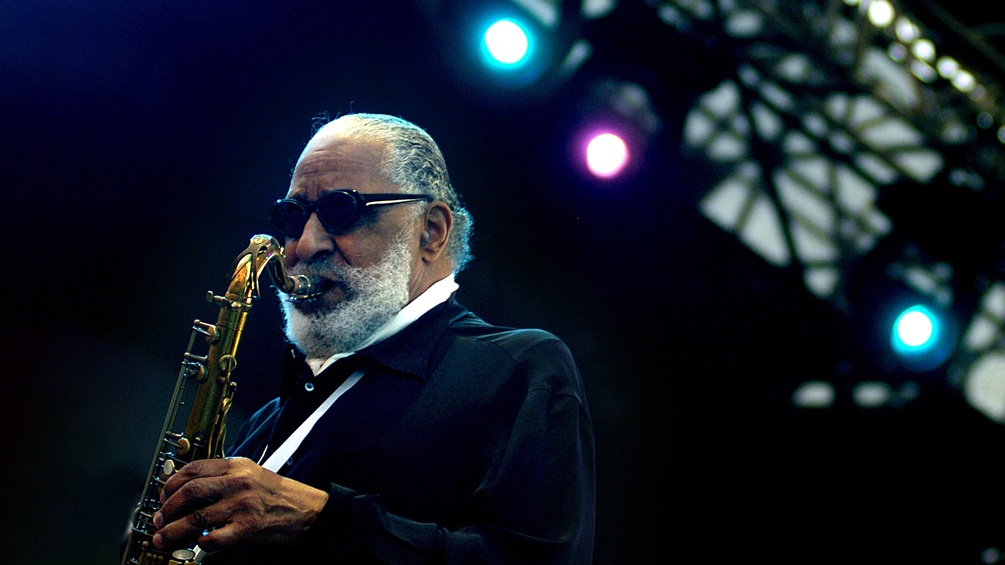
The jazz world is in mourning today following the passing of one of its most towering figures. Theodore Walter “Sonny” Rollins, the legendary tenor saxophonist whose improvisational genius helped define the evolution of modern jazz, has died at the age of 95. His passing marks the end of an era for a genre he helped shape across more than seven decades of performance, recording, and innovation.
Known affectionately as the “Saxophone Colossus”—a title cemented by his seminal 1956 album of the same name—Rollins was celebrated for his immense, robust tone and his relentless pursuit of melodic invention. From his early days in the bebop movement alongside giants like Charlie Parker and Dizzy Gillespie to his later years as a revered elder statesman of music, Rollins remained a restless creative force, constantly pushing the boundaries of what a tenor saxophone could express.
According to official records maintained by the Library of Congress, which houses the Sonny Rollins Collection, the artist was born in New York City on September 7, 1930. His career was characterized by a profound dedication to the craft of improvisation, often marked by his famous practice of taking long sabbaticals—most notably in the late 1950s and early 1970s—to refine his sound and deepen his musical philosophy.
A Legacy of Improvisational Mastery
Rollins’ influence on jazz is difficult to overstate. His ability to construct complex, thematic improvisations—taking a simple melody and dismantling it, reconstructing it, and exploring its every possibility—set a standard for generations of musicians. As noted in his profile by the National Endowment for the Humanities, Rollins received the National Medal of Arts in 2010, the highest award given to artists by the United States government.

Throughout his prolific career, Rollins recorded dozens of albums that remain essential listening for any student of jazz. His 1956 release, Saxophone Colossus, is widely regarded as a masterpiece of the hard-bop era. His work was not merely about technical proficiency; it was deeply rooted in the blues, calypso, and the social realities of his time. His 1958 album Freedom Suite, for instance, was one of the first jazz recordings to explicitly address the struggle for civil rights in America, a testament to his belief that music could serve as a powerful vehicle for social discourse.
The “Saxophone Colossus” and the Evolution of Jazz
For those of us who have spent years covering the arts, Rollins stood out not just for his technical prowess, but for his intellectual approach to performance. He treated the saxophone not just as an instrument, but as a voice. In various archival interviews, he often spoke of the “freedom” inherent in jazz, though he famously cautioned that freedom in music required a foundation of rigorous discipline and historical understanding.
His connection to the history of the instrument was absolute. Having played with the likes of Thelonious Monk, Miles Davis, and John Coltrane, Rollins was one of the final living links to the golden age of jazz. His ability to bridge the gap between the chaotic energy of bebop and the structured lyricism of later styles ensured his music remained relevant to listeners across different generations.
The John F. Kennedy Center for the Performing Arts, which honored Rollins with a Kennedy Center Honor in 2011, noted that his improvisational style transformed the tenor saxophone into a vessel for profound emotional storytelling. His influence extends far beyond the jazz community, impacting popular music, hip-hop sampling, and modern classical composition alike.
What Happens Next: Honoring a Titan
As the music community processes this loss, tributes have begun to pour in from artists, scholars, and fans worldwide. While official funeral arrangements have not been publicly announced by his representatives, it is expected that the jazz community will organize a series of memorial concerts and retrospectives in the coming months to celebrate his monumental contributions to culture.

For those interested in exploring his extensive body of work, the official Sonny Rollins website continues to serve as an authoritative resource for his discography, archival photographs, and historical timelines. The preservation of his legacy is also supported by organizations like the Jazz Foundation of America, which works to support veteran jazz musicians in need.
The passing of Sonny Rollins is a reminder of the fragility and the enduring power of artistic genius. He leaves behind a catalog that serves as a permanent record of a life dedicated to the pursuit of beauty and truth through sound. We invite our readers to share their favorite Sonny Rollins tracks or memories in the comments section below as we celebrate the life of a true giant of music.
Keep reading