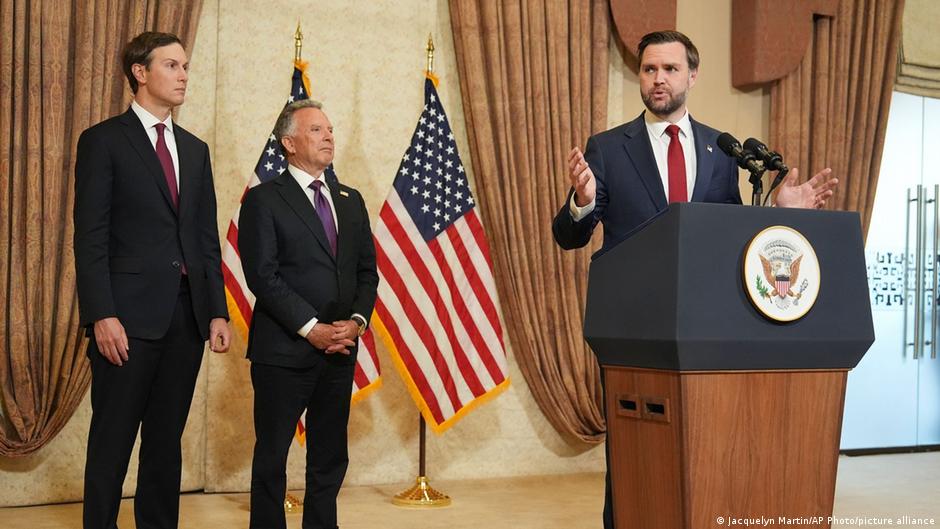
U.S. Vice President JD Vance announced on Sunday, April 12, 2026, that the United States has left peace talks in Pakistan without reaching an agreement with Iran to end the ongoing war. The collapse of the negotiations follows a marathon session in Islamabad, where U.S. And Iranian officials met for 21 hours in an attempt to broker a ceasefire and a lasting peace deal.
The failure to secure a deal centers on a critical security demand from the Trump administration. According to Vice President Vance, the Iranian delegation refused to agree to American demands that Iran must not develop a nuclear weapon. Vance characterized this requirement as the “core goal” that President Donald Trump sought to achieve through the diplomatic process.
The talks, which were facilitated by the Pakistani government, were seen as a high-stakes effort to stabilize the Middle East. However, the lack of a breakthrough leaves the region in a precarious state, with a two-week ceasefire already under significant strain as Iran continues to block most shipping traffic through the Strait of Hormuz, the world’s most critical oil choke point according to CNBC.
Nuclear Ambitions and the Breakdown in Islamabad
During a press conference following the negotiations, Vice President Vance detailed the primary sticking point that prevented a resolution. He stated that the U.S. Required an “affirmative commitment” from Tehran that it would not seek a nuclear weapon, nor would it seek the tools that would enable the quick achievement of such a weapon.
“We have been at it now for 21 hours, and we’ve had a number of substantive discussions with the Iranians. That’s the good news,” Vance told reporters. “The bad news is that we have not reached an agreement.” He noted that the Iranian delegation ultimately chose not to accept the terms presented by the U.S. Side via CNBC.
The diplomatic effort in Islamabad was the result of weeks of maneuvering. Pakistan’s Prime Minister Shehbaz Sharif had expressed readiness to facilitate “meaningful and conclusive talks” to end the conflict. This effort included high-level coordination, including a call between Pakistan’s army chief, Asim Munir, and Donald Trump, as well as discussions between Prime Minister Sharif and Iranian President Masoud Pezeshkian, who had previously agreed on the urgent need for de-escalation and diplomacy as reported by The Guardian.
Escalation in the Strait of Hormuz
As diplomatic efforts stalled, military tensions intensified in the Persian Gulf. Two U.S. Warships transited through the Strait of Hormuz for the first time since the start of the conflict, signaling a shift back toward a more aggressive military posture following the failed talks via CNBC.
The maritime situation remains volatile. While a two-week ceasefire was nominally in place, it has been undermined by Iran’s continued blockade of shipping traffic. This disruption in the Strait of Hormuz threatens global oil supplies and increases the risk of direct naval confrontations between U.S. And Iranian forces.
On the Iranian side, reports indicated that Tehran had presented Pakistani mediators with four “non-negotiable conditions” before the meetings began. While the specific details of all four conditions were not fully disclosed in the public summaries, the refusal to abandon nuclear aspirations proved to be the insurmountable barrier for the U.S. Delegation.
The Role of Pakistani Mediation
Pakistan’s military and political leadership attempted to position Islamabad as a neutral ground for the warring parties. The involvement of Field Marshall Asim Munir, Pakistan’s Chief of Army Staff, was central to the arrangement. Vance was seen arriving in Islamabad on April 11, 2026, accompanied by Munir and Pakistani Deputy Prime Minister and Foreign Minister Mohammad Ishaq Dar via CNBC.
The selection of JD Vance as the chief negotiator was a strategic move by the U.S. Administration. Iranian sources had previously indicated they would refuse to negotiate with other Trump administration figures, specifically Middle East envoy Steve Witkoff or Jared Kushner, who had led nuclear negotiations prior to the outbreak of the war as reported by The Guardian.
Key Takeaways from the Islamabad Talks
- Duration: U.S. And Iranian officials engaged in 21 hours of substantive discussions.
- Primary Conflict: The U.S. Demanded a commitment from Iran to cease all pursuit of nuclear weapons and the tools to create them.
- Outcome: No agreement was reached; the U.S. Delegation departed Pakistan on Sunday, April 12.
- Military Context: Two U.S. Warships have returned to the Strait of Hormuz as the ceasefire remains under strain due to Iranian shipping blockades.
- Mediators: The talks were brokered by the Pakistani government and military leadership.
With the departure of the U.S. Delegation and the failure to secure a nuclear non-proliferation agreement, the path toward a peaceful resolution of the war remains unclear. The international community now awaits further signals from Washington and Tehran regarding whether other diplomatic channels remain open or if the conflict will enter a modern phase of military escalation.
For the latest official updates on Middle East diplomacy and U.S. Foreign policy, readers are encouraged to monitor official White House briefings and Department of State advisories.
Do you believe diplomatic solutions are still possible in this conflict? Share your thoughts in the comments below and share this report with your network.
Related reading