
Donald Trump and Jimmy Kimmel’s Feud: A Decade of Clashes, Jokes, and Political Fireworks
For more than a decade, the relationship between former U.S. President Donald Trump and late-night television host Jimmy Kimmel has been a volatile mix of sharp humor, public insults, and political tension. What began as playful jabs on social media and television has evolved into a full-blown feud, marked by accusations of incitement, calls for censorship, and a rare public statement from First Lady Melania Trump. The latest escalation—sparked by a joke Kimmel made about Melania during a mock White House Correspondents’ Dinner skit—has reignited debates about comedy, free speech, and the boundaries of political satire in America.
Trump, never one to shy away from a fight, took to his social media platform, Truth Social, on April 28, 2026, to demand that Kimmel be “immediately fired” by Disney and ABC. The former president called Kimmel’s joke a “despicable call to violence,” a claim the comedian vehemently denied. Melania Trump, in a rare public statement, accused Kimmel of spreading “hateful and violent rhetoric,” adding that his words “deepen the political sickness within America.” The clash comes at a time when political polarization in the U.S. Is at an all-time high, and late-night comedy has increasingly turn into a battleground for cultural and ideological wars.
But how did this feud reach such a boiling point? To understand the latest chapter, it’s essential to look back at the history of their clashes—from early social media spats to high-profile television moments that have defined their contentious relationship.
The Early Days: Social Media Jabs and Public Spats
The first signs of tension between Trump and Kimmel emerged in the early 2010s, when Trump was still a reality TV star and real estate mogul, and Kimmel was solidifying his reputation as one of late-night television’s sharpest voices. Their exchanges were largely confined to Twitter (now X), where Trump, known for his combative style, frequently targeted celebrities, politicians, and media figures who criticized him.
One of the earliest recorded clashes occurred in 2013, when Kimmel aired a segment mocking Trump’s birther conspiracy theories—the false claims that then-President Barack Obama was not born in the United States. Trump, who had been a prominent promoter of the birther movement, responded on Twitter, calling Kimmel “a total lightweight” and accusing him of being “jealous” of his success. Kimmel, in turn, doubled down on his criticism, framing Trump’s birther claims as a distraction from more pressing issues.
By 2015, as Trump launched his presidential campaign, Kimmel’s jokes about him became more frequent—and more pointed. In one memorable segment, Kimmel played a clip of Trump bragging about his wealth, then cut to a fake infomercial selling “Trump Steaks,” a real (and short-lived) business venture by the former president. The bit went viral, and Trump responded by calling Kimmel “a third-rate talent” on Twitter. The exchange set the tone for what would become a recurring pattern: Kimmel’s jokes provoking Trump’s ire, followed by the former president’s attempts to discredit the comedian’s credibility.
The 2016 Election and Beyond: Comedy as Political Weaponry
As Trump’s presidential campaign gained momentum in 2016, Kimmel’s reveal became a frequent target of Trump’s supporters, who accused the host of being part of a “liberal media” bias against the candidate. Kimmel, however, insisted that his comedy was not partisan but rather a response to Trump’s own rhetoric. “I don’t have a political agenda,” Kimmel said in a 2016 interview with The Hollywood Reporter. “I just think it’s funny when someone says something ridiculous, and I point it out.”
One of the most contentious moments came in October 2016, when Kimmel aired a segment titled “The Donald Trump Presidential Debate Drinking Game.” The bit encouraged viewers to accept a sip of alcohol every time Trump interrupted his opponent, Hillary Clinton, during their debates. Trump supporters accused Kimmel of promoting irresponsible behavior, whereas critics of the then-candidate praised the segment for highlighting Trump’s debate tactics. Trump himself did not directly respond to the segment, but his campaign manager at the time, Kellyanne Conway, called it “desperate and sad.”
After Trump’s election victory, Kimmel’s jokes about the new administration became more frequent—and more biting. In 2017, he aired a segment mocking Trump’s proposed border wall with Mexico, featuring a fake ad for “Trump’s Great Wall of America,” complete with exaggerated claims about its effectiveness. Trump responded on Twitter, calling Kimmel “a hack” and accusing him of being “obsessed” with him. The exchange underscored how deeply personal the feud had become, with both men using their platforms to trade insults rather than engage in substantive debate.
The 2020 Election and the “Fire Kimmel” Campaign
The feud reached new heights during the 2020 presidential election, as Kimmel’s show became a frequent target of Trump’s allies. In September 2020, Trump’s son, Donald Trump Jr., called for Kimmel to be fired after the host aired a segment mocking the president’s handling of the COVID-19 pandemic. The segment, which featured a fake ad for “Trump’s COVID-19 Survival Kit,” included a joke about the president’s suggestion that injecting bleach could cure the virus. Trump Jr. Accused Kimmel of spreading “dangerous misinformation,” while Kimmel defended the segment as satire.
The calls for Kimmel’s firing intensified in October 2020, when the host aired a segment titled “The Trump Family’s Guide to Grifting.” The bit mocked the Trump family’s business dealings, including the president’s controversial Trump University and his children’s involvement in various ventures. Trump’s allies, including then-White House press secretary Kayleigh McEnany, accused Kimmel of “crossing a line” and called for ABC to take action. The network, however, stood by Kimmel, issuing a statement that read, “Jimmy Kimmel is a valued member of the ABC family, and we support his right to express his views through comedy.”
The 2024 White House Correspondents’ Dinner and the Latest Escalation
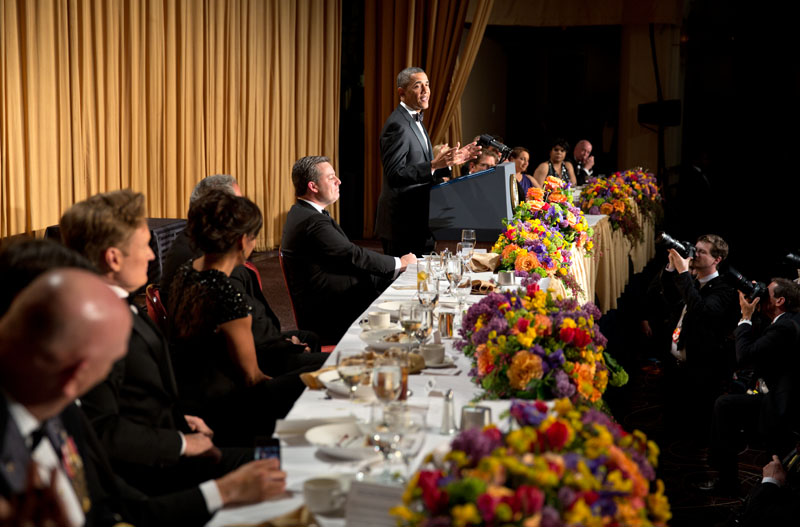
The most recent—and perhaps most serious—escalation in the Trump-Kimmel feud occurred in April 2026, following a skit Kimmel aired on his show, Jimmy Kimmel Live!. The segment, which parodied the White House Correspondents’ Dinner, featured Kimmel pretending to be the event’s master of ceremonies. During the bit, he made a joke about Melania Trump, saying, “Our First Lady Melania is here. So beautiful, Mrs. Trump, you have a glow like an expectant widow.”
The joke, which aired days before the actual White House Correspondents’ Dinner, quickly drew condemnation from Trump and his allies. On April 28, 2026, Trump took to Truth Social to demand Kimmel’s firing, calling the joke a “despicable call to violence.” He wrote, “Normally [I] would not be responsive to anything that he [Kimmel] said, but this is something beyond the pale. Jimmy Kimmel should be immediately fired by Disney and ABC.”
Melania Trump too weighed in, issuing a rare public statement in which she accused Kimmel of spreading “hateful and violent rhetoric.” She wrote, “His monologue about my family isn’t comedy—his words are corrosive and deepen the political sickness within America. People like Kimmel shouldn’t have the opportunity to enter our homes each evening to spread hate.” The first lady’s statement marked a significant escalation, as she had previously avoided engaging in public disputes with Trump’s critics.
Kimmel, however, was unapologetic. During his show on April 28, 2026, he defended the joke, calling it “a very light roast joke about the fact that [Trump] is almost 80 and she’s [Melania] younger than I am.” He added, “It was not by any stretch of the definition a call to assassination, and they know that. I’ve been very vocal for many years speaking out against gun violence, in particular. I agree that hateful and violent rhetoric is something we should reject. I think a great place to start to dial that back would be to have a conversation with your husband about it.”
The timing of the controversy was particularly fraught, as the White House Correspondents’ Dinner—scheduled for April 26, 2026—was disrupted by a gunman who opened fire outside the event. While no one was injured, the incident added a layer of tension to the already heated exchange between Trump and Kimmel. The suspected gunman, Cole Allen, was later charged in federal court with three counts, including attempting to assassinate the president. Trump and Melania were present at the dinner when the gunshots rang out, and they were evacuated from the ballroom.
The Broader Context: Comedy, Free Speech, and Political Polarization
The Trump-Kimmel feud is more than just a personal spat between a politician and a comedian. It reflects broader debates about the role of comedy in politics, the limits of free speech, and the increasing polarization of American society. Late-night television has long been a platform for political satire, but in recent years, it has become a flashpoint for cultural and ideological battles. Shows like The Daily Show, Last Week Tonight with John Oliver, and Jimmy Kimmel Live! have faced criticism from both sides of the political spectrum, with conservatives accusing them of liberal bias and liberals arguing that they don’t go far enough in holding power to account.
For Trump, the feud with Kimmel is part of a larger pattern of attacking media figures who criticize him. Throughout his presidency and beyond, Trump has frequently targeted journalists, comedians, and late-night hosts, accusing them of spreading “fake news” and being part of a “deep state” conspiracy against him. His allies have often echoed these sentiments, calling for boycotts of networks and shows that they perceive as hostile to the former president.
Kimmel, for his part, has framed his comedy as a necessary check on power. In a 2021 interview with The New York Times, he said, “If you’re in a position of power and you’re not being made fun of, then you’re not doing your job right. Comedy is supposed to punch up, not punch down.” This philosophy has guided his approach to Trump, whom he has frequently portrayed as a figure of ridicule rather than reverence.
What’s Next for the Trump-Kimmel Feud?
As of April 2026, it remains unclear whether the latest escalation will mark the end of the Trump-Kimmel feud or merely another chapter in their long-running battle. ABC has not indicated any plans to discipline Kimmel, and the comedian has shown no signs of backing down. Trump, meanwhile, has a history of holding grudges and is unlikely to let the matter drop without further comment.
For now, the feud serves as a reminder of the increasingly blurred lines between comedy and politics in the United States. As late-night hosts continue to push the boundaries of satire, and as politicians become more sensitive to criticism, clashes like this one are likely to become more frequent—and more contentious.
The next major development in the story may come on May 5, 2026, when Kimmel is scheduled to return to the air after a brief hiatus. Whether he will address the feud again—or whether Trump will respond—remains to be seen. One thing, however, is certain: the Trump-Kimmel feud is far from over.
What do you think? Should late-night comedy be held to a different standard when it comes to political figures? Share your thoughts in the comments below, and don’t forget to follow World Today Journal for the latest updates on this story and more.