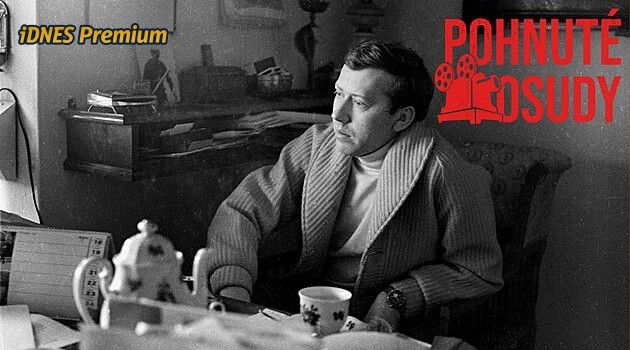
The landscape of 20th-century Czechoslovak culture remains deeply marked by the wit and enduring legacy of Jiří Grossmann. A multifaceted artist, Grossmann was a renowned actor, writer, musician, and comedian whose partnership with Miloslav Šimek became a cornerstone of Czech satirical theatre. His ability to find humor in the mundane and his sharp, observational style of comedy resonated with audiences during a period of significant social and political transition. Yet, behind the public persona of the charming joker, Grossmann navigated a private life shaped by profound challenges, including a long-term struggle with Hodgkin’s disease, a diagnosis that eventually claimed his life at the age of 30.
Grossmann’s contributions extended well beyond the stage. As a central figure in the Semafor theatre ensemble, he helped redefine the boundaries of Czech humor, blending music with prose to create a unique theatrical experience. His work, characterized by a mix of melancholy and irony, captured the spirit of his generation. Despite his declining health, he maintained a rigorous creative output, continuing to perform and write until his physical condition necessitated his withdrawal from the public eye. His passing on December 5, 1971, in Prague, left a void in the cultural scene, yet his recorded works and scripts continue to be studied and celebrated as essential components of Czech artistic heritage.
The Artistic Legacy of a Cultural Icon
Born in Prague in 1941, Jiří Grossmann’s early career was defined by his instrumental role in the development of the “Besídka” (parlor) style of performance. Working alongside Miloslav Šimek, he developed a repertoire that relied heavily on dialogue, wordplay, and the subversion of everyday social norms. According to historical records archived by the National Theatre of Prague, these performances were not merely entertainment; they served as a subtle form of cultural expression that allowed artists to communicate with a public eager for authentic, human-centric storytelling. His influence is often compared to other great satirists of the era, though he possessed a distinct, self-deprecating charm that distinguished him from his contemporaries.

His transition into music was equally impactful. Grossmann was a gifted multi-instrumentalist, often incorporating his musical talents into his comedy sketches. This synthesis of arts allowed him to reach a broader audience, bridging the gap between high-brow theatre and popular cabaret. The recordings of his performances, many of which remain available through the National Museum of Czech Music, highlight his mastery of timing and his ability to shift seamlessly from comedic absurdity to poignant reflection. For many, Grossmann represents the quintessential “charming joker,” a figure who used laughter as both a shield and a weapon against the hardships of his reality.
Navigating Life with Hodgkin’s Disease
The narrative of Grossmann’s life is inextricably linked to his battle with illness. Diagnosed with Hodgkin’s disease—a type of lymphoma—at a relatively young age, he lived with the knowledge of his prognosis for several years. Medical literature from the World Health Organization notes that therapeutic options for lymphoma were significantly more limited in the late 1960s and early 1970s than they are today, making his dedication to his craft during this period particularly remarkable. He often spoke of his condition with the same irony he applied to his sketches, refusing to allow his illness to define his public image.
The intensity of his work schedule during his final years is frequently cited by colleagues as a testament to his commitment. He continued to participate in rehearsals and performances, even as his health deteriorated. It was this relentless drive that characterized his final months, leading to the well-documented conclusion of his career, when he was no longer physically able to sustain the demands of the stage. His death, which occurred in December 1971, was met with widespread mourning across the cultural landscape of what was then Czechoslovakia, marking the end of a pivotal chapter in the history of Czech satire.
A Lasting Impact on Czech Satire
The enduring appeal of Jiří Grossmann lies in the timeless nature of his humor. Unlike many political satires that lose their relevance once the specific context of their time has passed, Grossmann’s work focused on human nature, interpersonal relationships, and the absurdity of social conventions. These themes remain universal, ensuring that his influence persists among contemporary comedians and writers. His scripts and dialogues are still frequently restaged, and his legacy is preserved by a dedicated fanbase that continues to discover his work decades after his passing.
Beyond the scripts, Grossmann’s life serves as a poignant reminder of the fragility of the creative spirit. His ability to balance the demands of a high-pressure career with the realities of a chronic, life-threatening condition provides a unique perspective on the nature of artistic dedication. As we look back on his contributions, he was more than just a comedian; he was a chronicler of his era, a musician, and a writer whose work continues to offer value to those interested in the history of European performance arts.
Key Takeaways on Jiří Grossmann
- Professional Partnership: His collaboration with Miloslav Šimek remains one of the most significant comedic duos in Czech history, known for their innovative approach to satirical theatre.
- Artistic Versatility: Grossmann was not only a performer but also a writer and musician, integrating these elements to create a unique, multi-layered theatrical style.
- Enduring Legacy: Despite a career cut short by illness, his body of work is preserved in archives and continues to be influential in the study of 20th-century Czech culture.
- Personal Resilience: His approach to his health struggles, specifically his battle with Hodgkin’s disease, is often noted for his refusal to abandon his creative work, reflecting a profound commitment to his craft.
The next major retrospective of his work is currently being curated by the National Library of the Czech Republic, with plans to digitize his remaining personal correspondence and unpublished manuscripts by the end of 2027. We invite our readers to share their thoughts on Grossmann’s influence on modern comedy in the comments section below, or to join the conversation on our social media platforms. Your engagement helps ensure that the stories of such influential figures continue to reach new generations.