
Australian households are experiencing more consistent broadband speeds than at any time since the inception of the Australian Competition and Consumer Commission’s (ACCC) monitoring program. In its final Measuring Broadband Australia report, published in late 2024, the regulator confirmed that fixed-line and wireless broadband performance has reached a sustained level of stability, effectively marking the conclusion of its long-running oversight project.
The ACCC launched the Measuring Broadband Australia program in 2017 to provide independent verification of internet performance across the National Broadband Network (NBN) and other fixed-line infrastructure. Over the course of 31 quarterly reports, the commission tracked whether internet service providers (ISPs) were delivering the speeds advertised to consumers. By the final quarter of 2024, the data indicated that the vast majority of services were meeting or exceeding their marketed download and upload metrics, signaling a maturity in the domestic telecommunications market.
The Evolution of Broadband Performance Standards
When the monitoring program began, the primary concern for Australian consumers was the disparity between “up to” speeds advertised by retailers and the actual throughput delivered to modems. The ACCC utilized specialized hardware—whiteboxes—installed in thousands of volunteer households to gather objective performance data. This independent verification forced a shift in industry behavior, as ISPs were publicly ranked on their ability to deliver consistent speeds during peak evening hours, typically defined as 7:00 p.m. to 11:00 p.m.
According to the final report, the transition to high-speed fiber-to-the-premises (FTTP) connections and the optimization of NBN Co’s wholesale service tiers have been central to this improvement. Retail Service Providers (RSPs) moved away from aggressive, unachievable marketing toward plans that more accurately reflect the physical limitations of the legacy copper infrastructure still present in some areas. The ACCC noted that the “broadband gap”—the difference between promised and actual speeds—has narrowed significantly for the average user.
What Changed for Wireless and Fixed-Line Users
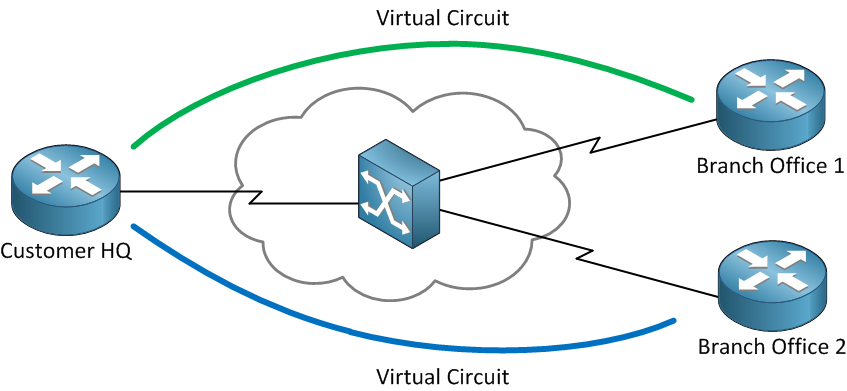
The final findings highlighted that both fixed-line and wireless broadband plans have benefited from increased network investment. For fixed-line services, the consistency of download speeds during peak times has improved to the point where most users experience minimal degradation. This consistency is a direct result of RSPs purchasing sufficient “Connectivity Virtual Circuit” (CVC) capacity from NBN Co to prevent network congestion during high-traffic periods.
Wireless broadband, including 4G and 5G home internet products, also showed marked improvement. While wireless performance is inherently more variable due to environmental factors and tower load, the ACCC’s testing revealed that providers are now managing contention ratios more effectively. The data suggests that for most urban and suburban users, fixed-wireless options are now a viable alternative to traditional wired connections, provided that signal strength remains within optimal parameters as defined in the official quarterly datasets.
Industry Accountability and the Future of Monitoring
The decision to conclude the Measuring Broadband Australia program was based on the premise that the market has reached a “steady state.” The ACCC stated that the consistent performance results observed over several consecutive quarters suggest that regulatory intervention is no longer required to ensure RSPs meet their obligations. This shift reflects a broader global trend where telecommunications regulators move from active performance auditing to a reliance on industry self-regulation and consumer-driven reporting.
However, the move has drawn scrutiny from consumer advocacy groups who argue that independent oversight remains necessary to prevent “speed drift” if market conditions change. The ACCC has clarified that while the quarterly reporting series has ended, the Telecommunications Consumer Protections (TCP) Code remains in effect. This code mandates that ISPs must provide accurate information about the speeds customers can expect to receive, and the commission retains the authority to investigate companies that engage in misleading or deceptive conduct regarding their internet service offerings.
Impact on the Australian Consumer
For the average Australian user, the primary takeaway is that the “buyer beware” era of broadband has largely passed. The industry-wide adoption of standardized speed terminology—such as “NBN 50” or “NBN 100″—has made it easier to compare products across different providers. Consumers are now better equipped to diagnose their own connection issues using tools provided by their RSPs, which are now required to provide a baseline level of transparency.

The ACCC recommends that any consumer who continues to experience speeds significantly below their plan’s advertised range should first contact their provider’s technical support team. If the provider fails to rectify the issue, the consumer can escalate the complaint to the Telecommunications Industry Ombudsman (TIO), which provides a free and independent dispute resolution service. The closure of the ACCC’s monitoring program does not remove the legal requirement for providers to deliver the services they sell.
The ACCC has indicated that it will continue to monitor the telecommunications sector through broader competition and consumer protection enforcement actions. No further quarterly broadband performance reports are scheduled for publication. Readers interested in the historical data or individual provider performance histories can still access the complete archive of reports via the ACCC’s public document register. We invite you to share your experiences with your current broadband provider in the comments section below.
Related reading