Russian universities have implemented preferential admission quotas for participants in the “special military operation” and their families, a policy that reduces the number of state-funded “budget” spots available to the general student population through traditional merit-based competition. These social priority tracks allow certain applicants to bypass standard high-stakes testing requirements or compete in separate enrollment categories, effectively shrinking the pool of free higher education places for civilian students relying solely on their Unified State Exam (EGE) scores.
The shift in admission dynamics comes as the Russian Ministry of Science and Higher Education expands social support measures for military personnel. While these policies provide essential benefits to combatants and their dependents, they have created a new layer of competition for the country’s most prestigious institutions. Students applying for state-funded positions have described the current landscape as increasingly unpredictable, where even high academic achievement may not guarantee a spot in a government-subsidized program.
How do Russian military education quotas work?
The Russian higher education system operates on a dual-track model: “budget” places, which are fully funded by the state, and “contract” places, which require students to pay tuition. Admission to budget places is typically determined by the Unified State Exam (EGE), a standardized national test. However, current federal regulations include “preferential rights,” known in Russia as l’goty, which grant specific groups priority access to these state-funded spots.
According to recent updates to Russian educational guidelines, these preferential rights have been expanded to include participants in the “special military operation” (SMO) and their children. These applicants often enter a separate competition track. Instead of competing against the entire national pool of students based on a single EGE score, they compete within a smaller, designated quota. While this ensures that military families receive support, it fundamentally alters the math for the remaining civilian applicants.
The Ministry of Science and Higher Education oversees the allocation of these spots. When a university receives its total number of state-funded seats, a specific percentage is often earmarked for social categories. As the number of people eligible for these social quotas grows, the number of seats remaining for the general pool of merit-based applicants decreases. This creates a mathematical squeeze on the “budget” spots available to the standard student body.
The role of the Unified State Exam (EGE)
For most Russian students, the EGE is the sole determining factor for university entry. The exam is designed to provide a standardized metric of academic ability across the country’s vast geography. However, the introduction of expanded quotas means that the EGE score is no longer the only lever for securing a free education. For many applicants, the ability to achieve a near-perfect score is no longer a guarantee of admission to top-tier institutions like Moscow State University (MSU) or the Higher School of Economics (HSE).
What is the impact on state-funded university spots?
The primary impact of these quotas is the reduction of the “meritocratic” pool. In the Russian education system, the competition for budget spots in high-demand fields—such as computer science, medicine, and international relations—is exceptionally intense. When a portion of those spots is diverted to social quotas, the “cutoff” scores for the general population often rise.
This phenomenon creates a high-pressure environment for civilian students. To secure a state-funded place, students must now achieve even higher scores than in previous years to compensate for the shrinking number of available seats. This has led to a situation where students with high academic standing find themselves relegated to “contract” (paid) education, increasing the financial burden on families who cannot afford tuition.
The tension is most visible in the nation’s largest cities, where the concentration of top universities is highest. In Moscow and Saint Petersburg, the density of applicants makes even a minor reduction in budget spots highly consequential. Reports from student forums and educational observers suggest that the competition has become less about academic excellence and more about navigating a complex system of social eligibility and luck.
Why are civilian students losing access to merit-based admissions?
The loss of access is not a result of a direct ban on civilian students, but rather a byproduct of how state resources are prioritized. The Russian government has signaled a significant shift in social policy, directing more state funds and institutional priority toward supporting the military and its stakeholders. This “militarization” of social benefits extends into the educational sector, where the state uses university spots as a form of social compensation.
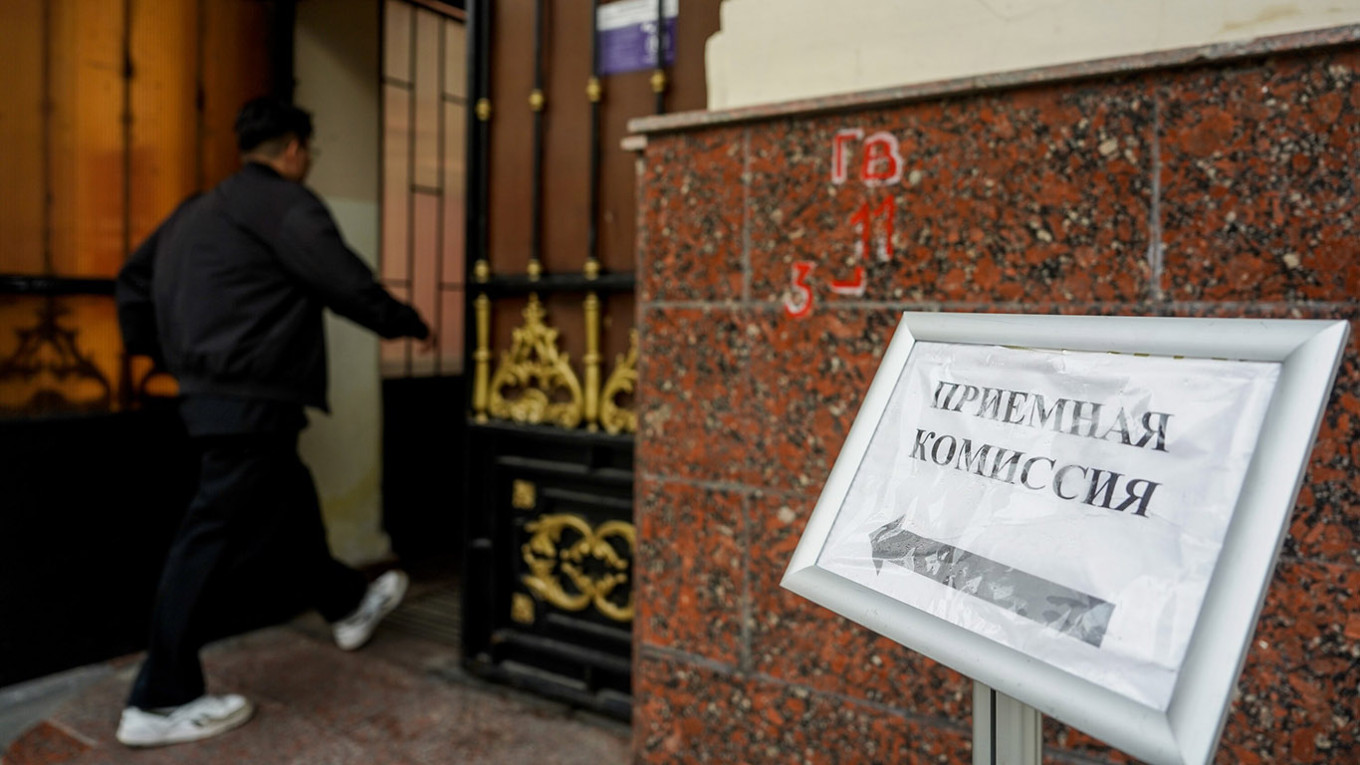
Critics of the system argue that this creates a two-tiered society. On one side is a group with guaranteed pathways to higher education through social priority; on the other is a group of high-achieving civilians who must compete for an increasingly narrow window of opportunities. This shift has raised concerns among educators regarding the long-term impact on academic standards and the potential for “brain drain” if top-tier students seek education abroad to avoid the uncertainty of the domestic system.
Furthermore, the allocation of these spots is often opaque. While the number of total budget spots for a university might be public, the exact breakdown of how many are reserved for various “preferential” categories is not always clearly communicated to the general public until the admissions cycle is well underway. This lack of transparency contributes to the feeling among students that the process resembles a game of chance rather than a structured academic evaluation.
Comparison of Admission Dynamics
The following table illustrates the conceptual shift in the Russian admissions landscape between the pre-2022 era and the current environment:
| Feature | Pre-2022 Standard | Current Environment |
|---|---|---|
| Primary Admission Driver | Unified State Exam (EGE) scores | EGE scores + expanded social quotas |
| Budget Spot Availability | Larger pool for general applicants | Smaller pool due to military priority |
| Competition Nature | Academic meritocracy | Meritocracy vs. Social priority |
| Financial Risk | Lower risk of being forced into paid spots | Higher risk for high-scoring civilians |
What are the official government justifications?
The Russian government and the Ministry of Science and Higher Education maintain that these measures are necessary to ensure social stability and to support those who have served the state. From an official standpoint, the quotas are not intended to undermine education but to provide a “social safety net” for families affected by the ongoing conflict. The administration views these educational benefits as a critical component of the broader support package for military personnel.
Officials have argued that providing free higher education to the children of soldiers is a matter of national duty and social justice. They contend that the state must ensure that the families of those serving in the “special military operation” are not disadvantaged by the economic or social disruptions caused by the conflict. By integrating these quotas into the existing university framework, the state can distribute these benefits through established institutional channels.
However, the government has not released comprehensive data detailing exactly how many budget spots have been reallocated from the general pool to the military quota. This lack of granular data makes it difficult for independent analysts to quantify the exact impact on the civilian student population or to determine if the total number of state-funded spots is actually increasing or simply being redistributed.
Student perspectives: Competition and uncertainty
For the students themselves, the impact is felt through increased anxiety and financial pressure. Many applicants have described the sensation of “winning at roulette,” where even a high EGE score does not provide certainty. The unpredictability of how many students will utilize the preferential quotas makes it nearly impossible for civilian students to plan their academic and financial futures with confidence.
In many cases, students who intended to pursue a state-funded degree in a specific field find themselves forced into paying for a “contract” spot at a less prestigious university, or paying full tuition at their preferred institution. This has led to a growing divide in the student body between those who can afford to bypass the quota struggle through private means and those who are entirely dependent on the state’s shrinking pool of free seats.
The sentiment among the youth is also shaped by the broader geopolitical context. For many, the university admissions process is no longer just a milestone of personal achievement, but a reflection of the shifting priorities of the state. The realization that academic merit is being weighed against social status has changed the culture of competition within Russian high schools and preparatory courses.
The next major checkpoint for this issue will be the release of the official enrollment statistics for the upcoming academic year, which will provide the first clear data on how many budget spots were occupied by preferential applicants compared to the general population. We will continue to monitor updates from the Ministry of Science and Higher Education and reports from major Russian educational institutions.
What do you think about the impact of social quotas on academic merit? Share your thoughts in the comments below and share this article to join the conversation.
Related reading