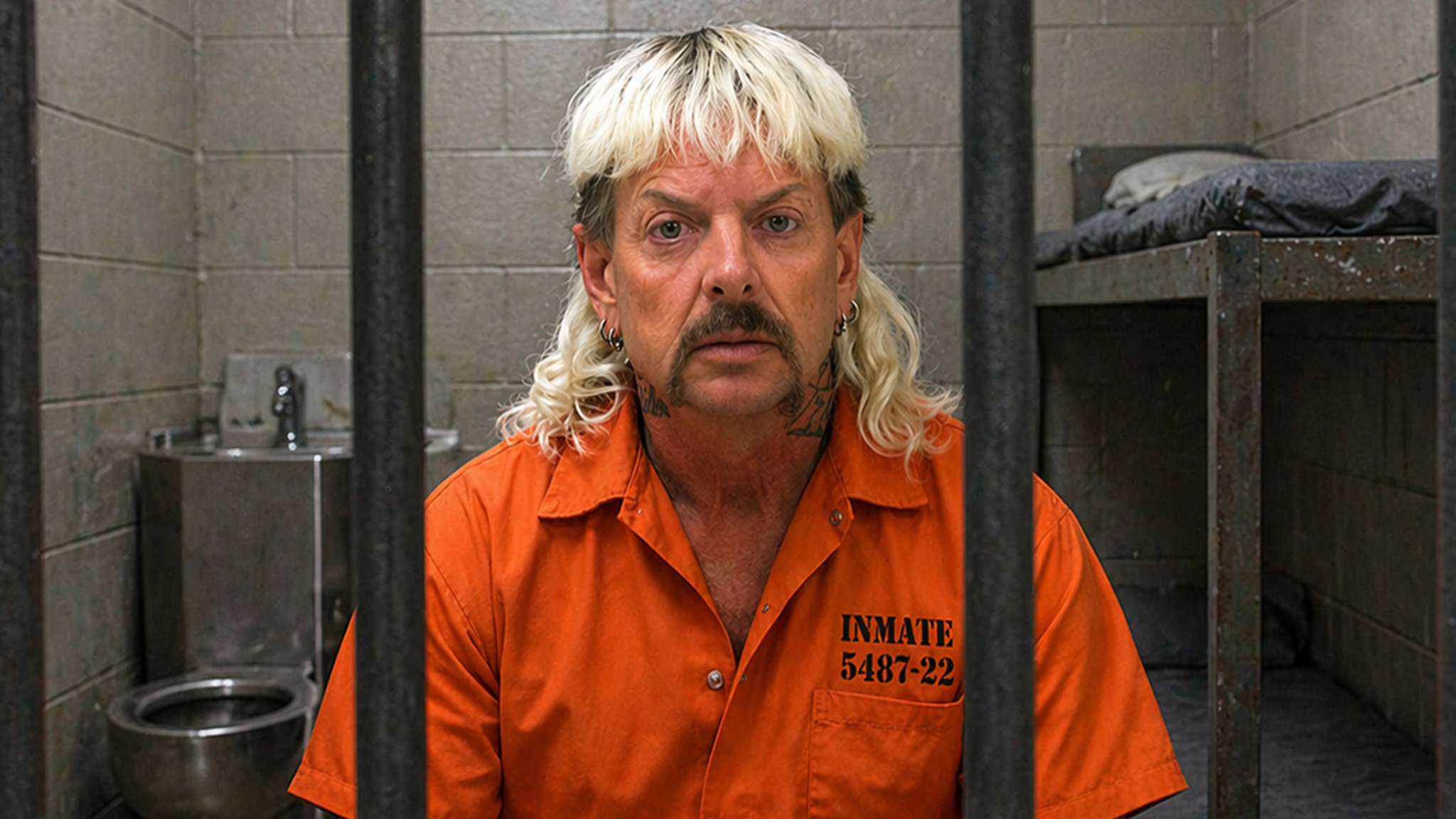
Joe Exotic, the former zoo operator and star of the Netflix documentary series “Tiger King,” has been placed in solitary confinement at a federal prison in Texas following social media activity attributed to him or his team. According to his attorney, Peter Ticktin, the disciplinary action resulted in Exotic being moved to the Special Housing Unit (SHU) of the Federal Medical Center, Fort Worth, where he has remained since last week.
The move comes amid ongoing legal efforts by Exotic’s team to secure a presidential pardon and challenge his 2019 conviction on charges related to a murder-for-hire plot and violations of wildlife protection laws. Ticktin told TMZ that the prison placement was a direct response to social media posts shared online on Exotic’s behalf, though it remains unclear whether a single message or a pattern of activity triggered the disciplinary review.
Exotic, whose legal name is Joseph Allen Maldonado-Passage, is currently serving a 21-year sentence after being convicted in 2019 of two counts of murder-for-hire, eight violations of the Lacey Act, and nine violations of the Endangered Species Act. His conviction stemmed from a plot to kill Carole Baskin, founder of Big Cat Rescue, and illegal activities involving the breeding and sale of tigers at his former Greater Wynnewood Exotic Animal Park in Oklahoma.
Since his incarceration, Exotic has maintained his innocence, claiming that key witness Allen Glover committed perjury during the trial. His legal team has repeatedly argued that the case was built on false testimony and has pursued appeals, clemency petitions, and a presidential pardon as avenues for release. Ticktin confirmed that paperwork for a pardon petition has been submitted to the Office of the Pardon Attorney at the U.S. Department of Justice, though no decision has been issued.
The Special Housing Unit, commonly referred to as solitary confinement, is used by the Federal Bureau of Prisons to isolate inmates for disciplinary reasons, administrative needs, or protective custody. Inmates in SHU typically have limited human contact, restricted access to prison programs, and spend 22 to 24 hours per day in their cells. Ticktin said he has been unable to speak directly with Exotic since the move, a common restriction during SHU placement.
Details about the specific social media content that led to the disciplinary action have not been disclosed by prison officials or Exotic’s legal team. However, Exotic has maintained an active presence on platforms like Twitter and Facebook through accounts managed by his supporters, where he has frequently criticized the justice system, proclaimed his innocence, and commented on political figures, including former President Donald Trump and President Joe Biden.
In recent months, Exotic has used his social media presence to weigh in on political events, including expressing support for Australian Labor Party leader Anthony Albanese during the 2022 Australian federal election and offering commentary on U.S. Politics. His attorney has framed the SHU placement as disproportionate, suggesting that prison staff took issue with the tone or frequency of the posts rather than any specific violation.
Federal Bureau of Prisons policy prohibits inmates from using social media directly, but third parties may post on their behalf unless such activity is deemed to violate prison rules regarding communication, harassment, or security. When such posts are identified, prison officials may initiate disciplinary reviews that can result in loss of privileges, including phone and email access, or placement in restrictive housing like the SHU.
Exotic’s case has drawn sustained public attention since the release of “Tiger King” in March 2020, which became a cultural phenomenon during the early months of the COVID-19 pandemic. The documentary brought widespread scrutiny to the exotic animal trade and fueled public debate over animal welfare, legal ethics, and the ethics of true crime storytelling.
Despite his incarceration, Exotic remains a polarizing figure. Supporters view him as a victim of a flawed legal system and an overzealous prosecution, whereas critics point to the evidence presented at trial, including audio recordings and testimony detailing the murder-for-hire plot. His legal team continues to challenge the conviction, arguing that prosecutorial misconduct and unreliable witnesses undermined the fairness of the proceedings.
As of now, there is no public timeline for when Exotic might be released from the SHU or returned to general population. His attorney said the legal team is monitoring the situation and remains in contact with prison officials, though no guarantees exist regarding the duration of the isolation. Federal disciplinary reviews can last from several days to several weeks, depending on the outcome of internal hearings and behavioral assessments.
For updates on Joe Exotic’s legal status, prison placement, or pardon petition, readers are encouraged to consult official filings through the U.S. Department of Justice’s Office of the Pardon Attorney or monitor verified court documents via the Public Access to Court Electronic Records (PACER) system.
Stay informed about developments in this ongoing case by following trusted news sources and official government channels. Share your thoughts in the comments below and support retain the conversation grounded in facts and accountability.