
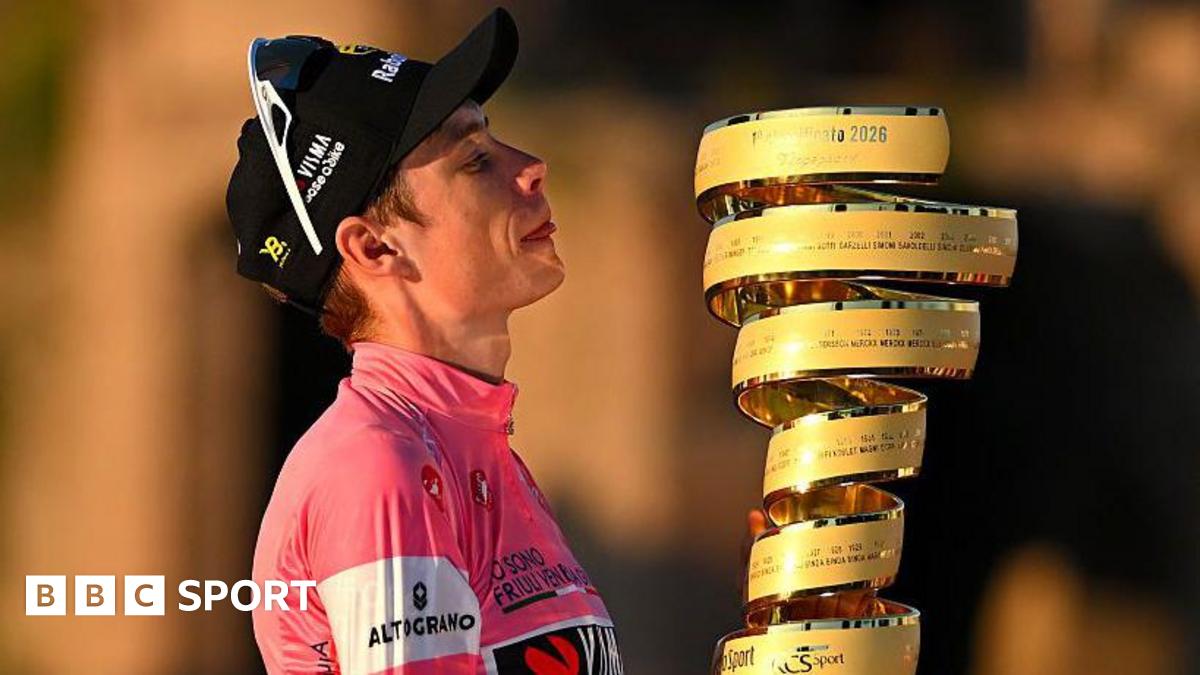
The landscape of professional cycling is defined by a select group of races that test the absolute limits of human endurance. Among these, the Grand Tours—the Tour de France, the Giro d’Italia, and the Vuelta a España—stand as the ultimate benchmarks of greatness. While many riders dream of conquering one, a rarefied few have managed to etch their names into the history books by claiming victory in all three. Jonas Vingegaard, the Danish powerhouse who has already cemented his legacy in the mountains of France, has been the subject of significant discussion regarding this prestigious “triple crown” of cycling.
However, This proves vital to clarify the current state of the record books as the cycling world looks toward the upcoming season. While Vingegaard has demonstrated exceptional form, winning the Tour de France in both 2022 and 2023, he has not yet completed the set of all three Grand Tours. As of early 2024, the list of riders who have achieved the “Triple Crown” remains a closed club of seven legends: Jacques Anquetil, Felice Gimondi, Eddy Merckx, Bernard Hinault, Alberto Contador, Vincenzo Nibali, and Chris Froome, according to official records maintained by the Union Cycliste Internationale (UCI).
The Anatomy of a Grand Tour Specialist
To understand why a rider like Vingegaard is so frequently linked to this historic achievement, one must look at the physical and tactical requirements of these three-week races. The Tour de France, typically held in July, is the most prestigious and media-heavy event, often requiring a rider to peak at the height of the European summer. The Giro d’Italia, known for its brutal climbs and unpredictable Italian weather in May, presents a different physiological challenge, while the Vuelta a España, held in the heat of late summer, often features a field of riders looking to redeem their seasons or build toward the world championships.

Vingegaard’s rise to prominence has been nothing short of meteoric. His ability to recover from extreme efforts in the high mountains has allowed him to dominate the general classification (GC) standings. According to data provided by ProCyclingStats, Vingegaard’s tactical maturation since joining Team Visma–Lease a Bike has been the primary driver of his success, transforming him from a promising young talent into a clinical leader capable of defending the Yellow Jersey against the world’s best.
The Elite Club: The Seven Who Have Done It
The pursuit of all three Grand Tours is a feat that requires not just talent, but incredible longevity and versatility. The seven men who have achieved this are widely regarded as the greatest stage racers in the history of the sport. The journey to this milestone is fraught with the risk of injury, the pressure of team dynamics, and the sheer unpredictability of the sport.

- Jacques Anquetil: The first to achieve the feat, completing his set in 1964.
- Felice Gimondi: A master of consistency who rounded out his collection in 1968.
- Eddy Merckx: Often cited as the greatest of all time, he secured his triple crown by 1973.
- Bernard Hinault: The “Badger” completed his dominance in 1980.
- Alberto Contador: The Spaniard achieved the triple crown in 2008, showcasing his prowess in the mountains.
- Vincenzo Nibali: Known as the “Shark of Messina,” he secured his final piece of the puzzle in 2014.
- Chris Froome: The most recent addition to the list, completing his set following his 2018 Giro d’Italia victory, as detailed by BBC Sport.
What Lies Ahead for Vingegaard
Speculation regarding Vingegaard’s future racing calendar is a constant theme in the sports press. While the rider himself has remained focused on his immediate objectives, the prospect of him entering the Giro d’Italia remains a significant point of interest for fans and analysts alike. To date, no official announcement has been made by Team Visma–Lease a Bike confirming his participation in the Italian Grand Tour for the 2024 or 2025 seasons. Any official roster updates will be posted via the team’s official news portal.
The challenges facing any modern rider attempting this feat are more complex than in the past. Modern cycling is defined by data-driven preparation, high-intensity training camps, and a level of specialization that makes it difficult to peak for two, let alone three, Grand Tours in a single calendar year. Riders now often target one primary race as their “A-goal,” making the pursuit of a career-spanning sweep of all three titles a multi-year project that requires immense physical preservation.
Key Factors Influencing Grand Tour Success
Success in these events is not merely about wattage and climbing speed. It involves a sophisticated interplay of team support, nutrition, and psychological resilience. As the sport continues to evolve, the ability to read a race and manage energy reserves over 21 days of competition remains the hallmark of a true champion. For Vingegaard, the next chapter of his career will likely be defined by his ability to maintain his current trajectory while managing the inevitable pressure of being the rider to beat in every race he enters.
The cycling season is long, and the path to glory is rarely a straight line. As we look ahead, the next major checkpoint for the professional peloton will be the start of the summer Grand Tour season, where the world’s best will once again gather to contest the most iconic jerseys in the sport. We will continue to monitor all team announcements and official entry lists as they become available.
What are your thoughts on the difficulty of winning all three Grand Tours in the modern era? Do you believe the specialization of today’s cyclists makes this feat more impressive than it was in the past? Share your insights in the comments section below—I look forward to hearing from our community of cycling enthusiasts.