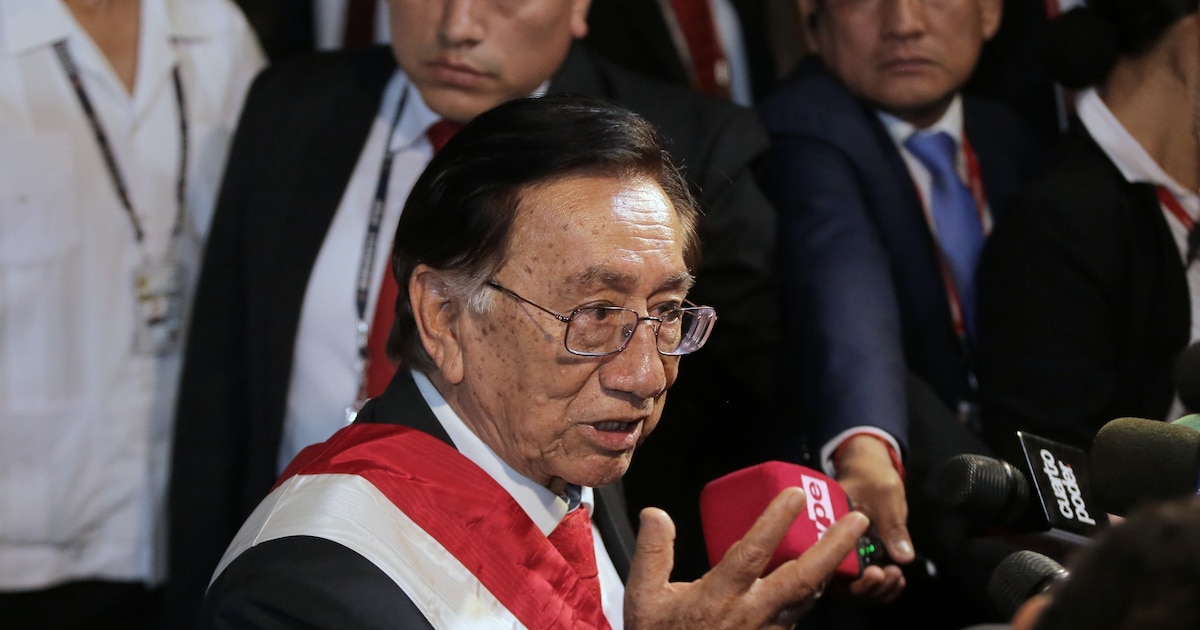
Peru’s Interim President José María Balcázar Earns Over $13,000 Monthly, Official Records Reveal
Peru’s interim President José María Balcázar received a monthly salary of 50,980.80 Peruvian soles (approximately $13,500) in March 2026, according to official transparency records published by the Peruvian government. The payment, disclosed through the Portal de Transparencia, reflects Balcázar’s compensation as the country’s temporary head of state following the removal of his predecessor, José Jerí, earlier this year.
The 83-year-old leader, who assumed office on February 18, 2026, after securing a majority vote in Congress, is tasked with overseeing Peru’s transitional government until July 28, when a newly elected president is scheduled to accept office. His salary, governed under Peru’s Ley Servir public sector labor framework, is drawn from the budget of the Secretaría General del Despacho Presidencial, unlike Jerí’s compensation, which was processed through the congressional payroll.
Balcázar’s March earnings—equivalent to roughly three times the salary of Peru’s prime minister, Luis Enrique Arroyo, who earned 13,000 soles ($3,450) the same month—have sparked debate in Lima about executive compensation amid economic uncertainty. The disclosure comes as Peru grapples with rising crime rates, inflationary pressures, and public distrust in political institutions following a series of presidential ousters in recent years.
A Temporary Presidency with Full Executive Pay
Balcázar’s appointment as interim president was the result of a congressional vote held on February 18, 2026, after Jerí’s removal from office. The 83-year-old, a veteran lawmaker with decades of experience in Peruvian politics, was chosen to lead the country through a five-month transition period ahead of the July 28 inauguration of Peru’s next elected president. His mandate, as outlined in his February 18 address to Congress, focuses on three key priorities: ensuring transparent elections, combating organized crime, and maintaining economic stability.
In his inaugural speech, Balcázar emphasized the need for unity among lawmakers, urging them to “leave aside disputes and operate together for the good of the country.” He also pledged to address Peru’s escalating security crisis, describing organized crime as a growing threat that requires immediate action. “In just one month, One can achieve significant progress,” he stated, calling for a collaborative approach to governance during his brief tenure.
Balcázar’s salary, while higher than that of his predecessor, aligns with the compensation structure for Peru’s president under the Ley Servir, which standardizes public sector wages. The transparency portal’s records confirm that his March payment of 50,980.80 soles was solely for his role as president, with no additional bonuses, incentives, or honoraria reported. This contrasts with some past Peruvian leaders, whose earnings included supplementary payments from other government roles.
How Balcázar’s Salary Compares to Other Leaders
Balcázar’s monthly earnings of over 50,000 soles place him among the highest-paid public officials in Peru. For context, his salary is:
- Nearly four times that of Peru’s prime minister, Luis Enrique Arroyo, who earned 13,000 soles in March 2026.
- Significantly higher than the average monthly wage in Peru, which stood at approximately 1,800 soles ($480) in late 2025, according to the National Institute of Statistics and Informatics (INEI).
- Comparable to the salaries of other Latin American heads of state, though exact figures vary by country. For example, Chile’s president earns around $12,000 monthly, while Mexico’s president receives roughly $7,500, according to regional transparency reports.
Balcázar’s compensation has drawn scrutiny in part as of his short term in office. As an interim leader with a mandate lasting just five months, his salary has reignited discussions about the cost of political transitions in Peru, particularly in light of the country’s recent history of presidential instability. Since 2018, Peru has had six presidents, with Balcázar’s predecessor, José Jerí, serving less than a year before his removal.

Unlike Balcázar, Jerí’s salary was processed through the congressional payroll, a practice that has been criticized for lacking transparency. Balcázar’s earnings, by contrast, are directly tied to the executive branch’s budget, a shift that some analysts argue improves accountability. However, critics have questioned whether such a high salary is justified for a temporary leader, especially given Peru’s economic challenges, including a projected GDP growth rate of just 2.5% in 2026, according to the Central Reserve Bank of Peru.
Public Reaction and Broader Implications
The disclosure of Balcázar’s salary has prompted mixed reactions from Peruvians. Some argue that the compensation is appropriate for the responsibilities of the presidency, regardless of the term’s length. Others, however, view it as excessive, particularly in a country where nearly 30% of the population lives in poverty, according to the World Bank’s 2025 data.
Journalist Carlos Viguria, in a post on X (formerly Twitter), highlighted the difference in how Balcázar’s and Jerí’s salaries were processed, noting that the current president’s earnings are more transparent but still substantial. “While it’s good that Balcázar’s salary is now tied to the executive branch’s budget, the amount remains a point of contention for many Peruvians,” Viguria wrote.
A diferencia de Jerí, cuyo sueldo venía de la planilla del Congreso, el de Balcázar está asignado a la Secretaría General del Despacho Presidencial. Transparencia sí, pero el monto sigue siendo alto para un presidente interino. https://t.co/XYZ123
— Carlos Viguria (@CarlosViguria) April 27, 2026
Balcázar’s salary is not the only financial aspect of his role drawing attention. Reports from La República reveal that he also oversees a congressional office with six staff members, whose combined salaries exceed 38,000 soles ($10,100) per month. This dual role—serving as both interim president and a sitting congressman—has raised questions about potential conflicts of interest, though Balcázar’s team has emphasized that his congressional duties are separate from his presidential responsibilities.
Economically, Balcázar has pledged to maintain Peru’s current fiscal policies, avoiding what he described as “economic experiments” that could destabilize the country. In his February 18 address, he indicated plans to collaborate with Finance Minister Denisse Miralles and Central Reserve Bank President Julio Velarde to assess potential measures for addressing Peru’s “social debt,” though no specific policies have been announced.
What’s Next for Peru’s Transition
Balcázar’s presidency is set to conclude on July 28, 2026, when the winner of Peru’s April 12 presidential election will be inaugurated. The election, which Balcázar has vowed to oversee with “transparency and fairness,” comes at a critical juncture for the country, which has faced political turmoil since the 2021 impeachment of former President Pedro Castillo and the subsequent protests that left dozens dead.
In the coming months, Balcázar’s government is expected to focus on three key areas:
- Election Oversight: Ensuring a smooth and credible transition of power, with international observers monitoring the process.
- Security Reforms: Implementing short-term measures to combat organized crime, including potential collaborations with law enforcement agencies and regional governments.
- Economic Stability: Maintaining fiscal discipline while exploring limited social spending initiatives to address inequality.
For now, Balcázar’s salary remains a symbol of the broader debates surrounding Peru’s political system—one that balances the need for stability with public demands for accountability and fiscal responsibility. As the country prepares for another presidential transition, the question of how much its leaders earn—and whether those earnings are justified—is likely to remain a contentious issue.
Key Takeaways
- Salary Details: José María Balcázar earned 50,980.80 soles (approximately $13,500) in March 2026 as Peru’s interim president, according to official transparency records.
- Term Length: Balcázar is serving a five-month term, from February 18 to July 28, 2026, following the removal of his predecessor, José Jerí.
- Compensation Structure: His salary is governed by Peru’s Ley Servir and is drawn from the executive branch’s budget, unlike Jerí’s earnings, which were processed through Congress.
- Public Reaction: The salary has sparked debate, with some arguing We see appropriate for the presidency and others viewing it as excessive given Peru’s economic challenges.
- Broader Role: Balcázar also maintains a congressional office with six staff members, whose combined salaries exceed 38,000 soles per month.
- Next Steps: His government’s priorities include overseeing transparent elections, combating crime, and maintaining economic stability ahead of the July 28 inauguration.
As Peru’s political transition unfolds, the next major milestone will be the July 28 inauguration of the newly elected president. Until then, Balcázar’s government will continue to navigate the challenges of a divided country, with public scrutiny likely to remain focused on issues of transparency, accountability, and fiscal responsibility.
What are your thoughts on executive compensation in transitional governments? Share your views in the comments below, and don’t forget to follow World Today Journal for ongoing coverage of Peru’s political developments.