
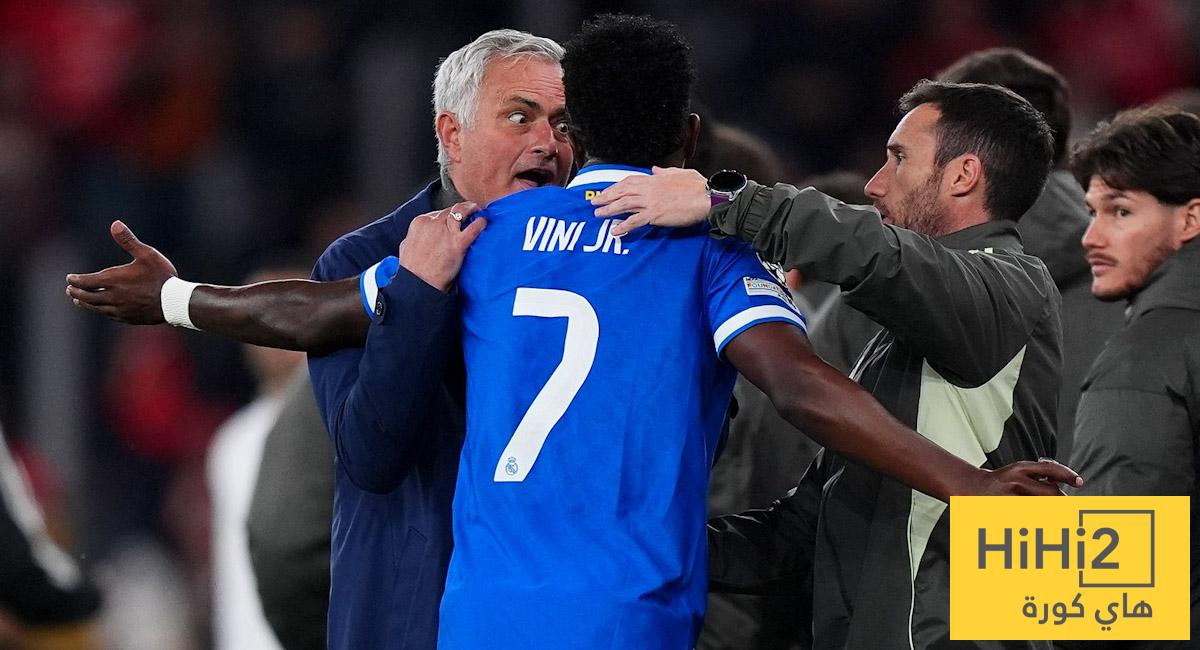
The managerial landscape at the Santiago Bernabéu is facing a potential seismic shift as reports emerge of high-level negotiations to bring one of football’s most polarizing and successful figures back to the Spanish capital. José Mourinho, the man once known as the “Special One” during his first tenure in Madrid, has reportedly re-entered the frame as a primary candidate to lead Real Madrid once again.
This development comes amid a period of significant instability for the club, where a disappointing campaign and mounting internal uncertainty have placed the current coaching staff under immense pressure. For a club of Real Madrid’s stature, the prospect of a Mourinho return is not merely a coaching change, but a strategic pivot that could redefine the club’s internal power dynamics.
As a journalist based in Lisbon, I have watched Mourinho’s trajectory closely, from his early triumphs to his current role in Portugal. The narrative surrounding his potential return to Madrid is not centered on the typical lures of a massive salary or a trophy-laden history, but rather on a fundamental struggle for control over the club’s sporting direction.
The latest reports indicate that the dialogue has already moved beyond mere speculation, involving direct communication between the manager and the highest levels of the club’s administration.
A Secret Summit: The Details of the Perez-Mourinho Meeting
According to reports from Esdiario and journalist Sergio Valentin, a “secret summit” has already taken place to lay the groundwork for a potential return. The meeting was not a traditional face-to-face encounter but a targeted video conference that lasted approximately one hour. The primary participants were José Mourinho and Real Madrid club president Florentino Perez.
Adding a layer of strategic complexity to the meeting was the presence of Jorge Mendes, Mourinho’s long-term representative and one of the most influential “super-agents” in global football. While Mendes was in attendance, reports suggest his role was primarily that of an observer, allowing the two power brokers—Perez and Mourinho—to speak directly about the vision for the club.
This direct line of communication suggests that the interest is mutual and urgent. For Perez, Mourinho represents a known quantity capable of restoring discipline and winning mentalities during a crisis. For Mourinho, Real Madrid remains the ultimate stage to validate his enduring relevance in the modern tactical era.
Control Over Capital: Mourinho’s Non-Negotiable Demands
While the possibility of a reunion is firmly on the table, the Portuguese tactician is not prepared to return to the Bernabéu under the same conditions that characterized his previous departures. Mourinho has reportedly laid out a series of non-negotiable conditions that must be met before he agrees to lead the project.

In a departure from typical managerial negotiations, these demands are not focused on financial packages or personal salary. Instead, Mourinho is demanding a total overhaul of the club’s internal functioning. This indicates a desire for “total control”—a hallmark of his management style—which likely extends to recruitment policy, squad management, and the autonomy to make sweeping changes without board interference.
This demand for structural control is a significant gambit. Florentino Perez has historically maintained a strong grip on the club’s overall direction, particularly regarding the “Galáctico” philosophy of signing global superstars. A “total overhaul” of internal functioning would require Perez to cede a level of authority that he rarely grants to any manager, regardless of their pedigree.
The Benfica Dilemma and the Road to Madrid
One of the most significant hurdles to this transition is Mourinho’s current professional commitment. He is presently managing Benfica, where he is under a contract that runs until 2027. Breaking a contract of this duration requires not only a substantial financial agreement between the two clubs but also a diplomatic resolution to avoid damaging relationships within the Portuguese football ecosystem.
The timing of these talks suggests that the instability at Real Madrid has reached a breaking point, prompting Mourinho to explore the feasibility of an early exit from Lisbon. While there has been widespread speculation in various regional media outlets regarding player reactions—including unconfirmed reports suggesting support from key figures like Vinícius Júnior—no official confirmation of player involvement in these negotiations has been released by the club.
The transition from the Primeira Liga back to La Liga would represent a homecoming for Mourinho, but the stakes are higher now. He is no longer the young disruptor of the late 2000s; he is a veteran strategist seeking to prove that his methods can still dominate in an era of high-pressing, position-less football.
A Club in Crisis: Why Now?
The urgency behind these talks is rooted in a “disappointing campaign” that has left the Real Madrid faithful restless. When internal uncertainty mounts at the Santiago Bernabéu, the club often looks for a “strongman” figure who can shield the players from external pressure and refocus the squad on winning.

The current coaching staff is reportedly facing a breaking point, with the managerial “merry-go-round” accelerating. In such an environment, Mourinho’s ability to create a “siege mentality”—where the squad feels it is the team against the world—could be viewed as the necessary antidote to the current internal fragmentation.
However, the risk remains that the very traits that make Mourinho attractive in a crisis—his demand for total control and his confrontational approach to authority—could lead to a repeat of the frictions that ended his first stint in Madrid. The success of this potential return depends entirely on whether Perez and Mourinho can find a middle ground between the president’s vision and the manager’s demands for autonomy.
The next confirmed checkpoint for this story will be any official statement from Real Madrid regarding their coaching staff or an official announcement from Benfica concerning Mourinho’s contract status. Until such a filing or statement is made, the “Special One’s” return remains a high-stakes possibility rather than a certainty.
Do you believe José Mourinho is the right man to restore order at Real Madrid, or would his demand for total control clash too harshly with the current club structure? Share your thoughts in the comments below.