
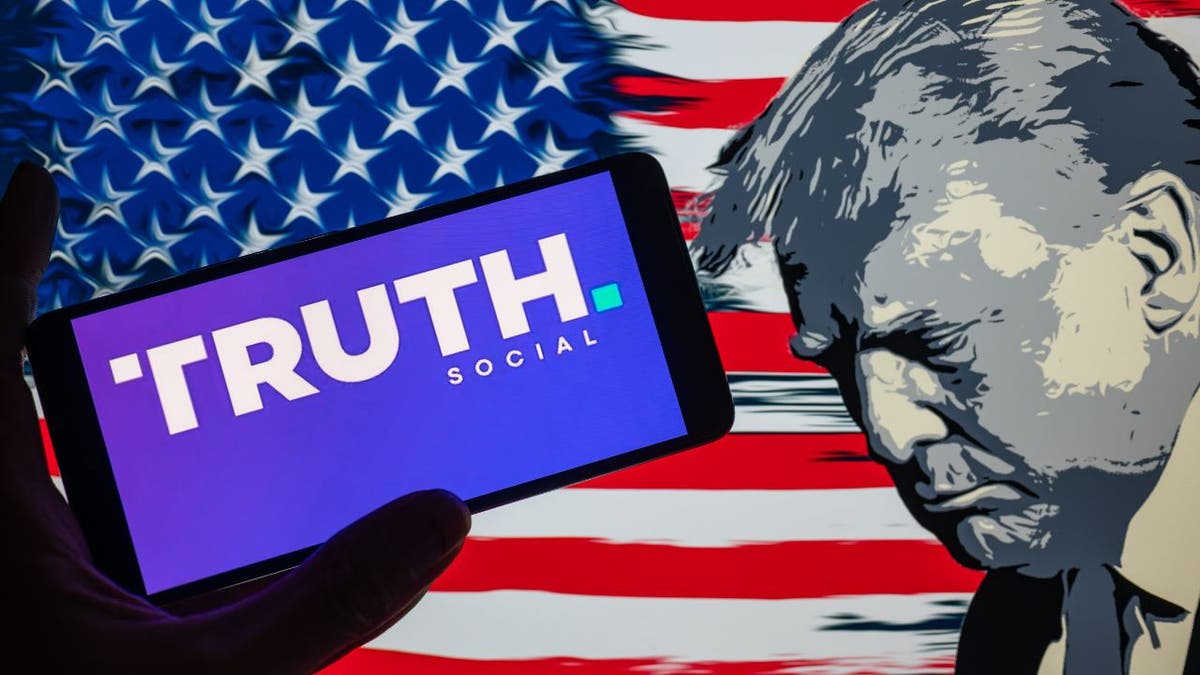
The juxtaposition of political dominance and corporate instability has reached a striking peak for President Donald Trump. While the 47th President of the United States maintains a firm grip on the executive branch, his primary business venture in the social media space, Trump Media & Technology Group (TMTG), is grappling with a financial reality that defies traditional economic logic.
Recent financial disclosures have revealed a staggering disconnect between the market valuation of the company and its operational performance. The parent company of Truth Social has reported a quarterly net loss exceeding $400 million, a figure that underscores the precarious nature of a business model heavily dependent on the personal brand of its founder rather than scalable revenue streams.
For global investors and market analysts, the Trump Media financial losses serve as a case study in the “meme stock” phenomenon, where sentiment and political loyalty override fundamental metrics such as earnings per share or price-to-sales ratios. As Chief Editor of Business at World Today Journal, I have tracked the intersection of politics and global markets for nearly two decades, and rarely have we seen a public company sustain such abysmal operational margins while maintaining a significant market presence.
The financial hemorrhage is not merely a result of high startup costs but points to a deeper struggle in monetizing a niche user base. While the platform serves as a critical communication tool for the President and his supporters, it has failed to attract the broad spectrum of advertisers necessary to offset the massive overhead of maintaining a proprietary social network.
The Scale of the Deficit: Revenue vs. Expenditure
According to the most recent SEC filings, TMTG’s quarterly performance was characterized by a near-total absence of significant revenue relative to its spending. While the company reported a loss of more than $400 million in the last quarter, its actual revenue remained marginal, often hovering around the $1 million mark. This creates a burn rate that would be unsustainable for any traditional tech firm without continuous capital injections or a massive surge in advertising spend.

The disparity is jarring. In a healthy tech ecosystem, a company reporting such losses would typically be showing exponential user growth or a clear path to profitability through a diversified product suite. TMTG, however, remains largely a mono-product entity. The costs associated with server infrastructure, legal fees, and administrative overhead continue to dwarf the income generated from its subscription models and limited advertising partnerships.
This financial trajectory suggests that the company is operating less as a commercial enterprise and more as a political utility. From a balance sheet perspective, the “business” of Truth Social is currently a liability, though its value to the President as a direct-to-consumer communication channel remains immeasurable in political terms.
The Speculative Engine: A “Meme Stock” Dynamic
To understand why the stock continues to trade despite these Trump Media financial losses, one must look at the behavior of the retail investor. The stock, traded under the ticker DJT, behaves more like a speculative asset—similar to certain cryptocurrencies or “meme stocks”—than a traditional equity. Its price movements are frequently tied to political news cycles, court rulings, and the President’s public statements rather than quarterly earnings reports.
This volatility creates a high-risk environment for shareholders. When the market treats a company as a proxy for a political candidate or leader, the fundamental value of the company becomes secondary to the perceived “winning” or “losing” streak of that individual. The $400 million loss is often ignored by the market in favor of the narrative surrounding the President’s influence.
However, this speculative bubble is fragile. If the gap between the company’s market capitalization and its actual revenue continues to widen, the risk of a sharp correction increases. For the institutional investor, the lack of a viable monetization strategy is a red flag; for the retail enthusiast, it is a secondary concern to the platform’s ideological mission.
Operational Challenges and the Path to Viability
The core challenge for TMTG is the “echo chamber” effect. While Truth Social has a loyal core audience, social media profitability depends on network effects—the idea that a service becomes more valuable as more people use it. By positioning itself as an alternative to “mainstream” platforms, TMTG has intentionally limited its appeal, which in turn limits its attractiveness to global brands that seek the widest possible reach for their advertising dollars.
To pivot toward sustainability, the company would need to achieve several critical milestones:
- Diversification of Revenue: Moving beyond simple subscriptions to integrated e-commerce or high-value data services.
- Broadening the User Base: Attracting users who are not solely motivated by political affiliation to increase the platform’s utility.
- Cost Optimization: Reducing the massive operational burn rate that led to the recent $400 million deficit.
Without these changes, the company remains a high-cost operation with a low-yield return. The reliance on the President’s personal brand is a double-edged sword; while it provides an instant audience, it also alienates a significant portion of the potential advertiser market, creating a ceiling on the company’s growth potential.
What So for the Global Market
The TMTG saga is a signal to the global market about the evolving nature of “Political Capital.” We are seeing the emergence of companies whose primary value is not their product, but their alignment with a specific power structure. This introduces a new layer of risk for analysts who rely on traditional valuation models.

For the broader tech sector, the struggles of Truth Social highlight the immense difficulty of displacing established giants like X (formerly Twitter) or Meta. The barrier to entry is no longer just the technology—which is relatively commoditized—but the social graph and the advertising relationships that take decades to build.
As we observe the ongoing financial reports, the question remains: can a company survive on loyalty alone? In the world of economics, loyalty does not pay the server bills. The $400 million loss is a stark reminder that while political power can be absolute, the laws of mathematics and accounting remain impartial.
The next critical checkpoint for investors will be the upcoming quarterly filing, which will reveal whether the company has managed to stem the losses or if the burn rate has accelerated. Shareholders should closely monitor the “Cash and Cash Equivalents” section of the next report to determine how much runway the company has left before it requires further financing.
Do you believe political alignment can sustain a business in the long term, or are fundamental economics inevitable? Share your thoughts in the comments below or share this analysis with your professional network.