
A federal judge has initiated a judicial inquiry into whether a legal settlement that established an “anti-weaponization fund”—part of a broader $1.8 billion financial arrangement—was predicated on fraudulent claims. The scrutiny centers on the origins and stated objectives of the fund, which emerged from a complex legal dispute involving the Internal Revenue Service (IRS). As the inquiry gains momentum, the court is demanding greater transparency regarding the specific representations made to the judiciary during the negotiation of these terms.
The core of this investigation concerns allegations that the settlement agreement, which carries significant financial implications, may have been secured through misleading information provided to the court. Legal experts and court observers are closely monitoring the proceedings to determine if the “anti-weaponization” designation—a term frequently used in political discourse to describe efforts to curb alleged executive overreach—was used as a tactical label to obscure the underlying financial realities of the agreement. The judicial directive requires that all parties involved provide comprehensive answers to questions concerning the integrity of the deal, specifically addressing whether any “grievous allegations” were leveraged to influence the court’s approval process.
Judicial Scrutiny of Settlement Integrity
At the center of the dispute is a lawsuit originally brought by former President Donald Trump, who sought substantial damages from the Internal Revenue Service. The litigation, which at one point involved claims for as much as $10 billion, became a flashpoint for debates surrounding the separation of powers and the administrative authority of federal tax agencies. The resulting settlement, which effectively diverted or structured $1.8 billion into the aforementioned fund, is now being re-examined by the bench to ensure that the court was not deceived during the adjudication process. According to federal court procedures, judges maintain the authority to reopen cases if there is evidence that a judgment was obtained through fraud or misrepresentation of material facts.
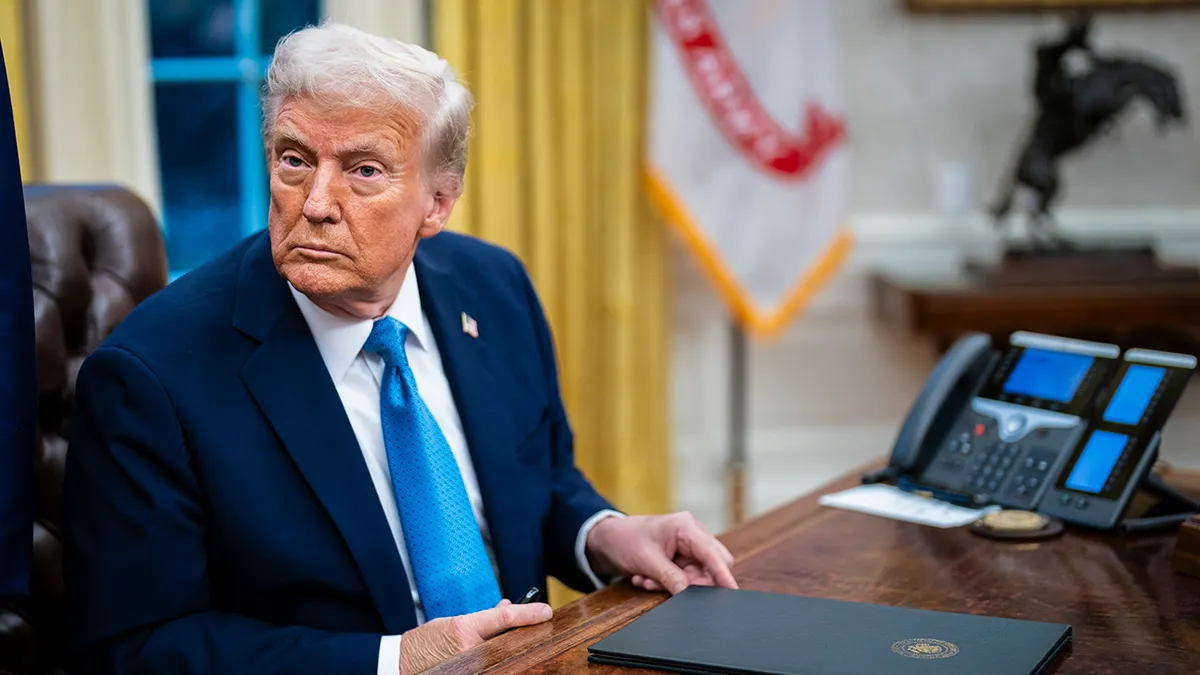
The judge presiding over the matter has ordered that the former president personally address the allegations of fraud. This move marks a significant escalation in a case that has spanned years of complex filings and counter-filings. The court’s focus is not merely on the dollar amount involved, but on the veracity of the claims presented as the basis for the settlement. If the court finds that the “anti-weaponization fund” was established under false pretenses, the potential legal ramifications could include the voiding of the settlement, the imposition of sanctions, or the referral of the matter for further investigation into the conduct of the legal teams involved.
The Anatomy of the Dispute
The “anti-weaponization” fund emerged as a central component of the settlement, ostensibly designed to protect against the perceived misuse of government power. However, the court is now questioning the legitimacy of this purpose. Critics of the settlement have long argued that the fund lacked a clear statutory basis, suggesting instead that it served as a mechanism to bypass standard appropriations processes. The court’s inquiry is expected to delve into the specific communications between the legal representatives and the government agencies involved during the final days of the negotiation.
In addition to the fraud allegations, the court is evaluating the impact of the settlement on the broader Internal Revenue Service operations. The agency, which has consistently maintained that its actions were consistent with federal law, is now compelled to participate in this inquiry as the court seeks to establish a definitive timeline of the settlement’s creation. The judge has emphasized that the court’s primary duty is to uphold the integrity of the judicial process, which requires that any agreement bearing the court’s imprimatur must be rooted in truth and transparency.
What Happens Next
The next phase of this legal saga involves a series of mandatory responses from the parties named in the court’s recent order. The court has set a firm timeline for these filings, insisting that the “grievous allegations” regarding the potential fraud be addressed with specificity. Failure to comply with these orders could result in further judicial action, including contempt proceedings or the appointment of a special master to oversee the discovery process. For now, the legal community awaits the next scheduled hearing, where the court is expected to review the sufficiency of the responses provided.

As this investigation unfolds, it serves as a stark reminder of the limitations placed on legal settlements that involve public funds or institutional mandates. The court’s intervention underscores the principle that no agreement, regardless of the size of the financial figures involved, is beyond the reach of judicial review when questions of fraud and systemic integrity are raised. Readers are encouraged to monitor the court’s public docket for the latest filings and official transcripts as this case proceeds.
Jonathan Reed is an editor and senior investigative journalist at World Today Journal. With over 16 years of experience covering international affairs and political developments, he provides in-depth analysis on the intersection of law, policy, and power.
Worth a look
- Gyeonggi Province Declares Financial Emergency Amid Mounting Debt and Structural Reforms
- Ibrahim Salah: Moroccan Winger Set for New Club Transfer
- Dow Jumps 1,000 Points as Bessent Hints at Potential Iran Shipping Deal (time.news)
- Qatar says drafts of potential US-Iran agreement are circulating (archyde.com)