
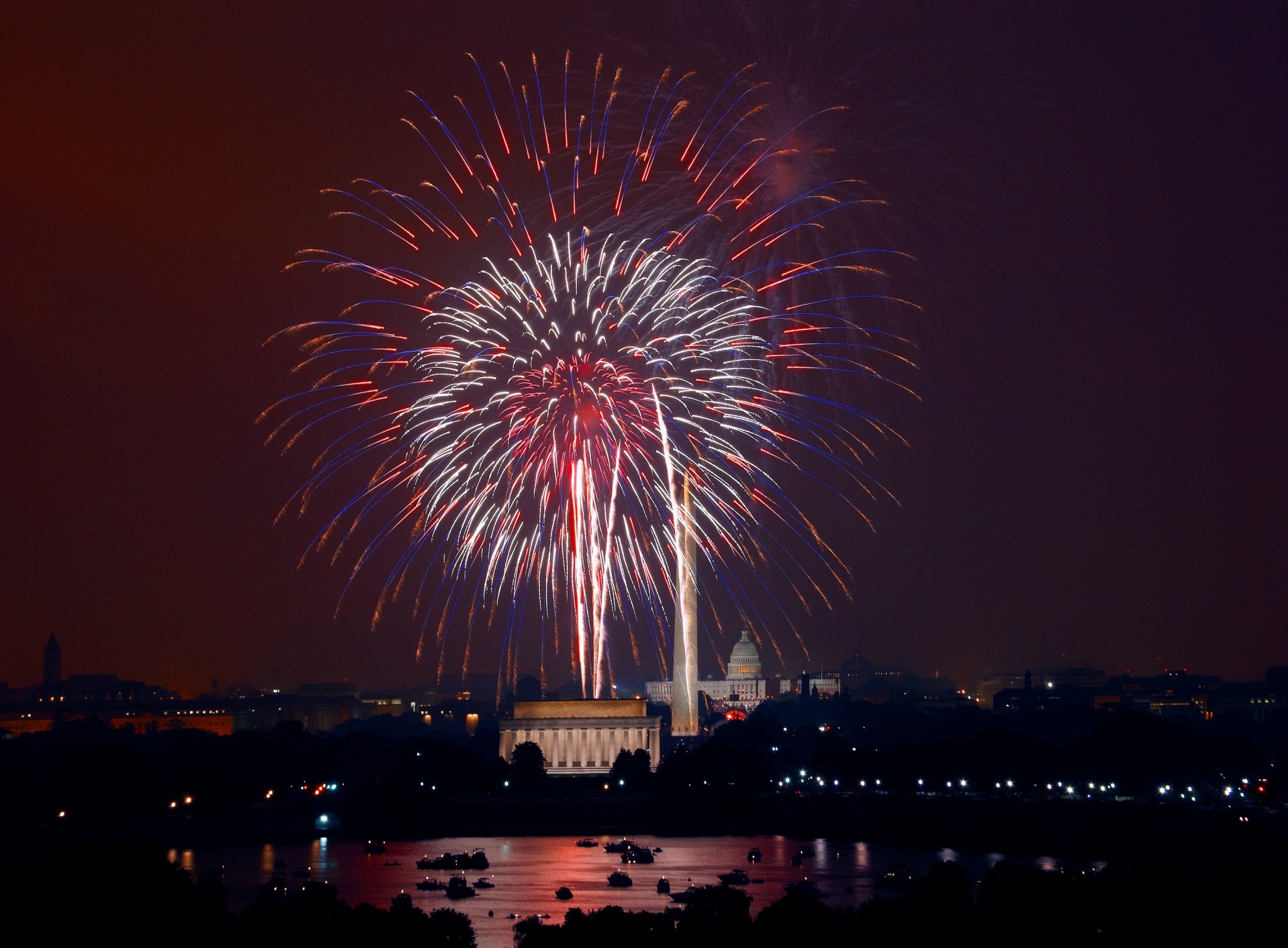
Internal government documents have identified significant environmental and public health concerns regarding the scale of fireworks displays planned for the National Mall in Washington, D.C. Air quality assessments indicate that the intensity of the pyrotechnics, combined with prevailing weather patterns, may lead to hazardous levels of fine particulate matter, potentially impacting the health of residents and visitors in the capital region.
The concerns center on the volume of fireworks deployed, which officials have characterized as a “supersized” event. According to documents reviewed by federal agencies, the concentration of smoke and debris is expected to exceed standard air quality safety thresholds, particularly in areas immediately downwind of the National Mall. Public health guidance issued in conjunction with these findings suggests that vulnerable populations—including children, the elderly, and individuals with respiratory conditions—should consider limiting their exposure to the smoke or utilizing protective equipment, such as N95 masks, if they remain in areas with heavy particulate density.
Environmental and Health Impacts of Large-Scale Pyrotechnics
The primary health risk associated with large-scale fireworks displays is the release of fine particulate matter, known as PM2.5. These particles are small enough to be inhaled deep into the lungs and can enter the bloodstream, according to the Environmental Protection Agency (EPA). When fireworks are launched in high density over a short duration, the resulting smoke creates a localized spike in air pollution that can persist even after the display has concluded.

In anticipation of the event, local environmental monitoring stations have been tasked with tracking air quality indexes (AQI) in real-time. Because fireworks smoke often lingers due to atmospheric inversion—where warm air traps cooler, polluted air near the ground—the impact is not limited to the immediate vicinity of the Mall. Residents in Arlington, Virginia, and other nearby jurisdictions have been advised that shifts in wind direction could carry smoke plumes across the Potomac River, potentially affecting air quality in residential neighborhoods well outside the central event zone.
Public Safety Guidance and Mitigation Strategies
Authorities have emphasized the importance of monitoring official air quality reports throughout the Independence Day holiday. The AirNow.gov platform provides localized data that residents can use to assess whether current conditions are safe for outdoor activity. For those attending the celebrations, experts suggest moving away from the immediate fallout zone if visible smoke becomes dense or if individuals experience difficulty breathing or throat irritation.
Beyond human health, the potential for high levels of smoke and noise has raised concerns regarding the welfare of pets and wildlife. Local animal control agencies have noted that the combination of intense light, percussive sounds, and poor air quality can lead to significant distress for animals. Pet owners are encouraged to keep animals indoors, secure windows to minimize smoke infiltration, and ensure that pets have a quiet, familiar space to retreat to during the loudest portions of the display.
Comparing Regulatory Perspectives on Event Planning
The planning of these events involves a complex interplay between ceremonial goals and public safety mandates. While organizers often focus on the visual and scale-related achievements of a display, municipal and federal environmental regulators are required to balance these objectives against the Clean Air Act, which governs the management of air pollutants in the United States.

There is a documented tension between the desire for high-impact public celebrations and the logistical reality of managing air quality in a dense urban environment. The decision to scale up the intensity of the pyrotechnics has prompted a re-evaluation of safety protocols, with some local agencies requesting additional monitoring equipment and clearer communication channels to inform the public of health risks as they develop throughout the evening.
The next official update regarding air quality forecasts for the region will be provided by the National Weather Service in the days leading up to the holiday. Residents are encouraged to check local municipal websites for specific street closures, public transit adjustments, and emergency service availability. We invite our readers to share their experiences or questions regarding the upcoming events in the comments section below.