
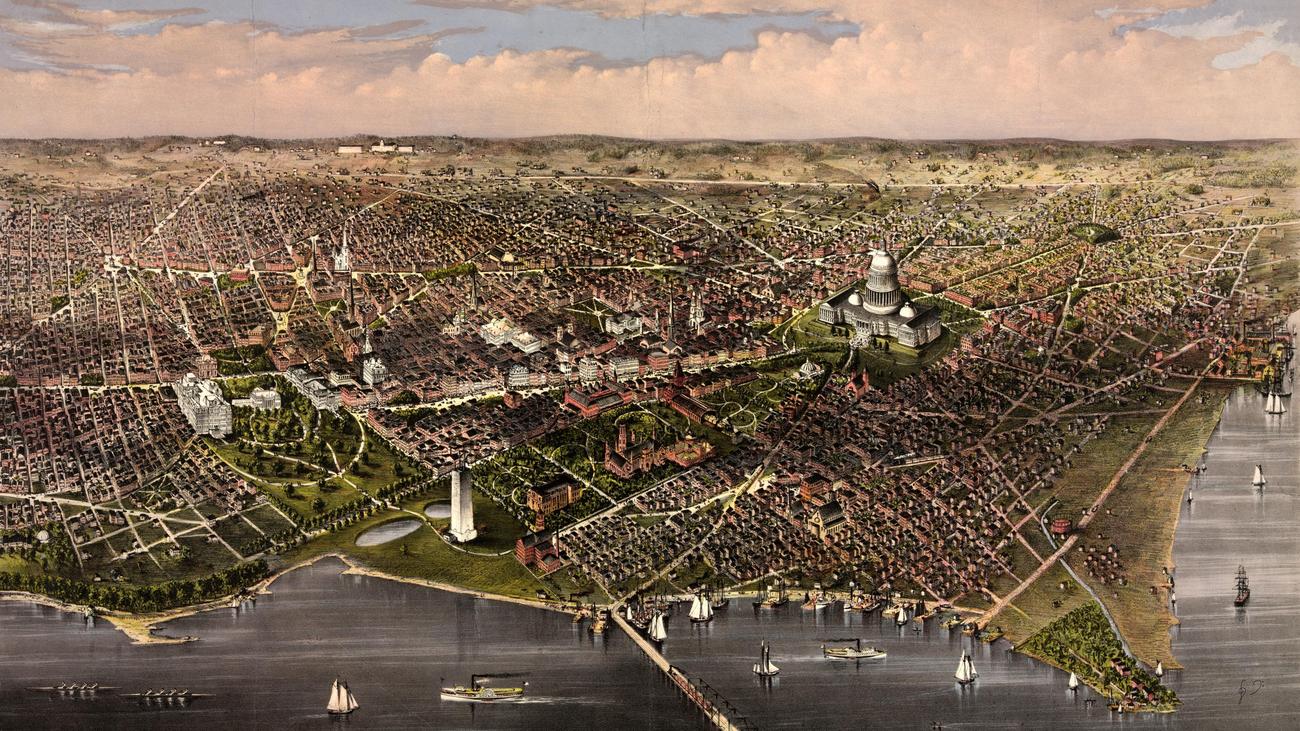
As the United States approaches its 250th anniversary in 2026, the historical narrative surrounding the founding of Washington, D.C., remains a subject of both academic study and modern political metaphor. The American capital was not merely a symbolic choice for a new republic; it was a pragmatic, and often difficult, construction project situated on what was then a marshy, challenging landscape along the Potomac River. While the term “draining the swamp” has become a fixture in contemporary American political rhetoric, the literal environment encountered by George Washington and his contemporaries necessitated significant engineering and labor to transform a riverfront lowland into the seat of federal power.
The selection of the District of Columbia as the permanent capital was the result of a political compromise, often referred to as the Compromise of 1790. According to the United States Senate historical records, the agreement between Thomas Jefferson, Alexander Hamilton, and James Madison secured the passage of the Residence Act in exchange for federal assumption of state war debts. This legislative deal shifted the capital from the bustling commercial centers of New York and Philadelphia to a site that was, at the time, largely undeveloped terrain.
Engineering the Federal City
The physical reality of the site selected by George Washington in 1791 posed immediate logistical hurdles. The area was characterized by tidal marshes, dense forests, and uneven topography. The National Park Service notes that Pierre Charles L’Enfant, the French-born architect commissioned to design the city, envisioned a grand grid of wide avenues and monumental spaces that would eventually mirror the aesthetic of European capitals. However, realizing this vision required clearing vast swaths of land and managing the water table of the surrounding Potomac and Anacostia rivers.
Construction crews and enslaved laborers were tasked with the arduous work of leveling hills and filling in low-lying areas. This early infrastructure work was foundational to the city’s ability to host the federal government by the time the offices moved from Philadelphia in 1800. The rapid expansion of the city during the 19th century further altered the natural geography, as the growing population and institutional needs of the federal government led to the canalization of streams and the continued filling of marshland to provide stable ground for the iconic marble structures that define the National Mall today.
From Physical Landscape to Political Metaphor
The evolution of the phrase “the swamp” within American political discourse marks a distinct shift from geographic description to a symbol of bureaucratic density and political corruption. While the term is frequently invoked in modern campaigns to suggest the need for institutional reform, historians point to the irony of the metaphor’s origins. By the early 20th century, the term was already being used to describe the perceived opacity and entrenchment of Washington’s influence-peddling networks.
The National Archives and Records Administration houses the original documents that underscore the intent of the Founders: to create a neutral territory that was not beholden to any single state. This independence was intended to protect the federal government from the pressures of local factions. Over the last two centuries, the growth of the federal apparatus—from a handful of departments in the 1800s to the current vast array of agencies and offices—has contributed to the perception of the city as a distinct political entity, separate from the rest of the nation.
The Legacy of 250 Years
As the nation looks toward its semi-quincentennial, the tension between the physical development of the capital and its symbolic weight remains a central theme in American history. The city has transitioned from a malarial, sparsely populated outpost to a global center of diplomacy and governance. The White House Historical Association documents that the constant process of renovation and expansion—such as the creation of the monumental core in the early 1900s—reflects the changing priorities of the American government over 250 years.

Today, the site that once required extensive drainage and clearing now stands as an enduring, if debated, monument to the political compromises of the 18th century. The physical “swamp” has been long contained, but the political debates over the nature of Washington’s influence are likely to continue as the United States marks its 250th year in 2026. Official preparations for the semiquincentennial celebrations are being coordinated by the U.S. Semiquincentennial Commission, which is tasked with planning commemorative events throughout the country leading up to July 4, 2026.
Updates on the planning for the 250th anniversary can be tracked through the commission’s public filings and scheduled hearings. Readers are encouraged to share their perspectives on the historical significance of the capital’s development in the comments section below.