In an era where autonomous mobile robots (AMRs) and high-tech automation dominate the headlines of warehouse logistics, a classic piece of German engineering is proving that reliability often outweighs the flashiest demo. The Jungheinrich Ameise, a family of compact electric forklifts and pallet trucks, is seeing a resurgence in demand as operators prioritize uptime and total cost per pallet moved over complex automation.
As global supply chains face ongoing labor shortages and rising maintenance costs, the Ameise series—essentially the “workhorse” of the narrow-aisle environment—is carving out a strategic niche. While the industry pushes toward full automation, the practical require for agile, pedestrian-operated equipment that can navigate tight spaces remains a critical bottleneck for e-commerce and distribution centers.
The appeal of the Jungheinrich Ameise lies in its ability to optimize space utilization in confined warehouse environments. With a slim profile typically under 800 mm wide, these units allow for operation in aisles as narrow as 1.75 meters, making them indispensable for modern facilities facing severe space constraints Jungheinrich Ameise: Compact Electric Forklift for Tight Spaces.
Engineering for Tight Spaces and High Density
The Jungheinrich Ameise is not a single machine but a versatile lineup of electric pedestrian stackers and pallet trucks. Designed for internal logistics, the series includes models such as the EJE 112, EJE 116 and EJE 120. These machines are specifically optimized for the horizontal and vertical transport of Euro pallets, supporting everything from ground-level shuttling to stacking on high-density shelves.
Technical specifications highlight the series’ capability to handle significant loads in small footprints. The lifting capacity ranges from 1.2 to 2.0 tons, with some models capable of reaching lift heights up to 5.4 meters Jungheinrich Ameise: Compact Electric Forklift for Tight Spaces. To ensure product safety, the trucks utilize proportional hydraulic control, which allows for gentle load handling to minimize the risk of product damage during transport.
The drive system is powered by maintenance-free AC motors, providing smooth acceleration and precise control via an ergonomic tiller head. To maximize operational windows, the energy-efficient design incorporates regenerative braking, which helps extend the daily operating time on a single charge.
Key Technical Characteristics
- Width: Typically under 800 mm, allowing for 1.75-meter aisle operation.
- Lifting Capacity: Between 1.2 and 2.0 tons.
- Max Lift Height: Up to 5.4 meters (some reports indicate up to 5.5 meters with specific fleet management monitoring).
- Motor Type: Maintenance-free AC drive and lift motors.
- Chassis: Robust steel construction for long-term durability.
The Strategic Pivot to “Compact Automation”
While the Ameise is a pedestrian-operated tool, it is increasingly being integrated into a broader strategy of “compact automation.” In North America, where the brand is expanding its footprint, the series is being positioned as a reliable alternative to expensive, fragile automation that may fail under the rigors of a high-cycle warehouse environment.
Recent updates in 2026 have seen the introduction of models like the EJE 112i and EJE 116i, which focus on very narrow aisles (VNAs). These newer iterations emphasize the integration of lithium-ion batteries and software updates designed for predictive maintenance. According to market analysis, these enhancements can reduce downtime by up to 20% in high-cycle operations, making the series a preferred choice for facilities handling 50 to 100 pallet positions per hour Jungheinrich Ameise Electric Forklifts: Compact Powerhouses.
the integration with Jungheinrich’s fleet management systems allows operators to monitor lift heights in real-time and track energy consumption. This alignment with sustainability mandates is particularly relevant in the North American market, where reducing the carbon footprint of intralogistics is becoming a corporate priority.
Why the “Classic” Workhorse Wins Over Robots
The debate between traditional material handling and full automation often comes down to the “total cost per pallet moved.” In many US warehouses, retail backrooms, and light industrial spaces, the Jungheinrich Ameise is winning because it offers a level of uptime that early-stage robotics cannot always guarantee. Many operations managers are shifting away from “throwaway” jacks that leak or fail safety inspections, opting instead for the durability of the Ameise line.
The human element also plays a significant role. The Ameise features an ergonomic handlebar with adjustable height and optional foldable platforms to reduce operator fatigue. These design choices support 8-to-10-hour shifts without a significant dip in performance, a critical factor for warehouses struggling with labor shortages who need to maximize the productivity of their existing staff Jungheinrich Ameise Electric Forklifts: Compact Powerhouses.
Comparison: Traditional vs. Automated Handling
| Feature | Jungheinrich Ameise Series | Full AMR/Robotic Systems |
|---|---|---|
| Implementation Speed | Immediate deployment | Lengthy integration/mapping |
| Maneuverability | High (1.75m aisles) | Variable (depends on sensor path) |
| Maintenance | Predictive/Low (AC Motors) | High technical specialization |
| Cost per Pallet | Low (High durability/uptime) | High initial CAPEX |
Impact on Global Logistics and E-commerce
The rise of e-commerce has fundamentally changed the layout of the modern warehouse. High-throughput picking and stacking are now the primary drivers of efficiency. The Ameise series supports these needs by allowing for high-density storage operations worldwide, ensuring that the “last mile” of internal warehouse movement is as efficient as the delivery to the customer’s door.
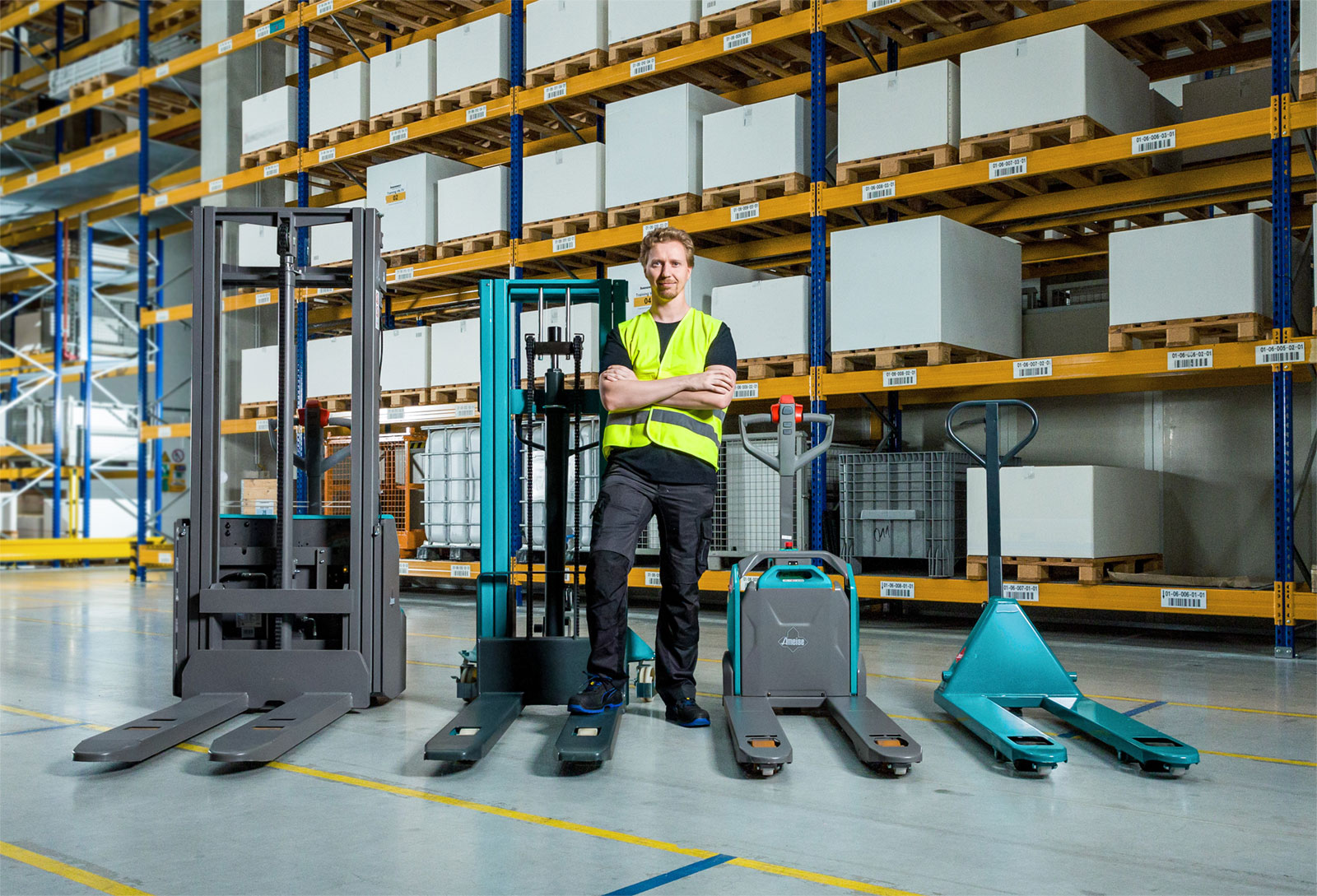
For investors and operators, the Ameise represents a hedge against the volatility of fully autonomous systems. By providing a reliable, electric, and highly maneuverable tool, Jungheinrich ensures that the core movement of freight remains uninterrupted, even as the industry experiments with more complex AI-driven logistics.
The continued growth of the Ameise in North America is a signal that the industry is entering a phase of “pragmatic automation”—where the goal is not to replace the human operator entirely, but to provide them with the most efficient, durable, and ergonomic tools possible to handle the increasing volume of global trade.
Key Takeaways
- Space Efficiency: The Ameise’s slim profile allows for operation in aisles as narrow as 1.75 meters.
- Performance: Lifting capacities range from 1.2 to 2.0 tons with heights up to 5.4 meters.
- Modernization: 2026 updates include lithium-ion integration and predictive maintenance software to reduce downtime by 20%.
- Market Position: Increasingly popular in the US as a durable alternative to “throwaway” jacks and overly complex robotics.
- Sustainability: AC motors and regenerative braking reduce energy consumption during multi-shift use.
As Jungheinrich continues to push into automated intralogistics, the Ameise remains the foundational tool for those who cannot afford downtime. The next phase of development for the series is expected to further integrate with fleet management systems to optimize real-time energy use and load tracking.
We aim for to hear from you: Is your facility moving toward full automation, or are you finding that reliable, operator-led equipment like the Ameise is still the most efficient choice? Share your experiences in the comments below.
Related reading