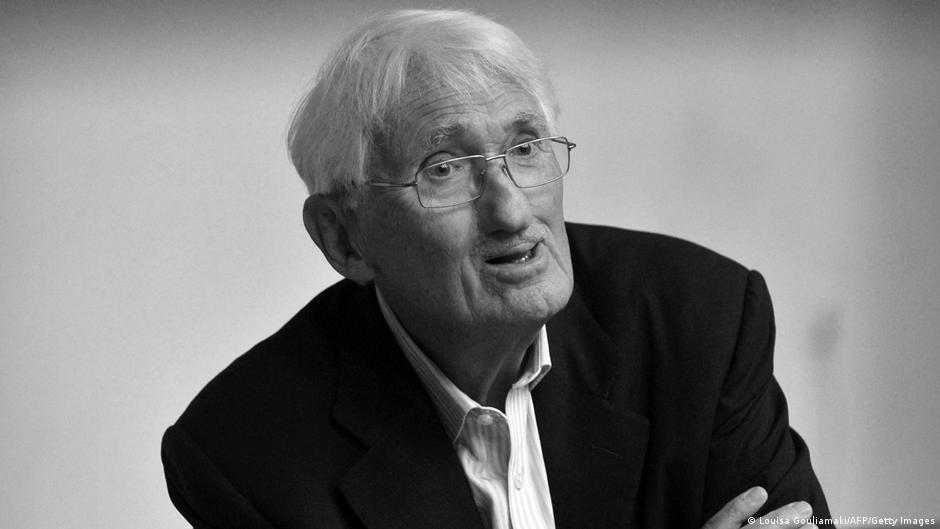
Jürgen Habermas, Influential German Philosopher, Dies at 96
Jürgen Habermas, one of postwar Germany’s most important and influential thinkers, has died at the age of 96. The news was announced on Saturday, March 14, 2026, by the Suhrkamp publishing house, according to reports from DW and WRAL. Habermas’s work profoundly shaped fields ranging from sociology and political science to philosophy and communication studies, leaving an indelible mark on intellectual discourse in the latter half of the 20th and early 21st centuries.
Born on June 18, 1929, in Düsseldorf, Germany, Habermas lived through a period of immense societal upheaval and dedicated his life to understanding and addressing the challenges facing democratic societies. His intellectual journey was deeply informed by the experiences of postwar Germany, the rise of student movements in the 1960s, and the ongoing quest for a just and equitable social order. He became a leading figure in the critical theory tradition, building upon the work of the Frankfurt School and developing his own distinctive approach to analyzing power, communication, and social change. Habermas’s concept of the “public sphere” – a realm of open and rational debate – remains central to contemporary discussions about democracy and civic engagement.
In recent years, Habermas increasingly focused on the require for greater European integration, advocating for a federal European structure as a means of preventing a resurgence of nationalist rivalries reminiscent of the 20th century. He believed a stronger, more unified Europe was essential for safeguarding peace and promoting shared values. His commitment to a federal Europe stemmed from a deep concern about the potential for fragmentation and conflict within the continent, and a conviction that collective action was necessary to address shared challenges.
The Architect of Communicative Rationality
Habermas is best known for his theory of communicative rationality, which posits that rational consensus can be achieved through open and uncoerced communication. This theory, detailed in his seminal work, The Theory of Communicative Action (1981), challenged traditional notions of rationality as solely instrumental or focused on individual self-interest. Instead, Habermas argued that genuine rationality emerges from a process of mutual understanding and agreement, where participants are willing to listen to and consider each other’s perspectives. This emphasis on dialogue and deliberation has had a significant impact on fields such as conflict resolution, mediation, and democratic theory.
His work extended beyond theoretical frameworks, actively engaging with contemporary political and social issues. He was a vocal critic of what he termed the “fascism of the left,” arguing that certain forms of radical activism could pose a threat to the principles of liberal democracy and the rule of law. This stance, articulated in the 1990s, sparked considerable debate and controversy, but underscored his unwavering commitment to defending fundamental rights and freedoms. He also offered sharp critiques of the reunification of Germany in 1989, expressing concerns that the process was driven primarily by market forces and neglected the social and cultural implications for East Germans.
Throughout his career, Habermas received numerous accolades and honorary degrees, recognizing his profound contributions to intellectual life. He was widely regarded as Germany’s most influential intellectual of his generation, and his ideas continue to be studied and debated by scholars and policymakers around the world. His influence extends to diverse fields, including law, political science, sociology, and communication studies, and his work remains relevant to contemporary challenges facing democratic societies.
Early Life and Intellectual Development
Habermas’s early life was marked by the shadow of Nazism. While born in 1929, he was incorporated into the Hitler Youth during World War II, though he was too young to actively participate in combat. This experience, along with the subsequent reckoning with Germany’s past, profoundly shaped his intellectual development and his commitment to democratic values. After the war, he studied philosophy, sociology, and economics at the Universities of Göttingen, Bonn, and Marburg, earning his doctorate from the University of Bonn in 1954.
He initially worked as a journalist before embarking on an academic career. In 1964, he became a professor at the University of Frankfurt, succeeding Theodor W. Adorno, a key figure in the Frankfurt School. Habermas continued to develop and refine the critical theory tradition, emphasizing the importance of reason, communication, and social critique. His work challenged prevailing assumptions about power, ideology, and the nature of social order, offering a powerful vision of a more just and democratic society.
Habermas’s intellectual legacy extends far beyond academic circles. His ideas have informed social movements, political activism, and public policy debates around the world. His emphasis on the importance of public discourse, the need for rational deliberation, and the defense of democratic values continues to resonate in an era of increasing polarization and political fragmentation. He leaves behind a body of work that will undoubtedly continue to inspire and challenge generations of thinkers and activists to come.
The passing of Jürgen Habermas marks the end of an era in philosophical and political thought. His contributions to our understanding of communication, democracy, and the challenges of modernity will continue to be studied and debated for years to come. His commitment to reason, dialogue, and social justice serves as a powerful reminder of the enduring importance of these values in a complex and rapidly changing world.
Further updates regarding memorial arrangements and tributes to Professor Habermas are expected to be released by Suhrkamp publishing house in the coming days. Readers interested in learning more about his work are encouraged to explore his extensive writings and engage in discussions about his enduring legacy.