
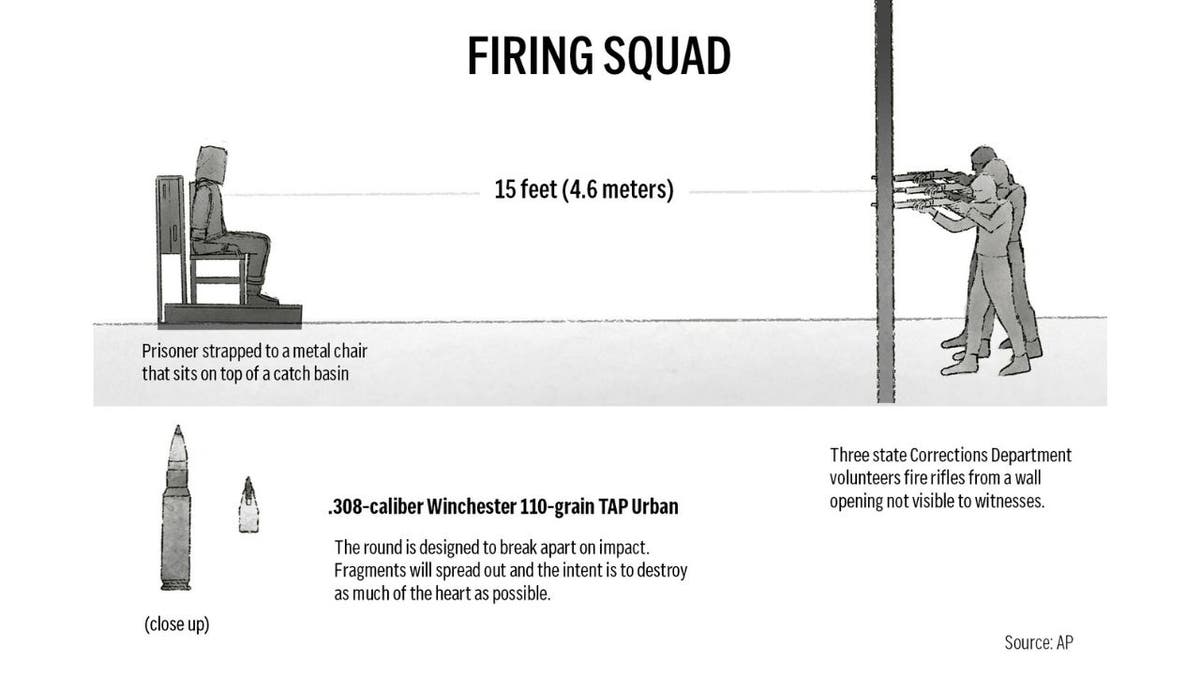
On Friday, April 24, 2026, the U.S. Department of Justice announced It’s taking actions to strengthen the federal death penalty, including readopting the firing squad as an authorized method of execution and reinstating the lethal injection protocol used during the first Trump administration. The move follows President Trump’s day-one executive order directing the department to prioritize seeking and implementing death sentences to protect public safety.
Acting Attorney General Todd Blanche said the department had rescinded a Biden-era moratorium on federal executions and authorized seeking death sentences against nine individuals. The Justice Department stated that among the actions taken were readopting the lethal injection protocol utilized during the first Trump administration, expanding the protocol to include additional manners of execution such as the firing squad, and streamlining internal processes to expedite death penalty cases.
These steps, the department said, are critical to deterring the most barbaric crimes, delivering justice for victims, and providing long-overdue closure to surviving loved ones. Blanche emphasized that under President Trump’s leadership, the Department of Justice is once again enforcing the law and standing with victims.
The federal government had not carried out an execution for nearly two decades before President Trump restarted federal executions during his first term in office from 2017 to 2021. The prior administration had refrained from pursuing or carrying out capital punishment against individuals deemed the most dangerous criminals, including terrorists, child murderers, and cop killers, according to Blanche.
Federal Execution Methods Expanded
The Justice Department’s announcement confirmed that firing squads would be added to the federal execution protocol alongside lethal injection. This marks the first time the federal government has authorized firing squads as a method of execution since the 19th century. The lethal injection protocol being readopted relies on pentobarbital as the lethal agent, consistent with the procedure used during the Trump administration’s resumption of federal executions.

While the Justice Department did not mention electrocution in its official statement on April 24, 2026, some media reports had suggested the department was considering a broader range of execution methods. However, only the firing squad and lethal injection were explicitly confirmed in the department’s press release and subsequent statements by Acting Attorney General Blanche.
The expansion of execution methods comes as the department seeks to address delays in carrying out death sentences. By streamlining internal processes and authorizing multiple execution methods, the Justice Department aims to expedite cases where inmates have exhausted their appeals.
Legal and Procedural Context
The federal death penalty had been subject to a moratorium during the Biden administration, which the Justice Department has now rescinded. The department’s actions are framed as fulfilling President Trump’s directive to prioritize capital punishment in appropriate cases and to promptly carry out those sentences.
Under the revived protocol, the Federal Bureau of Prisons (BOP) is responsible for implementing executions. The BOP had previously carried out 13 federal executions between July 2020 and January 2021 using lethal injection with pentobarbital before the pause was instituted.
The Justice Department did not specify a timeline for when the first execution under the fresh protocol might occur, noting that cases must first proceed through the judicial system until all appeals are exhausted. The department emphasized that its focus is on restoring the ability to carry out lawful capital sentences rather than setting a specific schedule for executions.
Stakeholder Reactions and Implications
Victims’ advocacy groups have generally supported the move, arguing that the death penalty provides closure and justice for families affected by heinous crimes. Conversely, civil rights organizations and legal experts opposed to capital punishment have criticized the decision, citing concerns about arbitrariness, racial disparities, and the risk of executing innocent individuals.
The leverage of firing squads, while rare in modern U.S. Practice, remains legal in a few states for state-level executions. Mississippi, Oklahoma, and Utah have authorized firing squads as an alternative method, primarily to be used if lethal injection is unavailable. The federal government’s adoption of firing squads aligns with these state-level policies but marks a significant expansion at the national level.
Legal scholars note that the addition of execution methods could face constitutional challenges under the Eighth Amendment’s prohibition against cruel and unusual punishment. However, the Supreme Court has historically upheld various execution methods as constitutional when they do not involve unnecessary pain or torture.
What Happens Next
The next step in the process involves the Federal Bureau of Prisons finalizing its updated execution protocols and ensuring compliance with any required administrative procedures. The Justice Department has indicated it will continue to review and process death penalty cases, but no executions can be carried out until inmates have completed all judicial appeals.

For updates on federal death penalty policy, execution protocols, or related legal proceedings, readers can refer to the U.S. Department of Justice’s official website and the Federal Bureau of Prisons’ public announcements. Court filings and congressional oversight hearings may also provide further insight into the implementation of these changes.
As this story develops, World Today Journal will continue to monitor verified sources for factual updates. Readers are encouraged to share their thoughts in the comments section and to follow our coverage for ongoing developments.