
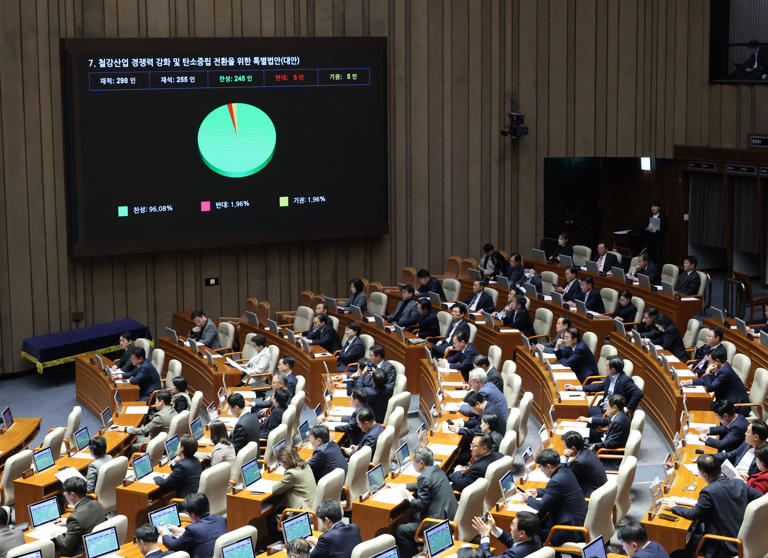
The South Korean government officially implemented the Special Act on Strengthening the Competitiveness of the Steel Industry and Transition to Carbon Neutrality, commonly referred to as the “K-Steel Act,” effective June 17, 2024. This legislative framework serves as a strategic response to mounting global trade pressures, including intensified supply chain volatility and the urgent mandate for decarbonization within the nation’s heavy industrial sector. According to the Ministry of Trade, Industry and Energy (MOTIE), the law provides a structured legal basis for providing financial, technical, and regulatory support to steelmakers navigating the transition to low-carbon production methods.
For South Korea, a nation where steel production remains a cornerstone of the manufacturing economy, the K-Steel Act represents a shift from traditional capacity-focused growth toward a future defined by environmental compliance and high-value, eco-friendly materials. Industry analysts suggest that the legislation is intended to mitigate the impact of international carbon border adjustment mechanisms, such as the European Union’s Carbon Border Adjustment Mechanism (CBAM), which threatens to impose significant costs on carbon-intensive exports.
Strategic Drivers for the K-Steel Act
The primary impetus for the legislation is the dual challenge of global oversupply and the rapid rise of green protectionism. Steel manufacturing is one of the most energy-intensive industries globally, and South Korean firms, including POSCO and Hyundai Steel, face increasing pressure to replace coal-based blast furnaces with hydrogen-based reduction technologies. As noted in recent World Steel Association reports, the global transition to “green steel” is no longer a voluntary corporate objective but a prerequisite for maintaining market access in developed economies.
The K-Steel Act authorizes the government to establish specialized industrial clusters and provide R&D subsidies for hydrogen-based steelmaking. By formalizing this support, the South Korean government aims to bridge the “valley of death” that often prevents capital-intensive industrial technologies from reaching commercial scale. Furthermore, the law includes provisions to streamline administrative procedures for companies attempting to repurpose existing facilities for eco-friendly production, effectively reducing the regulatory burden on firms undergoing major capital expenditure projects.
Addressing Global Trade Barriers
International trade dynamics have necessitated a more proactive industrial policy. With the European Union and other major trading partners implementing strict emissions standards, South Korean steel exports face a potential decline in competitiveness if the industry remains reliant on traditional, carbon-heavy methods. The European Commission’s CBAM framework, which began its transitional phase in late 2023, serves as a primary reference point for why the K-Steel Act was prioritized at this juncture.
The legislation seeks to insulate domestic producers by fostering a domestic market for low-carbon steel. By encouraging state-owned enterprises and large-scale public infrastructure projects to prioritize the procurement of “green steel,” the government intends to create a stable demand base. This demand-side intervention is designed to give steelmakers the financial confidence required to justify the multi-billion-dollar investments needed to transition their core production assets.
Impact on Industrial Competitiveness
Beyond carbon neutrality, the K-Steel Act aims to reorganize the domestic steel supply chain to improve resilience against external shocks. South Korea’s reliance on imported raw materials, such as iron ore and coking coal, has historically left the industry vulnerable to global price fluctuations. The new law introduces mechanisms to diversify supply chains and promote the domestic production of high-value alloy steels that are less susceptible to the commoditization cycle that defines much of the global market.
Industry stakeholders have highlighted that the success of this legislation will depend heavily on the scale of funding allocated to the transition. While the law provides the legal framework for support, the actual budgetary commitments remain subject to annual parliamentary reviews. According to the Korea Iron & Steel Association, domestic companies are already in the process of auditing their carbon footprints to align with the new requirements, though the pace of adoption will vary significantly between large conglomerates and small-to-medium-sized enterprises (SMEs) within the supply chain.
Next Steps for Implementation
The implementation phase of the K-Steel Act will involve a series of secondary regulations and specific policy announcements regarding R&D grant eligibility. The government is expected to release a detailed roadmap for the “Green Steel Transition Fund” by the end of the current fiscal year. For businesses operating within the sector, the coming months will be critical as they align their internal sustainability roadmaps with the government’s newly defined criteria for financial assistance.

Market observers will be monitoring the next National Assembly session for updates on the specific budget allocations for the 2025 fiscal year. As the industry adapts to these new legal requirements, the focus will remain on whether the government can effectively balance the immediate need for carbon reduction with the long-term goal of maintaining South Korea’s status as a leading global steel exporter. Readers interested in following these developments are encouraged to monitor the official announcements from the Ministry of Trade, Industry and Energy for upcoming public hearings and policy briefings.