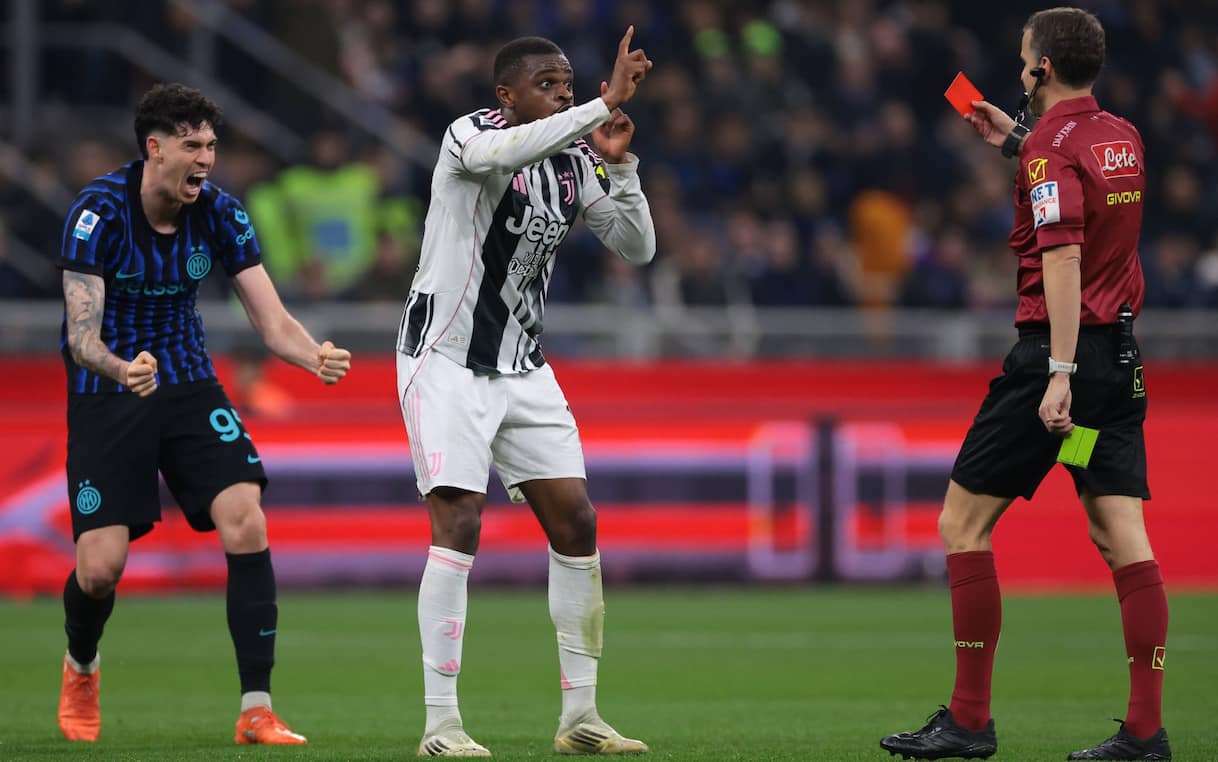
Rome – The Italian Football Federation (FIGC) President Gabriele Gravina has rejected Juventus’ appeal for a sporting pardon for defender Pierre Kalulu following his recent suspension, a decision that underscores the strict application of disciplinary rules in Serie A. The appeal came after Kalulu received a one-match ban for accumulating two yellow cards during a heated match against Inter Milan at the San Siro stadium.
The incident has sparked debate about the consistency of refereeing decisions and the potential for subjective interpretation in issuing cautions. Juventus argued that the circumstances surrounding Kalulu’s dismissal warranted a review, citing what they considered an “evident injustice.” However, the FIGC’s decision affirms the principle that once a suspension is issued based on on-field decisions, it is difficult to overturn, even with appeals to the highest authorities within Italian football.
Juventus’ Appeal and the FIGC’s Stance
Juventus formally requested the pardon, arguing that the double yellow card offense was not a clear-cut case and that overturning the suspension was justified. The club’s appeal was initially presented to the National Sports Court of Appeal, which ultimately dismissed the claim as inadmissible. This decision was based on the regulations which do not allow for a reduction of an automatic one-match suspension resulting from a direct red card. Following this setback, Juventus escalated the matter to President Gravina, hoping for a more favorable outcome. However, Gravina upheld the original decision, effectively ending the club’s efforts to have Kalulu available for their upcoming match against Como.
The FIGC’s firm stance highlights the importance of maintaining the integrity of the referee’s authority during matches. Allowing a pardon in this instance, officials feared, would set a dangerous precedent, potentially opening the door to challenges against every disciplinary decision made on the field. This could lead to increased scrutiny of referees and a destabilization of the game’s regulatory framework. The principle of “ne bis in idem” – meaning one cannot be tried twice for the same offense – was also a key consideration in the decision-making process.
Precedent and the Lukaku Case
The decision to deny Juventus’ appeal was further contextualized by a comparison to a similar situation involving Inter Milan’s Romelu Lukaku in 2023. During a Coppa Italia semi-final match against Juventus, Lukaku received a second yellow card and subsequent suspension. However, in that instance, President Gravina granted a pardon, but under incredibly specific and exceptional circumstances. ESPN reported that the pardon was granted due to the racially motivated nature of the abuse directed at Lukaku by some fans, which provoked his reaction leading to the second yellow card.
Gravina explicitly stated at the time that the Lukaku case was an “exceptional and extraordinary” situation. The pardon wasn’t for the suspension itself, but rather for the second yellow card, allowing half of the penalty to be considered served whereas maintaining the first yellow card for accumulation purposes. This distinction is crucial, as it demonstrates that pardons are reserved for truly unique circumstances, such as those involving discriminatory behavior, and are not routinely granted for standard on-field disciplinary actions. The Lukaku case, served as a clear benchmark against which the Kalulu appeal was measured.
The Importance of Consistency in Disciplinary Action
The FIGC’s decision underscores the importance of maintaining consistency in applying disciplinary rules. Granting a pardon to Kalulu would have opened the floodgates for similar appeals, potentially undermining the authority of referees and creating a chaotic environment where every contentious decision could be challenged. This would not only prolong match-related disputes but also erode the fairness and integrity of the competition. The Italian football authorities are keen to avoid a situation where the perception of justice is compromised by inconsistent application of the rules.
the decision reflects a broader trend in football governance towards upholding the decisions made by match officials. While video assistant referee (VAR) technology has been introduced to correct clear and obvious errors, it is not intended to overturn subjective judgments made by referees in the heat of the moment. The FIGC’s stance reinforces this principle, emphasizing that referees have the final say on matters of fact during a match, and their decisions should only be overturned in exceptional circumstances.
Impact on Juventus and Kalulu’s Availability
The rejection of the appeal means that Pierre Kalulu will be unavailable for Juventus’ upcoming Serie A match against Como on February 28, 2026. This is a significant blow to Juventus, as Kalulu has grow a key player in their defense. His absence will likely require coach Massimiliano Allegri to reshuffle his backline and potentially rely on less experienced players. The match against Como is crucial for Juventus as they continue their pursuit of a top spot in the Serie A standings.
The situation also raises questions about the potential for further disciplinary action against Juventus if they continue to challenge refereeing decisions. While clubs have the right to appeal decisions they believe are unjust, excessive or frivolous appeals could lead to sanctions from the FIGC. The federation is keen to discourage clubs from undermining the authority of match officials and will likely take a firm stance against any attempts to do so.
Looking Ahead: Serie A Disciplinary Procedures
The Kalulu case serves as a reminder of the complex disciplinary procedures in Serie A and the challenges faced by clubs seeking to overturn suspensions. The process involves multiple layers of appeal, from the National Sports Court to the FIGC President, but the threshold for overturning a decision is high. Clubs must demonstrate a clear and compelling case of injustice, and even then, the outcome is far from guaranteed.
The incident also highlights the ongoing debate about the role of VAR in Serie A. While VAR has helped to correct some clear and obvious errors, it has also been criticized for slowing down the game and creating confusion among players and fans. The FIGC is constantly reviewing the implementation of VAR and considering ways to improve its effectiveness and transparency. The goal is to strike a balance between ensuring fair play and maintaining the flow of the game.
The decision regarding Kalulu’s suspension is final, and Juventus must now focus on preparing for their match against Como without one of their key defenders. The incident serves as a cautionary tale for other clubs, reminding them that challenging refereeing decisions is a difficult and often unsuccessful endeavor. The integrity of the game and the authority of match officials remain paramount in Serie A, and the FIGC is committed to upholding these principles.
The next step will be Juventus’ preparation for their match against Como, with the team needing to adjust their defensive strategy in Kalulu’s absence. Fans and analysts will be closely watching to see how the team performs without the key defender, and whether this setback will impact their overall performance in the league. The outcome of this match, and subsequent games, will be crucial in determining Juventus’ chances of securing a top position in Serie A.
What are your thoughts on the FIGC’s decision? Share your opinions in the comments below, and don’t forget to share this article with your fellow football enthusiasts.
Worth a look