Warsaw – Polish President Karol Nawrocki is facing increasing scrutiny over his frequent use of veto power, sparking a political debate dubbed “the veto war” within the country. Since assuming office on August 6th, 2025, President Nawrocki has vetoed a significant number of bills passed by the Sejm, the lower house of the Polish parliament, raising questions about the balance of power and the president’s legislative agenda. As of January 9th, 2026, he had already vetoed 144 pieces of legislation, a rate unprecedented in Poland’s post-communist era. This aggressive use of the presidential veto is prompting both criticism and support, with opponents accusing him of obstructionism and supporters praising his commitment to safeguarding key principles.
The sheer volume of vetoes issued by President Nawrocki has drawn comparisons to George Orwell’s dystopian novel, *Nineteen Eighty-Four*, with some critics labeling him a “vetomat” – a portmanteau of “veto” and “automat.” However, the President himself dismissed this characterization, arguing that he has, in fact, vetoed too few bills to warrant such a label. This assertion came during a period where his actions were under intense public and political examination. The situation highlights a fundamental tension between the executive and legislative branches of the Polish government, and the debate extends to the very nature of presidential power and its role in a democratic society.
Record-Breaking Vetoes and Rising Concerns
President Nawrocki’s record-breaking pace of vetoes began almost immediately after his inauguration. Within the first four months of his presidency, he had vetoed 17 bills, surpassing the number vetoed by any previous Polish president during a comparable timeframe. For context, his predecessor, Andrzej Duda, vetoed only four bills within his first 100 days in office, while Bronisław Komorowski, Lech Kaczyński, and Aleksander Kwaśniewski did not veto any during their initial periods. TVN24 reported on this unprecedented rate, highlighting the significant shift in the dynamics of Polish politics.
This trend continued into 2026, with President Nawrocki vetoing three additional bills on January 9th, as announced by the Presidential Chancellery via social media. The vetoed legislation included a controversial amendment to the law on electronic services, which the President argued contained provisions akin to “administrative censorship.” He specifically objected to aspects of the bill that would have granted government officials control over online content, comparing it unfavorably to the surveillance state depicted in Orwell’s *Nineteen Eighty-Four*. Polsat News detailed the President’s concerns, quoting his statement that the proposed law would allow for the funding of “trusted informants” to identify and flag dissenting opinions online.
Public Opinion and Political Reactions
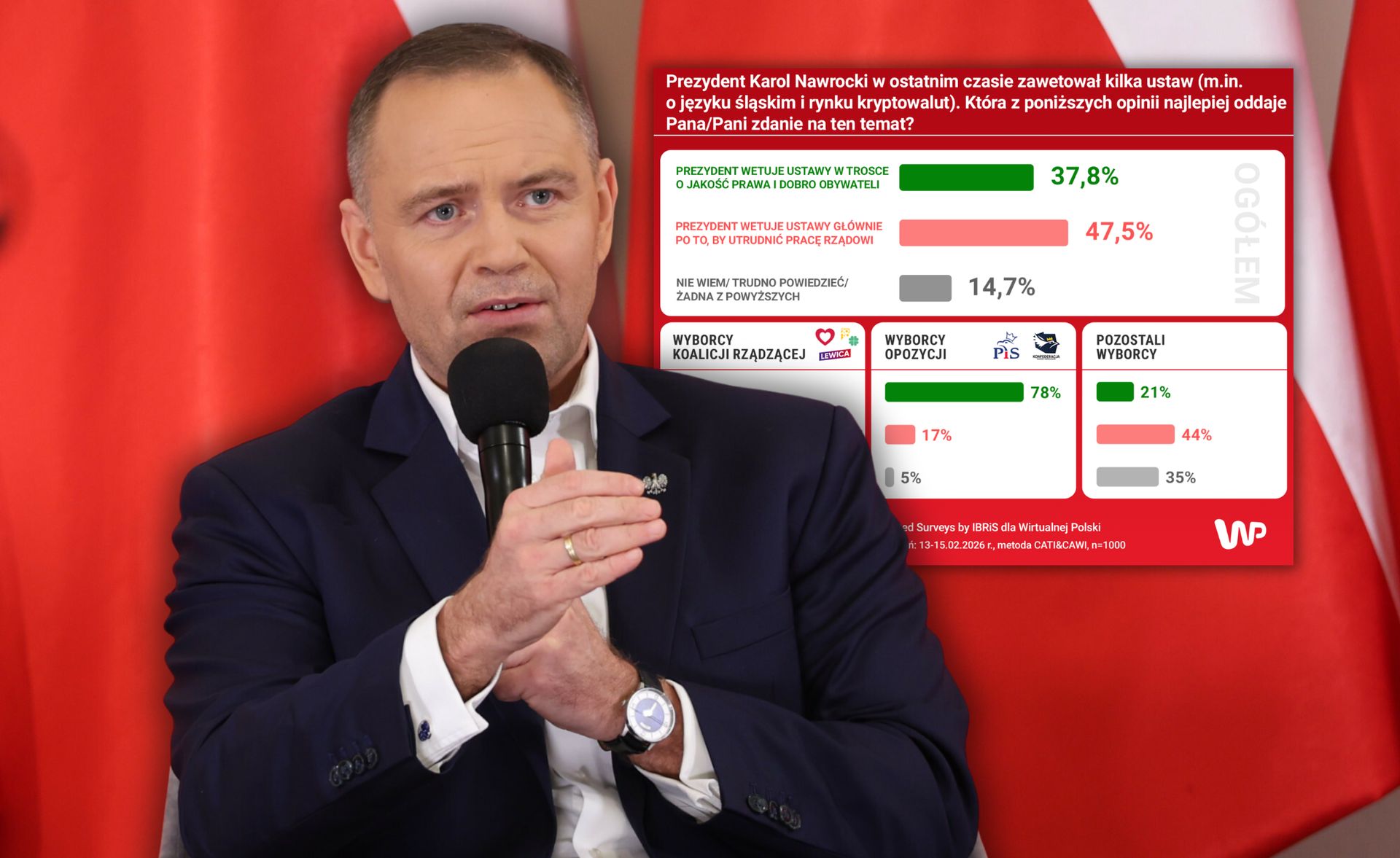
Public reaction to President Nawrocki’s frequent vetoes has been mixed. Recent polls indicate a growing skepticism regarding the President’s motives, with a majority of Poles expressing a belief that his vetoes are not driven by genuine concerns for the country’s welfare but rather by political considerations. According to a survey reported by GazetaPrawna.pl, a significant portion of the population does not believe in the impartiality of his vetoes.
Despite the public skepticism, President Nawrocki maintains that his actions are necessary to protect the interests of the Polish people. He has signed 95 bills into law during his presidency, emphasizing that he is not simply obstructing the legislative process. He argues that he is carefully reviewing each bill to ensure it aligns with the constitution and serves the best interests of the nation. He has also pointed to instances where the government has revised legislation in response to his vetoes, suggesting that his actions are having a positive impact on the quality of laws being passed.
The Digital Services Act Veto and Concerns over Censorship
The veto of the amendment to the law on electronic services, often referred to as the Digital Services Act (DSA), has been particularly contentious. President Nawrocki argued that the bill’s provisions would grant the government excessive control over online content, potentially stifling freedom of expression and creating a climate of censorship. He expressed concern that the law could be used to suppress dissenting voices and punish individuals for expressing unpopular opinions. Polsat News reported that the President specifically objected to the possibility of funding “trusted informants” to identify and report “undesirable” content and individuals.
This veto has sparked a debate about the balance between regulating online content and protecting freedom of speech. Supporters of the DSA argue that it is necessary to combat illegal content and protect users from harmful online activities. However, critics contend that the bill’s broad language and vague provisions could be used to suppress legitimate expression and undermine democratic values. The President’s decision to veto the DSA underscores his commitment to defending civil liberties and resisting what he perceives as government overreach.
X/Twitter Post from the Presidential Chancellery
Łącznie już 144 razy mój podpis… pic.twitter.com/M6e7yEfUHL — Kancelaria Prezydenta RP (@prezydentpl) January 9, 2026
Looking Ahead: Potential for Continued Conflict
With President Nawrocki continuing to demonstrate a willingness to use his veto power, the potential for further conflict between the executive and legislative branches remains high. Minister of Justice Waldemar Żurek has suggested that, if the current rate of vetoes continues, President Nawrocki could surpass the total number of vetoes issued by all previous Polish presidents combined by spring 2027. This prediction underscores the unprecedented nature of the current situation and the potential for a prolonged period of political tension.
The coming months will be crucial in determining the future of Polish politics. The Sejm may attempt to override the President’s vetoes, requiring a three-fifths majority vote. Alternatively, the government may seek to negotiate compromises with the President to avoid further confrontations. The outcome of these efforts will have significant implications for the direction of Polish policy and the stability of the country’s democratic institutions. The next key date to watch is February 28th, 2026, when the Sejm is scheduled to reconvene to discuss the vetoed DSA amendment.
The ongoing “veto war” in Poland is a complex and multifaceted issue with far-reaching consequences. It raises fundamental questions about the role of the presidency, the balance of power, and the protection of civil liberties. As the situation continues to unfold, it will be essential to closely monitor the actions of both the executive and legislative branches and to assess the impact of these developments on the future of Polish democracy.
Stay informed: For the latest updates on this developing story, follow TVN24 and Polsat News.