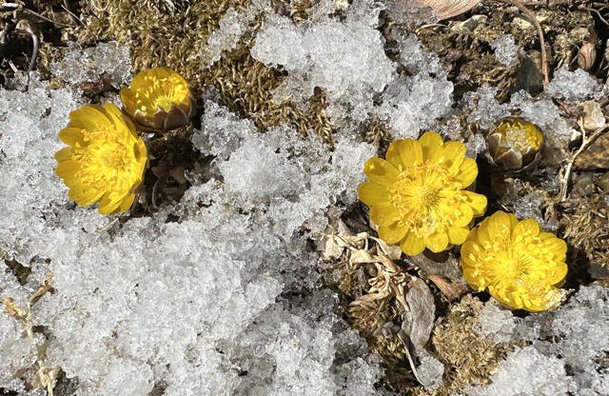
Soyangsan National Park, South Korea – As the Korean peninsula remains in the grip of winter, a vibrant sign of spring has emerged in Soyangsan National Park. The Adonis amurensis, commonly known as the Korean pasque flower or “boksucho” in Korean, has begun to bloom, offering a striking contrast to the lingering snow. The delicate yellow blossoms are a traditional symbol of good fortune and longevity, and their appearance is eagerly anticipated by locals and visitors alike.
The first blooms were observed on February 19, 2026, marking the Usu solar term, a day traditionally associated with the awakening of nature in the Korean calendar. The Soyangsan National Park Office, under the National Park Corporation, confirmed the flowering, noting the flower’s resilience in pushing through icy conditions. This early blooming is a testament to the plant’s ability to thrive in harsh environments, earning it the nicknames “ice flower” and “snow flower.”
A Symbol of Resilience and New Beginnings
The boksucho holds a significant place in Korean culture, representing both “bok” (福 – fortune) and “su” (壽 – longevity). Its ability to blossom amidst the cold and snow is seen as a metaphor for overcoming adversity and embracing new beginnings. The flower’s unique characteristic of opening its golden petals in sunlight and closing them when cloudy or at night adds to its mystique. The Fact reports that the blooms are currently visible in the Samga district of Soyangsan National Park, particularly on sunny slopes.
소백산국립공원에 봄을 알리는 복수초가 노랗게 피어 있다. (사진=소백산국립공원사무소 제공)
The Korean pasque flower is a perennial plant belonging to the buttercup family (Ranunculaceae). It typically grows in sunny, slightly moist areas. Newsis details that the plant’s vibrant yellow petals unfurl in the sunlight, creating a stunning visual display. However, park officials caution visitors to observe the delicate flowers from a distance to avoid disturbing their natural habitat.
Beyond the Boksucho: A Promise of Spring
The blooming of the boksucho is just the first sign of a broader awakening within Soyangsan National Park. Park officials anticipate a succession of spring wildflowers will follow, including Epimedium koreanum (Korean epimedium), Helleborus thibetanus (Tibetan hellebore), Corydalis ambigua (ambiguous corydalis), and Fritillaria cirrhosa (Fritillary). These blooms are expected to peak around mid-March, transforming the park into a vibrant tapestry of color. Kim Hye-gyeong, head of the Resource Conservation Division at Soyangsan National Park Office, emphasized the importance of mindful exploration, advising visitors to “walk slowly and observe nature carefully” to fully appreciate the delicate beauty of these wildflowers.
Soyangsan National Park, located in Yeongju, North Gyeongsang Province, is a popular destination for hikers and nature enthusiasts. The park is known for its rugged peaks, dense forests, and diverse flora, and fauna. The arrival of the boksucho signals the beginning of the park’s peak season, attracting visitors eager to witness the transition from winter to spring. The park’s accessibility and stunning scenery make it an ideal location for a springtime getaway.
Conservation Efforts and Responsible Tourism
The National Park Corporation is actively involved in conservation efforts to protect the boksucho and other vulnerable wildflowers within Soyangsan National Park. These efforts include habitat preservation, monitoring of plant populations, and public education campaigns promoting responsible tourism. Park officials urge visitors to stay on designated trails, avoid picking flowers, and refrain from disturbing the natural environment. Daegu Ilbo highlights the need to protect these delicate plants, as their small size makes them easily overlooked and susceptible to damage.
The park’s Resource Conservation Division is also conducting research to better understand the ecological factors influencing the boksucho’s blooming patterns. This research will help inform future conservation strategies and ensure the long-term survival of this iconic spring flower. The ongoing monitoring of the park’s biodiversity is crucial for maintaining the ecological integrity of this valuable natural resource.
Planning Your Visit to Soyangsan National Park
For those planning a visit to Soyangsan National Park to witness the boksucho and other spring wildflowers, it is recommended to check the park’s official website for the latest updates on blooming conditions and trail closures. Visitors should also be prepared for varying weather conditions, as the mountains can experience sudden changes in temperature and precipitation. Appropriate hiking gear, including sturdy footwear, waterproof clothing, and sunscreen, is essential. The park offers a range of hiking trails to suit different fitness levels, from easy strolls to challenging climbs.
The park is accessible by public transportation, with buses connecting Yeongju City to the park entrance. Accommodation options are available in nearby towns and cities, ranging from traditional Korean guesthouses to modern hotels. Visitors are encouraged to support local businesses and contribute to the sustainable development of the region.
The blooming of the boksucho in Soyangsan National Park is a poignant reminder of the resilience of nature and the beauty of the changing seasons. It’s a spectacle that draws visitors from across South Korea and beyond, offering a moment of tranquility and a renewed appreciation for the natural world. As the park prepares for the influx of spring visitors, conservation efforts remain paramount to ensure that future generations can enjoy the splendor of this unique ecosystem.
Park officials anticipate further updates on the progression of the spring bloom will be available in early March. Stay tuned to the Soyangsan National Park Office website for the latest information. We encourage readers to share their experiences and photos of the boksucho blooms in the comments below.
Worth a look