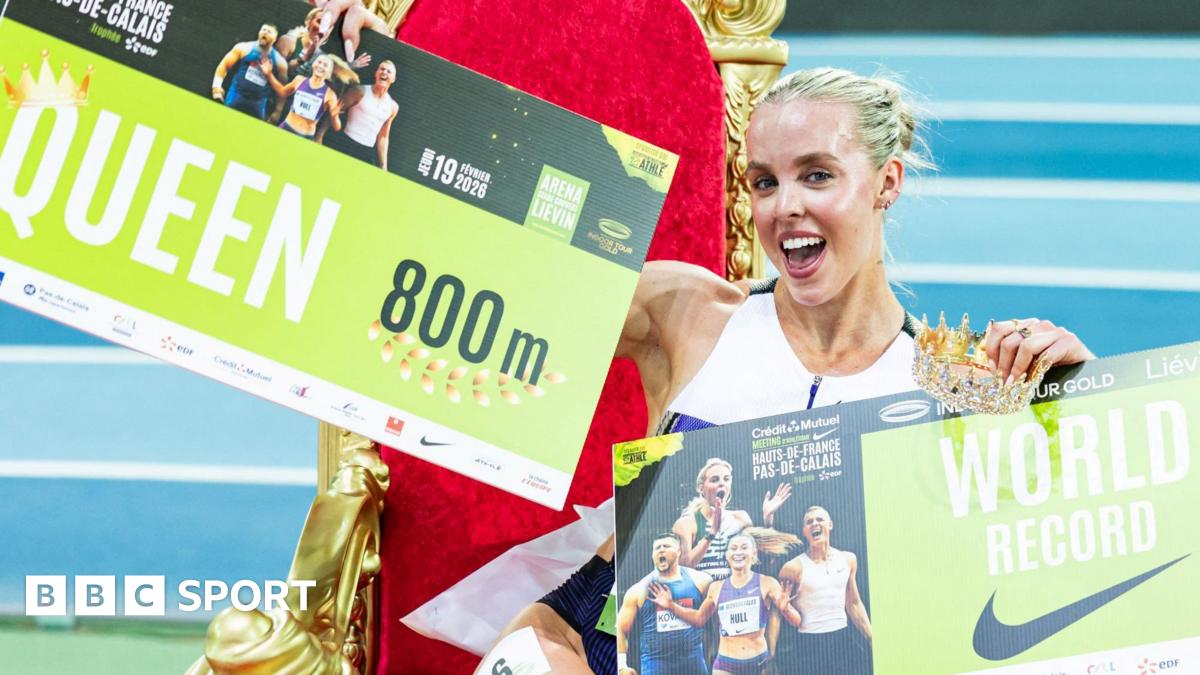
As the track and field season intensifies, all eyes in the middle-distance world are fixed on British star Keely Hodgkinson. The Olympic silver medalist and reigning European champion has set her sights on a monumental challenge: eclipsing the women’s 800m world record, a benchmark that has remained untouched for over four decades. As we look toward the London Diamond League in July, the atmosphere surrounding this pursuit is electric, marking what many analysts are calling a defining era for the event.
The current world record of 1:53.28 was established by Jarmila Kratochvílová of Czechoslovakia in 1983, a time that has stood as a formidable barrier in athletics history. For Hodgkinson, the prospect of breaking this long-standing 800m mark is more than just a statistical ambition; it represents a homecoming performance that could cement her status among the sport’s all-time greats. Her recent progression—marked by consistency, tactical maturity, and an ability to thrive under the pressure of major championship finals—has led many experts to believe that the record is finally within reach for the 24-year-old athlete.
The Quest for History in London
Hodgkinson has publicly expressed her desire to pursue this historic feat on home soil at the London Diamond League. The meeting, which serves as a cornerstone of the international athletics calendar, provides the ideal stage for such an attempt, offering the high-caliber competition necessary to push an athlete to their physical limit. According to official World Athletics records, the women’s 800m has seen a resurgence in depth and quality, with Hodgkinson consistently leading the charge for a new generation of middle-distance runners.
The significance of the 1983 record cannot be overstated. It was set during an era of different training methodologies and technological advancements in track surfaces and footwear. By aiming to lower this time, Hodgkinson is not merely racing against the clock; she is engaging in a multi-generational dialogue about human performance. Her preparation, often conducted under the watchful eye of her coaching team, emphasizes a blend of speed endurance and tactical awareness, which she has refined through multiple seasons of competing against the world’s best.
Understanding the 800m Challenge
The 800m is frequently described as the most grueling event on the track. It requires the explosive power of a sprinter combined with the aerobic capacity of a distance runner. To break the 1:53.28 barrier, an athlete must maintain a blistering pace for two full laps, managing the physiological accumulation of lactic acid while navigating the crowded, often physical environment of a world-class race. Hodgkinson’s tactical approach has been a hallmark of her career; she frequently positions herself in the top tier of the pack, waiting for the optimal moment to make her move in the final 200 meters.
When discussing her goals, Hodgkinson has maintained a grounded perspective, acknowledging the difficulty of the task while expressing the confidence required to compete at the highest level. Her journey to this point has been characterized by consistent podium finishes at the Olympic Games and World Championships, proving that she has the temperament required to perform when the stakes are at their highest. This mental fortitude is exactly what is required to challenge a record of such longevity.
What Lies Ahead for the Season
The path to London is paved with several critical milestones. Athletes must navigate a series of qualifying events and high-intensity meets to ensure they reach peak condition at the right moment. For Hodgkinson, managing the physical toll of these competitions is essential. The Diamond League circuit serves as the primary testing ground, where the world’s elite gather to compete in a structured, high-stakes environment. Success here is often a precursor to major championship dominance.
As the international community awaits the London event, the conversation continues to revolve around the evolution of women’s middle-distance running. The sport has benefited from increased visibility, better funding for training programs, and a greater emphasis on data-driven performance analytics. These factors, combined with the emergence of talents like Hodgkinson, suggest that the coming years could see a significant reshaping of the record books across several disciplines.
Key Factors to Watch
- Tactical Execution: How Hodgkinson manages the “kick” in the final stages of the race will be the deciding factor in her record attempt.
- Field Depth: The presence of other world-class competitors ensures a quick pace, which is necessary for record-breaking conditions.
- Physical Recovery: Managing the intensity of the Diamond League schedule to avoid injury is a primary concern for her team.
- Environmental Conditions: Weather patterns in London during July will play a significant role in the viability of a record-breaking run.
The pursuit of the 800m world record is a reminder of why we engage with sports: the relentless drive to push beyond perceived limits. Whether or not the record falls this July, Hodgkinson’s dedication to her craft and her willingness to aim for the pinnacle of her sport ensure that she remains a central figure in global athletics. As she continues her preparations, the sports world will be watching closely, ready to witness if the 43-year-old mark will finally be eclipsed.

We encourage our readers to share their thoughts on this historic pursuit. Do you believe the 1:53.28 mark is the next major record to fall? Join the conversation in the comments section below and stay tuned to our sports section for ongoing coverage as the London Diamond League approaches.
Keep reading
- Angels Land Arjun Nimmala: The Best Prospect of the 2026 MLB Trade Deadline
- River Plate Outcast Kevin Castaño Sparks Outrage After Praising Rosario Central’s Campaz
- Arsenal Reportedly Agree Blockbuster Deal to Make Vinicius Junior Highest-Paid Premier League Player (archynewsy.com)
- Dongguan Wins 2026 Guangdong Basketball League Championship (newsdirectory3.com)