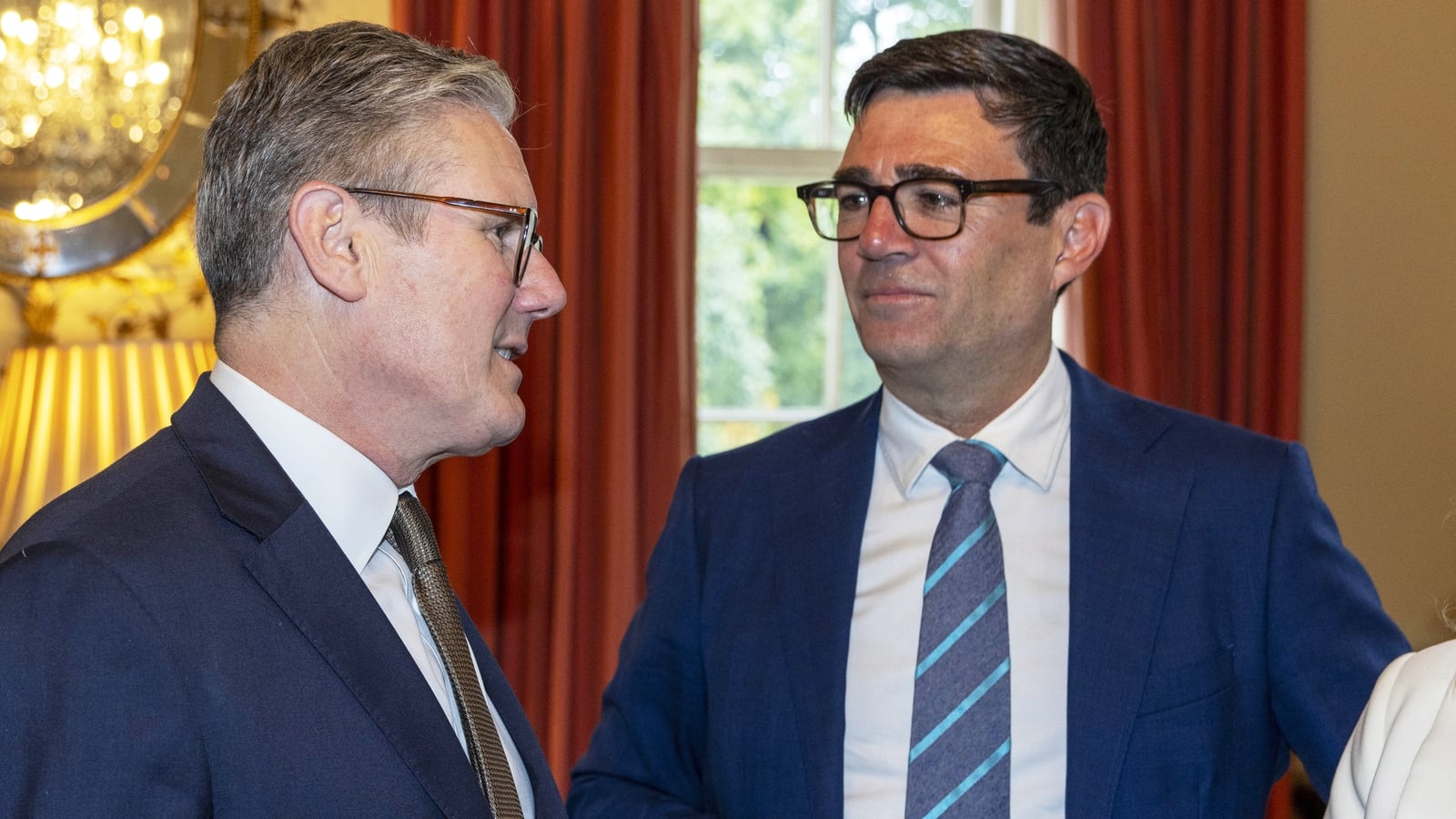
Political Pressure Mounts on Keir Starmer as Andy Burnham Eyes Parliamentary Return
The stability of the current British administration has entered a period of significant uncertainty following reports of a strategic political maneuver intended to reshape the leadership of the Labour Party. Prime Minister Keir Starmer is reportedly facing intensifying pressure as a sitting Labour Member of Parliament (MP) has moved to stand aside, creating a potential pathway for Greater Manchester Mayor Andy Burnham to return to the House of Commons.
This development, if realized, would not only facilitate Burnham’s reentry into national politics but would also position him as a direct challenger to Starmer’s leadership. The prospect of a high-profile figure like Burnham—who has built a formidable political base in the North of England—returning to Parliament suggests a growing rift or a shift in momentum within the party’s internal hierarchy.
For Starmer, whose leadership has been defined by efforts to consolidate party unity following recent electoral cycles, this move represents a significant tactical hurdle. The mechanism of a sitting MP stepping down to allow a heavyweight figure to contest a seat is a rare and potent political tool, often signaling deep-seated ambitions or fundamental disagreements regarding the direction of the government’s policy and leadership style.
A Strategic Shift in Parliamentary Dynamics
The core of the current political tension lies in the reported decision of a Labour MP to vacate their seat. While the specific identity of the MP has not been formally confirmed in official government communications, the implications of such a vacancy are profound. In the British parliamentary system, a vacancy necessitates a by-election, providing a localized arena for a national political contest.
By facilitating this vacancy, the party is essentially clearing a path for Andy Burnham to transition from his influential role as the Mayor of Greater Manchester back into the legislative heart of the country. Burnham has long been viewed as a figure with significant national capital, possessing a brand of politics that resonates deeply within the “Red Wall” constituencies—areas that were pivotal to the Labour Party’s recent electoral successes.
The transition from regional governance to parliamentary influence is a calculated move. As Mayor, Burnham has demonstrated an ability to command significant public attention and manage large-scale regional economic and social policies. A return to Parliament would provide him with the constitutional platform required to challenge the Prime Minister directly on the floor of the House of Commons, rather than exerting influence solely from the periphery of regional government.
The Burnham Factor: Regional Power Meets National Ambition
To understand why this move presents such a challenge to Keir Starmer, one must analyze the political standing of Andy Burnham. As the Mayor of Greater Manchester, Burnham has cultivated a reputation as a champion of regional devolution and local empowerment. His leadership in one of the UK’s most significant economic hubs has provided him with a level of visibility that few other regional leaders possess.
Unlike many politicians who rise through the traditional ranks of parliamentary committees and ministerial roles, Burnham’s power base is rooted in direct executive responsibility at the metropolitan level. This “outsider-insider” status makes him a uniquely potent figure; he is a known quantity within the Labour Party, yet he operates with a degree of autonomy that is often unavailable to sitting MPs or ministers.
A leadership challenge from a figure with Burnham’s regional mandate could tap into broader sentiments regarding the centralisation of power in Westminster. If the Starmer administration is perceived to be drifting away from the core priorities of its heartlands, Burnham’s return to Parliament could serve as a lightning rod for those seeking a more regionally-focused or populist-leaning approach within the party.
Implications for the Starmer Administration
The primary concern for Prime Minister Keir Starmer is the potential for internal fragmentation. A leadership challenge, even one that is unfolding through the indirect mechanism of a by-election and a subsequent parliamentary return, can be deeply destabilizing. It forces party members to choose sides, potentially diluting the government’s ability to pass key legislation and maintain a coherent policy front.

The pressure on Starmer is multifaceted:
- Policy Cohesion: A challenger like Burnham may advocate for different economic or social priorities, particularly concerning regional investment and devolution, which could force the Prime Minister to defend his administration’s record in ways that highlight internal divisions.
- Party Discipline: The act of an MP standing aside specifically to facilitate a leadership rival’s return is a significant breach of traditional political norms, suggesting that the machinery of the party may be working against the sitting Prime Minister.
- Public Perception: Constant internal maneuvering can project an image of instability to both domestic voters and international markets, potentially undermining the government’s perceived authority and ability to govern effectively.
As the political landscape evolves, the Starmer administration will likely need to focus on reinforcing its connection to its core constituencies to preempt the momentum that a returning Burnham could generate.
Key Takeaways
- Leadership Challenge: The reported move by a Labour MP to stand aside is seen as a strategic step to enable Andy Burnham to challenge Keir Starmer’s leadership.
- Burnham’s Profile: As Mayor of Greater Manchester, Burnham brings significant regional political capital and a high public profile to the national stage.
- Political Mechanism: The use of a by-election to facilitate a return to Parliament is a high-stakes maneuver that signals deep political shifts.
- Governmental Stability: The primary risk to the Starmer administration is increased internal party division and a potential loss of focus on central government objectives.
The next critical checkpoint in this developing story will be the formal announcement regarding the parliamentary vacancy and the subsequent scheduling of a by-election. Observers will be closely watching for official statements from the Labour Party leadership and the Greater Manchester Mayor’s office to confirm the timeline of these political shifts.

What are your thoughts on the impact of regional leaders entering national politics? Do you believe this move will reshape the Labour Party’s direction? Let us know in the comments below and share this article with your network.