
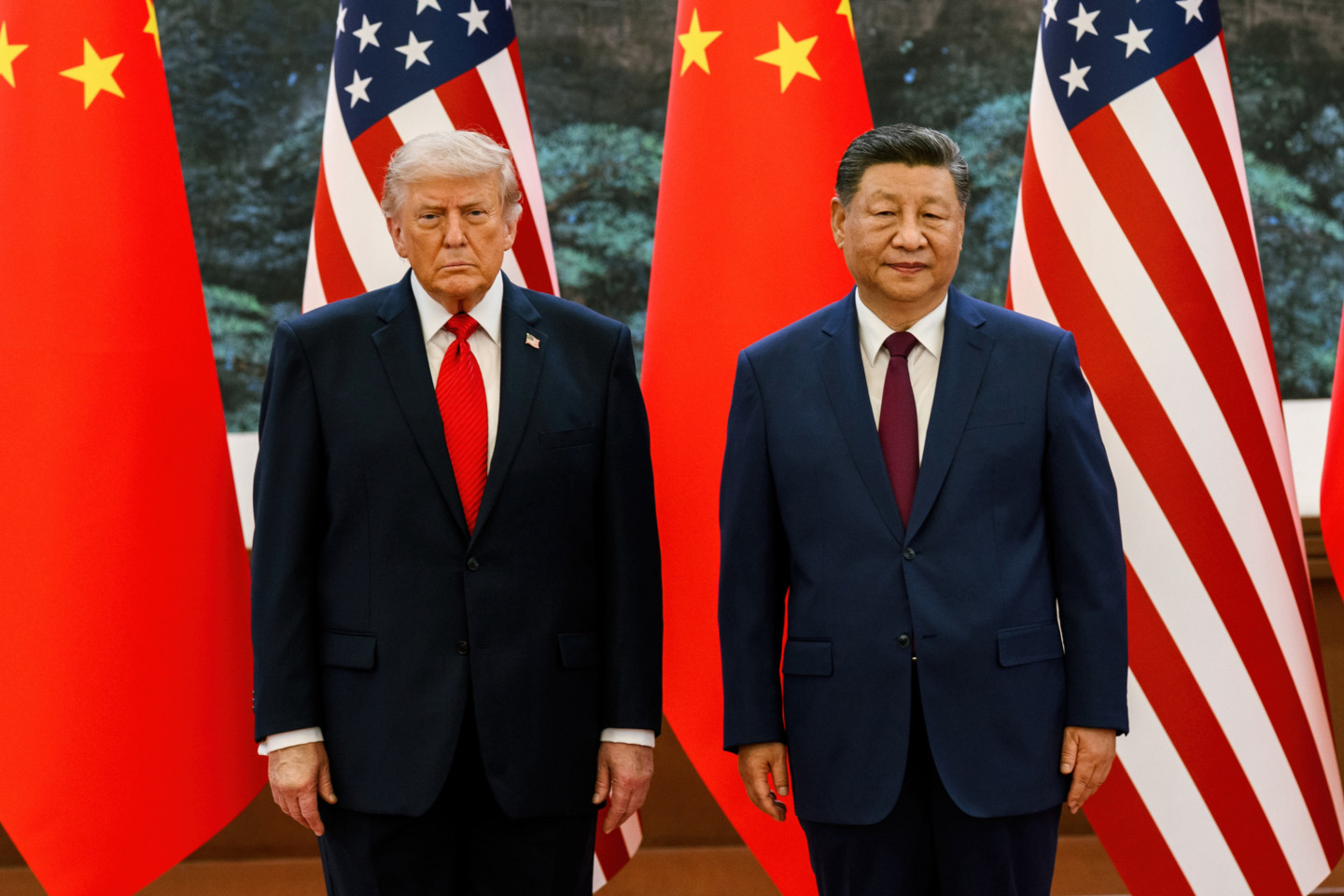
Xi Jinping Warns Trump on Taiwan Stability During High-Stakes Beijing Summit
BEIJING — In a high-stakes diplomatic encounter that could redefine the trajectory of 21st-century geopolitics, Chinese President Xi Jinping issued a stark warning to U.S. President Donald Trump on Thursday, stating that the status of Taiwan could lead to conflicts that “seriously threaten all relations” between the two superpowers.
The meeting, held behind closed doors at the Great Hall of the People, lasted approximately two hours and served as a critical touchstone for an era of intensifying competition, and uncertainty. While President Trump adopted a tone of unprecedented optimism and personal praise, President Xi maintained a disciplined and cautionary stance, emphasizing that the resolution of the Taiwan issue remains the fundamental prerequisite for bilateral stability.
The summit comes at a moment of extreme global volatility, with leaders from the world’s two largest economies grappling with a litany of overlapping crises, ranging from the ongoing war in Ukraine to escalating tensions in the Middle East and the perennial instability of the Korean Peninsula.
The Taiwan Red Line: A Prerequisite for Stability
For President Xi, the discussions were centered on what he characterized as the most sensitive and vital component of the China-U.S. Relationship. According to information provided by the Chinese Ministry of Foreign Affairs, Xi underscored that the “Taiwan issue is the most important issue in China-US relations.”

The Chinese leader’s rhetoric was direct, leaving little room for ambiguity regarding Beijing’s position. He warned that if the issue is not “properly resolved,” the consequences would extend far beyond regional tensions, potentially triggering “clashes and even conflicts” that would jeopardize the entirety of the bilateral relationship.
Xi’s approach appeared designed to frame the Taiwan issue not merely as a territorial dispute, but as a systemic risk to global order. By linking the stability of China-U.S. Ties directly to the outcome in Taiwan, Beijing is signaling to Washington that any perceived shift in the status quo could result in a total breakdown of diplomatic and economic cooperation.
A Study in Contrasting Diplomatic Tones
The atmosphere of the summit was marked by a striking divergence in diplomatic style. President Trump opened the proceedings with a series of highly personal accolades, signaling a desire to bypass traditional bureaucratic friction in favor of a leader-to-leader rapport.

“You are a great leader,” Trump told Xi before the formal discussions began. “Sometimes people don’t like that I say it, but I say it anyway, because It’s the truth.”
Trump continued to lean into a posture of friendship, stating, “It is an honor to be your friend,” and expressing a vision where “China and US relations will be better than ever before.” This optimistic framing suggests an administration intent on leveraging personal diplomacy to secure what it views as “fantastic trade deals” and a de-escalation of existing tensions.
In contrast, President Xi’s remarks were characterized by a more measured, “restrained” tone. While he expressed hope that the two nations could avoid conflict and establish a “new model of relations” between major powers, his emphasis remained on the perils of confrontation. “Cooperation is mutually beneficial, but confrontation harms both,” Xi noted, urging the two nations to act as partners rather than rivals.
Broadening the Scope: Trade, Ukraine, and the Middle East
While the Taiwan issue dominated the strategic subtext, the two-hour session was comprehensive in its scope. The leaders moved beyond regional flashpoints to address the structural elements of the global economy and several ongoing international conflicts.
- Trade Relations: Both leaders engaged in discussions regarding trade, a perennial source of friction that continues to shape the economic policies of both Washington and Beijing.
- The Ukraine Conflict: The ongoing war in Ukraine was a key item on the agenda, reflecting the need for the two superpowers to coordinate—or at least communicate—on European security.
- Middle East Instability: The leaders addressed the volatile situation in the Middle East, acknowledging the potential for regional wars to have global repercussions.
- The Korean Peninsula: Security concerns regarding the Korean Peninsula were also brought to the table, highlighting the interconnectedness of Indo-Pacific stability.
The inclusion of these topics suggests that while the “Taiwan question” is the most critical hurdle, the summit was an attempt to manage a complex web of global vulnerabilities that neither nation can address in isolation.
Seeking a “New Model” of Major Power Relations
The core tension of the meeting lies in the pursuit of what President Xi described as a path toward “common prosperity” and a “new era” of relations. Xi’s closing sentiments emphasized a desire for the two nations to work together toward mutual benefit rather than engaging in a zero-sum competition for global dominance.

“Both countries should be partners, not rivals, achieving success together and striving for common prosperity,” Xi stated, while calling for the establishment of a correct path for major-power relations in a new era.
For the international community, the question remains whether Trump’s brand of personal, transactional diplomacy can bridge the profound ideological and strategic gap identified by Xi. While the President’s optimism offers a glimmer of hope for improved trade and economic engagement, the President of China’s warnings serve as a stark reminder that the “Taiwan issue” remains an uncompromising red line that could, at any moment, pivot the relationship from cooperation to confrontation.
Key Takeaways from the Beijing Summit
- Taiwan is Paramount: Xi Jinping explicitly stated that the Taiwan issue is the most critical factor in China-U.S. Relations and a potential trigger for conflict.
- Diplomatic Divergence: Trump utilized personal praise and an optimistic “friendship” narrative, while Xi maintained a cautious, warning-based approach.
- Multi-Front Discussions: The meeting covered a wide array of global issues including trade, Ukraine, the Middle East, and the Korean Peninsula.
- Call for Partnership: China is advocating for a “new model” of relations characterized by partnership and mutual benefit rather than rivalry.
Official follow-up statements from the U.S. State Department and the Chinese Ministry of Foreign Affairs regarding the specific outcomes of the trade discussions are expected in the coming days.
What do you think this meeting means for global stability? Should the U.S. Prioritize trade or regional security in its dealings with China? Let us know in the comments below and share this report with your network.