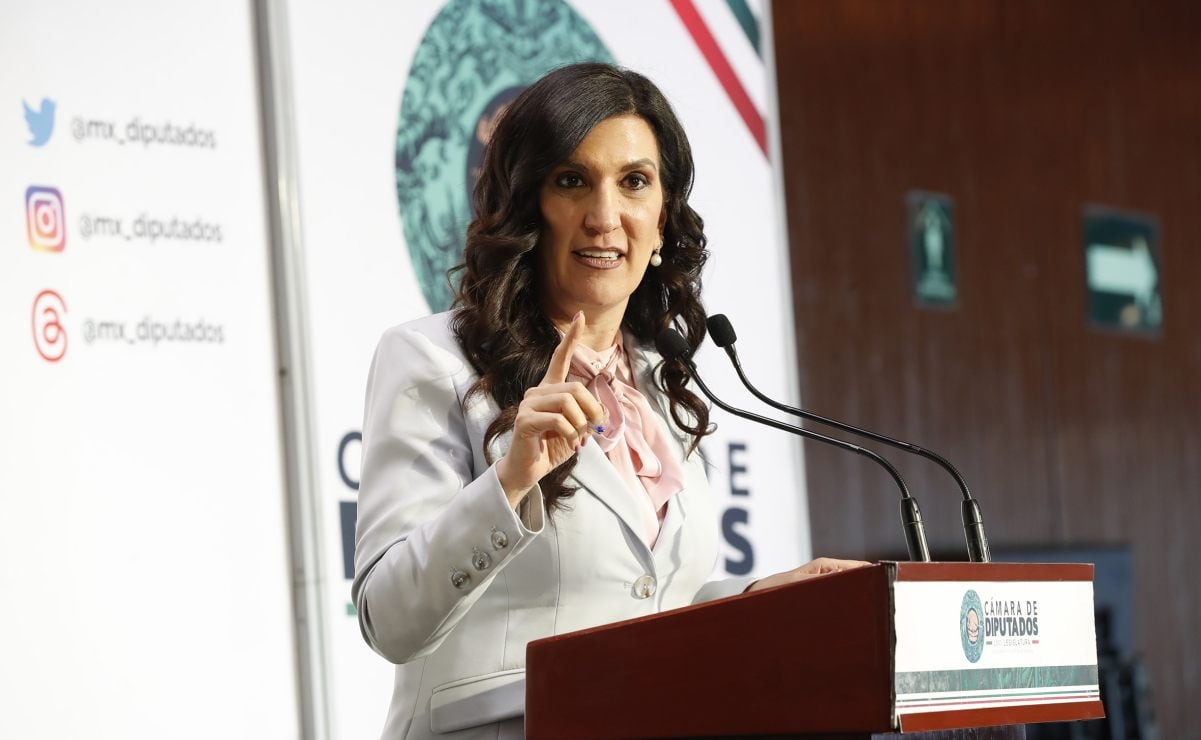
MEXICO CITY — As Mexico navigates one of its most significant political transitions in decades, a growing chorus of voices is warning against the potential for a “shadow presidency” to undermine the authority of the nation’s first female president. The debate has intensified following sharp critiques from prominent journalist Kenia López Rabadán, who has publicly urged outgoing President Andrés Manuel López Obrador (AMLO) to step back and allow President Claudia Sheinbaum the necessary autonomy to manage a complex web of domestic security crises and volatile bilateral relations with the United States.
The tension arrives at a critical juncture for Mexico. President Sheinbaum inherits a nation grappling with unprecedented levels of cartel-related violence and a diplomatic landscape that is poised for significant shifts with the return of Donald Trump to the White House. The core of the controversy lies in whether the outgoing administration’s influence will facilitate a smooth continuity of policy or act as a diplomatic and political anchor, preventing the new administration from addressing urgent pressure from Washington regarding narcotics trafficking and border security.
For international observers and global markets, the stability of the Sheinbaum administration depends largely on its ability to project independent leadership. The concerns raised by commentators like López Rabadán highlight a fundamental question in Mexican politics: Can a successor truly govern when the predecessor remains a dominant, and often interventionist, figure in the national discourse?
The Critique: Kenia López Rabadán’s Warning to AMLO
Kenia López Rabadán, a well-known voice in Mexican political commentary, has become a focal point for those arguing that the transition of power must be more than symbolic. Her recent criticisms have centered on the idea that AMLO’s continued involvement in high-level decision-making—particularly regarding foreign policy and security—could “obstruct” President Sheinbaum’s ability to establish her own mandate.
The critique specifically addresses the potential for friction between Mexico and the United States. López Rabadán has argued that the outgoing president’s approach to U.S. Accusations regarding drug trafficking and the fentanyl crisis could leave the Sheinbaum government in a defensive and reactive posture. By framing U.S. Security concerns as external aggressions, the outgoing administration has historically set a confrontational tone that may not serve the incoming president’s need for pragmatic, high-stakes diplomacy.
López Rabadán has pointed to the ongoing security crisis as a direct consequence of the policies maintained during the AMLO era. The transition period is being viewed not just as a change in leadership, but as a moment of reckoning for the “hugs, not bullets” (*abrazos, no balazos*) doctrine, which critics argue has failed to stem the tide of violence perpetrated by organized crime syndicates. The argument posits that for Sheinbaum to succeed, she must be allowed to redefine Mexico’s security strategy without being tethered to the political legacy of her predecessor.
The Looming Shadow: US-Mexico Relations and the Trump Factor
The timing of these domestic warnings is no coincidence. The geopolitical landscape is shifting rapidly as the United States prepares for a change in administration. The prospect of a second Donald Trump presidency introduces a layer of unpredictability that demands a highly agile and independent Mexican foreign policy.
The United States has consistently identified the flow of fentanyl and other synthetic opioids across the border as a primary national security threat. According to reports from the Reuters, the incoming U.S. Administration is expected to place intense pressure on Mexico to take more aggressive action against the cartels responsible for the drug supply.
This pressure creates a significant diplomatic dilemma for President Sheinbaum:
- Bilateral Cooperation: The need to maintain a functional relationship with Washington to manage trade, migration, and security.
- National Sovereignty: The desire to avoid appearing subservient to U.S. Demands, a key tenet of the MORENA party’s political identity.
- Security Reform: The necessity of addressing the internal violence that fuels the exceptionally trafficking issues the U.S. Is targeting.
If the outgoing administration continues to dictate the tone of these interactions, there is a risk that Mexico may struggle to find the middle ground required for effective diplomacy. A confrontational stance, often favored by AMLO, could trigger unilateral U.S. Actions, such as increased border enforcement or even more drastic measures regarding trade and sanctions, which would be detrimental to the Mexican economy.
Inheriting a Security Crisis: The Reality on the Ground
Beyond the diplomatic halls, the practical challenges facing the Sheinbaum administration are rooted in a domestic security landscape that remains deeply fractured. Mexico continues to experience high rates of homicides and disappearances, much of which is linked to territorial disputes between rival criminal organizations.
The “security crisis” mentioned by critics is not merely a political talking point; it is a documented reality of the Mexican state. While the previous administration emphasized social programs as a means to reduce crime, the proliferation of sophisticated, well-armed cartels suggests that the root causes of violence—ranging from economic inequality to institutional corruption—remain largely unaddressed.
The Sheinbaum administration faces the daunting task of evolving the national security strategy. This involves not only addressing the violence but also managing the institutional response of the military and the National Guard, both of which have seen expanded roles during the AMLO years. The transition will require a delicate balance: maintaining the stability provided by these institutions while addressing the criticisms regarding their effectiveness in protecting civilian populations.
Navigating the Transition: What Happens Next?
As the Sheinbaum administration begins its work, the international community will be watching for signs of “autonomy in action.” The ability of the new president to hold her own in bilateral meetings and to implement a distinct security policy will be the ultimate test of her leadership.
Key indicators to watch in the coming months include:
- Diplomatic Appointments: The selection of Mexico’s ambassadors to the U.S. And other key nations will signal the administration’s intended tone.
- Security Policy Announcements: Any shift in the approach to organized crime—whether toward more intelligence-led operations or a continuation of current social-focused strategies.
- U.S. Policy Shifts: How the first major diplomatic engagements with the Trump administration unfold, particularly regarding fentanyl and migration.
The warnings from journalists like Kenia López Rabadán serve as a reminder that for a transition to be successful, the successor must be more than a continuation of the predecessor; they must be a leader capable of meeting the specific challenges of their own era.
Key Takeaways: The Mexico-US Political Nexus
| Issue | Core Challenge | Potential Impact |
|---|---|---|
| Political Autonomy | Preventing “shadow governance” by AMLO. | Ensures Sheinbaum’s mandate and policy credibility. |
| US-Mexico Relations | Managing Trump-era pressures on drugs/border. | Avoids trade disruptions and unilateral US actions. |
| National Security | Addressing persistent cartel violence. | Reduces homicide rates and improves public safety. |
The next major checkpoint for the Sheinbaum administration will be the forthcoming bilateral security dialogues with U.S. Officials, which will provide the first real test of Mexico’s new diplomatic posture.
What do you think about the transition of power in Mexico? Will Sheinbaum be able to establish her own voice, or will AMLO’s influence remain too strong? Let us know in the comments below and share this article to join the conversation.
Worth a look