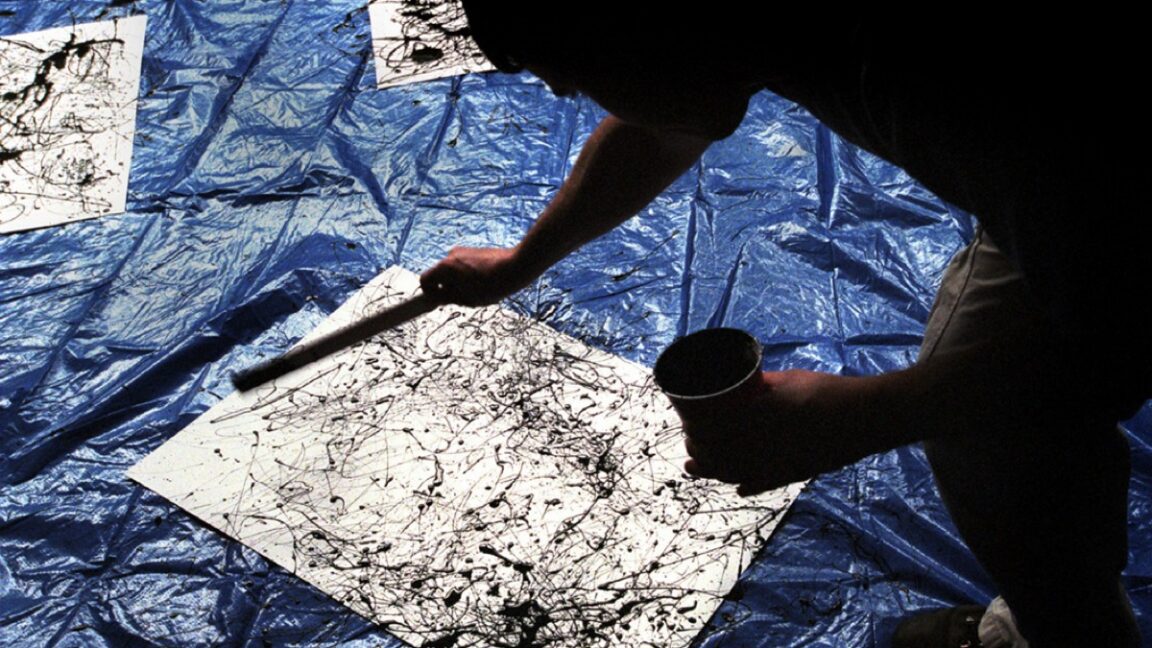
The Science Behind Splatter: What Pollock and Children’s Paintings Reveal About Movement
Have you ever wondered what distinguishes the seemingly chaotic energy of a Jackson Pollock painting from the artwork created by a child engaging in the same activity? Recent research delves into the fascinating intersection of art, physics, and human movement, revealing surprising insights into how our bodies control paint splatter.
I’ve found that understanding these differences isn’t just about aesthetics; it’s about the fundamental mechanics of how we move and maintain balance. Let’s explore what scientists are discovering.
Decoding the Splatter: Adult vs. Child Techniques
Researchers meticulously analyzed splatter paintings created by both adults and children, focusing on the patterns left behind by the paint. Here’s what they uncovered:
* Paint Density: Adult splatter paintings consistently exhibited higher paint densities.
* Paint Trajectories: Adults demonstrated wider and more varied paint trajectories, indicating greater freedom and complexity of movement.
* Fine-Scale Patterns: Children’s paintings featured smaller, more localized patterns.
* Paint Clustering: Gaps between paint clusters were more prominent in children’s work.
* Movement Complexity: Children’s trajectories were simpler, largely one-dimensional, and changed direction less frequently.
Essentially, adult paintings showcased a rich tapestry of both broad and intricate movements, while children’s paintings displayed a more contained and less nuanced approach.
The Role of Balance and Fine Motor Control
The key difference,according to the study,lies in the fine-scale structure of the paint patterns. Adults exhibit a greater degree of uniformity in this structure,while children’s patterns are noticeably “clumpy.”
Here’s what works best when considering this: this difference isn’t random. It’s directly linked to how adults and children regain their balance during the act of painting. Adults possess more refined motor control and a greater ability to adjust their movements, resulting in a smoother, more consistent splatter.
Understanding the Scales of Motion
Researchers identified two key scales of motion at play. Both adults and children demonstrate similar coarse-scale movements – the broad sweeping gestures. However, adults excel in fine-scale structure, incorporating subtle adjustments and variations that children haven’t yet fully developed.
I believe this highlights the importance of experience and practice in refining motor skills. The uniformity of the fine structure in adult paintings suggests a sophisticated interplay between movement and balance correction.
Implications Beyond the Canvas
These findings extend beyond the realm of art. They offer valuable insights into the development of motor skills, the mechanics of balance, and even potential applications in fields like rehabilitation.
For example, understanding how adults maintain stability during complex movements could inform therapies for individuals recovering from neurological injuries. Furthermore, the study underscores the inherent connection between our physical capabilities and our creative expression.
Ultimately, the science of splatter reveals that even seemingly chaotic art forms are governed by underlying principles of physics and human movement. it’s a gorgeous reminder that art and science are not mutually exclusive, but rather complementary lenses thru which we can explore the world around us.
Keep reading