
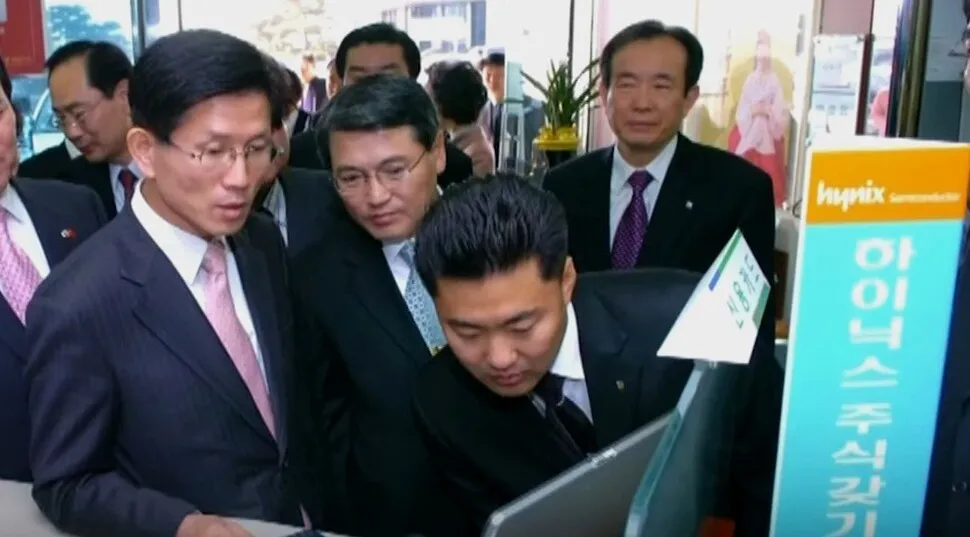
Kim Moon-soo, the current Minister of Employment and Labor in South Korea, has disclosed a significant return on a long-term equity investment in SK Hynix, a global leader in semiconductor manufacturing. According to his official public asset disclosure filed with the South Korean government, the minister holds 30 shares of SK Hynix, which he purchased approximately 19 years ago. The value of this investment has increased roughly 100-fold since the initial acquisition, a development that has drawn public attention to his personal financial portfolio and long-term investment strategy.
The disclosure, required under South Korean public official ethics regulations for high-ranking government personnel, highlights the substantial appreciation of the technology stock over the past two decades. Official records from the Public Official Ethics Committee confirm that the minister’s holdings are subject to mandatory reporting to ensure transparency in government service. This report provides a breakdown of the investment context and the regulatory framework governing such disclosures for South Korean officials.
Timeline and Growth of the SK Hynix Holding
Minister Kim purchased the 30 shares of SK Hynix in 2005, a period when the company was navigating a volatile transition in the global memory chip market. Publicly available financial data indicates that the stock was acquired at a price of approximately 20,000 KRW per share at the time. As of recent market valuations, the shares have seen an exponential increase in value, with individual share prices fluctuating around the 250,000 KRW mark, representing a total value appreciation consistent with the 100-fold growth reported by major domestic media outlets including Chosun Ilbo and The Korea Economic Daily.
The minister has characterized the investment as a gesture of support for the company during a period of financial uncertainty for the firm. In public comments, he noted that he did not actively manage or trade the shares, leading to his long-term retention of the asset. The passive nature of this holding serves as a case study in the impact of long-term “buy-and-hold” strategies within the volatile semiconductor sector, where cyclical market conditions often lead to drastic price shifts over multi-year periods.
Regulatory Framework for Public Officials
Under the Public Service Ethics Act of South Korea, high-ranking officials are mandated to report their personal assets, including stocks, real estate, and cash holdings, to the government. The Ministry of Personnel Management oversees these filings to prevent conflicts of interest and ensure that those in positions of power maintain transparent financial records. According to the Ministry of Personnel Management, these disclosures are updated annually and are accessible to the public to maintain institutional integrity.

The disclosure of the SK Hynix stock is part of a comprehensive report that details the minister’s total net worth. By requiring officials to list assets held for long durations, the system allows the public to track the evolution of an official’s wealth throughout their career. In this instance, the disclosure serves as a routine compliance measure rather than an indication of recent trading activity, as the minister has maintained the same position in the company for nearly two decades.
Semiconductor Market Performance and Investor Impact
The 100-fold increase in the value of the minister’s investment reflects the broader trajectory of the South Korean semiconductor industry since the mid-2000s. SK Hynix, formerly known as Hynix Semiconductor, underwent significant restructuring and expansion, eventually becoming a critical supplier in the global artificial intelligence and data center markets. Data from SK Hynix’s investor relations portal confirms that the company’s market capitalization has grown significantly as demand for DRAM and NAND flash memory surged with the rise of mobile computing and cloud infrastructure.
For individual retail investors, the story of this holding highlights the inherent risks and rewards of the technology sector. While the minister’s specific gain is notable, market analysts frequently emphasize that the semiconductor industry is highly sensitive to global supply chain shifts and macroeconomic cycles. The disclosure of such assets provides transparency into the financial interests of government leaders, ensuring that their policy decisions regarding the technology and labor sectors remain subject to public scrutiny.
Future Transparency Requirements
Minister Kim’s asset disclosures will remain subject to the annual review process mandated by the South Korean government. Any further changes to his portfolio, including the sale or acquisition of additional equity, must be documented in the next reporting cycle. The Public Official Ethics Committee conducts periodic audits of these filings to verify accuracy. Citizens interested in reviewing the specific details of these filings can access the reports through the Official Gazette of the Republic of Korea, which publishes the summary of asset changes for high-ranking officials each year.

The case has sparked broader discussions regarding the intersection of public office and private investment. As the Minister of Employment and Labor continues his tenure, his financial disclosures will remain a point of record for those monitoring government accountability. We encourage our readers to share their thoughts on the role of asset transparency in governance in the comments section below.