
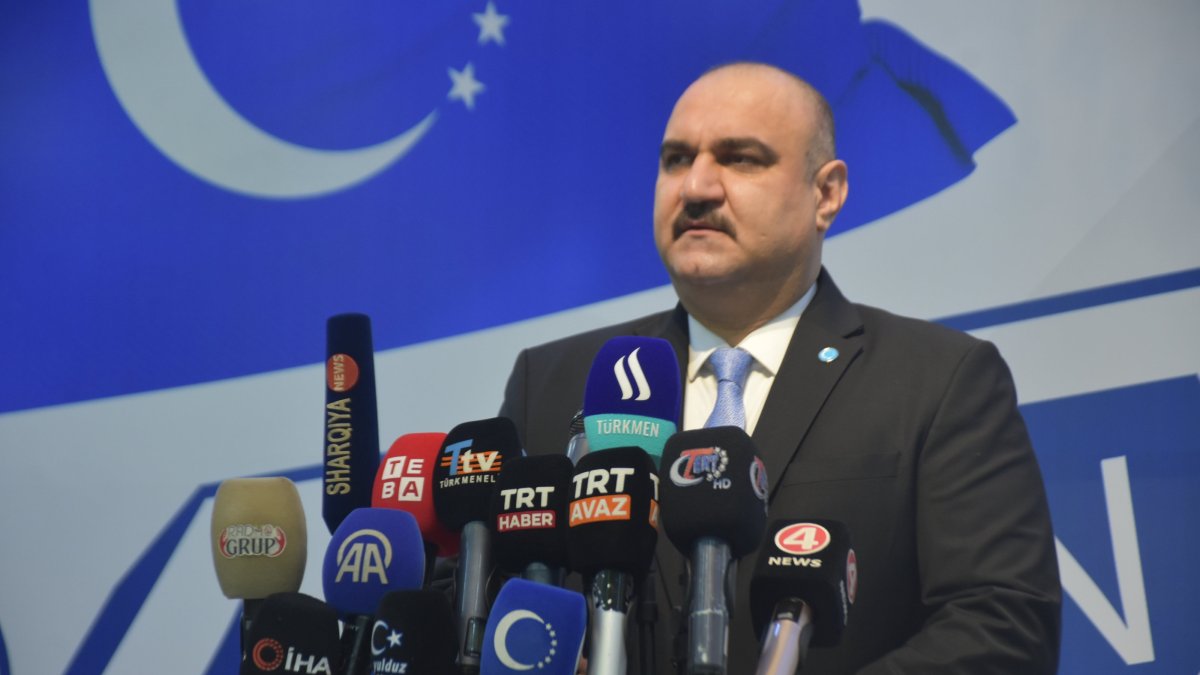
On April 26, 2026, the Kirkuk Provincial Council accepted the resignation of Governor Rebwar Taha, a development that has reignited discussions about the long-standing political and ethnic dynamics governing Iraq’s most contested province. Taha, who maintained close ties to the Patriotic Union of Kurdistan (PUK), stepped down during a council session held in Kirkuk city, according to reports from local government sources. His resignation comes amid heightened tensions over the administration of Kirkuk, a region rich in oil reserves and home to a diverse population of Kurds, Arabs, Turkmen and other ethnic groups.
The resignation marks the latest chapter in a protracted struggle over governance in Kirkuk, a province whose administrative status has been disputed since the fall of Saddam Hussein’s regime in 2003. For over two decades, Kurds have sought to incorporate Kirkuk into the semi-autonomous Kurdistan Region of Iraq (KRI), citing historical and demographic claims. However, successive Iraqi governments have resisted such moves, emphasizing the need for a constitutional resolution that balances the interests of all ethnic communities. The Turkmen community, which constitutes the third-largest ethnic group in Kirkuk after Kurds and Arabs, has consistently advocated for power-sharing arrangements and greater representation in provincial institutions.
According to a report by Daily Sabah, the resignation has been framed by some observers as a symbolic return to Turkmen influence in Kirkuk’s governance after a period of Kurdish-led administration. The outlet noted that this development comes approximately 102 years after the establishment of the modern Iraqi state under the British Mandate, a period during which various ethnic groups have vied for control over Kirkuk’s political and economic resources. While the claim of a “return” to Turkmen control requires careful contextualization, it reflects broader perceptions among certain communities about shifting power balances in the province.
The political fallout from Taha’s resignation was immediate. The Kurdistan Democratic Party (KDP), one of the two dominant Kurdish parties alongside the PUK, announced its decision to boycott the upcoming Kirkuk Provincial Council meeting. The New Region reported that the KDP cited the “governorship shakeup” as grounds for its boycott, arguing that the resignation undermines prior power-sharing agreements and threatens the stability of the current administrative arrangement. The party has long maintained that any changes to Kirkuk’s governance must be made through consensus among all major ethnic groups, warning that unilateral actions could exacerbate sectarian tensions.
Adding to the complexity, Kurdistan24 published a statement from the son of a former Kirkuk governor, who warned that the evolving situation poses a “serious threat” to the interests of the Kurdistan Region. While the identity of the former governor was not specified in the report, the commentary underscores the deep apprehension among Kurdish leaders about any perceived erosion of their influence in Kirkuk. The statement reflects broader anxieties within the KRI leadership regarding Baghdad’s increasing assertiveness in administering disputed territories, particularly as federal authorities seek to reassert control over areas previously managed by Kurdish forces following the 2017 independence referendum.
Kirkuk’s significance extends far beyond its symbolic value. The province contains an estimated 10% of Iraq’s proven oil reserves, making it a critical asset for the national economy. Control over its hydrocarbon resources has been a central point of contention between Baghdad and Erbil, with both sides asserting legal and historical claims to the revenue streams generated from Kirkuk’s oil fields. The discovery of large oil deposits in the early 20th century attracted international interest and set the stage for the province’s enduring strategic importance. Today, the Kirkuk oil field remains one of the largest in Iraq, with production managed by the North Oil Company, a subsidiary of Iraq’s Ministry of Oil.
Ethnically, Kirkuk is one of Iraq’s most diverse provinces. Kurds form the largest ethnic group, followed by Arabs and Turkmen, with smaller communities of Assyrians, Armenians, and others. The Turkmen, who trace their presence in the region back to the Seljuk and Ottoman periods, have long sought recognition as a constitutive component of Iraq’s social fabric. They have advocated for official recognition of Turkmen as a third official language in Kirkuk, alongside Arabic and Kurdish, and for equitable representation in security forces, civil service, and local governance. Despite these aspirations, Turkmen political representation has often been limited by electoral systems that favor larger blocs.
The legal framework governing Kirkuk’s status remains unresolved. Article 140 of the Iraqi Constitution, enacted in 2005, was designed to resolve the disputed status of Kirkuk and other territories through a process of normalization, census, and referendum. However, implementation has been repeatedly delayed due to security concerns, political disagreements, and logistical challenges. Successive governments have failed to hold the promised referendum, leaving the province in a state of administrative ambiguity. International observers, including the United Nations Assistance Mission for Iraq (UNAMI), have repeatedly urged Iraqi leaders to resume efforts to implement Article 140, warning that prolonged uncertainty fuels instability and mistrust among communities.
In the wake of Governor Taha’s resignation, attention has turned to the process for selecting his successor. Under Iraq’s provincial governance laws, the Kirkuk Provincial Council is responsible for electing a new governor from among its members. The council, which includes representatives from Kurdish, Arab, Turkmen, and other political blocs, must achieve a consensus or majority vote to confirm the appointment. Given the current divisions, the selection process is expected to be contentious, with each ethnic group advocating for a candidate who reflects their communal interests. The outcome will likely influence perceptions of fairness and inclusion across Kirkuk’s diverse population.
Security conditions in Kirkuk have remained relatively stable in recent months, though sporadic incidents continue to occur. Iraqi federal forces, alongside units from the Kurdish Peshmerga and local police, share responsibility for maintaining order in the province under a joint security mechanism established after the 2017 crisis. While large-scale violence has diminished since the defeat of ISIS in 2017, occasional attacks and tensions persist, particularly around disputed administrative boundaries and resource allocation. The presence of multiple armed groups underscores the fragility of the current arrangement and the need for sustained dialogue.
Economically, Kirkuk’s oil industry continues to operate under the oversight of Iraq’s federal Ministry of Oil, which manages production, exports, and revenue distribution. Disputes over oil revenue sharing have been a recurring source of friction between Baghdad and Erbil, with the Kurdistan Region seeking a greater share of profits from Kirkuk’s fields as compensation for historical marginalization. The federal government, however, maintains that all natural resources belong to the Iraqi state as a whole, citing constitutional provisions that place oil and gas under federal control. Recent negotiations have focused on establishing a temporary framework for revenue sharing pending a permanent resolution of Kirkuk’s status.
Civil society organizations in Kirkuk have called for renewed efforts to promote interethnic dialogue and reconciliation. Groups such as the Kirkuk Center for Truth and Reconciliation and various Turkmen cultural associations have emphasized the importance of inclusive governance, cultural preservation, and equitable development. They argue that sustainable peace in Kirkuk depends not only on political agreements but also on addressing historical grievances, fostering mutual understanding, and ensuring that all communities benefit from the province’s wealth. Educational initiatives, cultural festivals, and joint economic projects have been proposed as tools to build trust across ethnic lines.
Looking ahead, the next major development in Kirkuk’s governance will be the election of a new governor by the Provincial Council. No date has been officially announced for this vote, but This proves expected to occur within the coming weeks, in accordance with Iraqi provincial council procedures. The selection will be closely monitored by regional and international observers, who view it as a bellwether for the broader relationship between Baghdad and the Kurdistan Region, as well as a test of Iraq’s ability to manage its diverse constituencies through peaceful, democratic means.
As the situation evolves, World Today Journal will continue to provide verified updates on developments in Kirkuk, drawing on official statements, institutional reports, and credible journalistic sources. Readers are encouraged to share their perspectives and engage in constructive dialogue about the challenges and opportunities facing one of Iraq’s most pivotal provinces.