KLAS Research has released its 2026 Patient Financing Services report, examining the evolving landscape of recourse versus nonrecourse financing models in healthcare. The analysis highlights a structural shift in how third-party patient financing programs are structured, with one emerging company gaining notable traction in the changing market.
Patient financing services function as third-party solutions that allow patients to manage healthcare costs through installment payments. These programs simultaneously transfer long-term receivables and associated financial risk away from healthcare providers, enabling organizations to improve cash flow while offering patients greater payment flexibility.
The market is broadly divided into two primary models. In recourse financing, the healthcare organization retains responsibility for patient defaults, meaning unpaid balances may eventually revert to the provider. This model typically features lower program fees and less restrictive eligibility criteria, appealing to organizations focused on return on investment and broader patient access. Conversely, nonrecourse financing places the full risk of nonpayment on the third-party financing firm, relieving the healthcare organization of reimbursement obligations if a patient fails to pay. This approach is favored by providers seeking risk transfer, accounting finality, and predictable cash flow, particularly those dissatisfied with prior experiences in recourse arrangements.
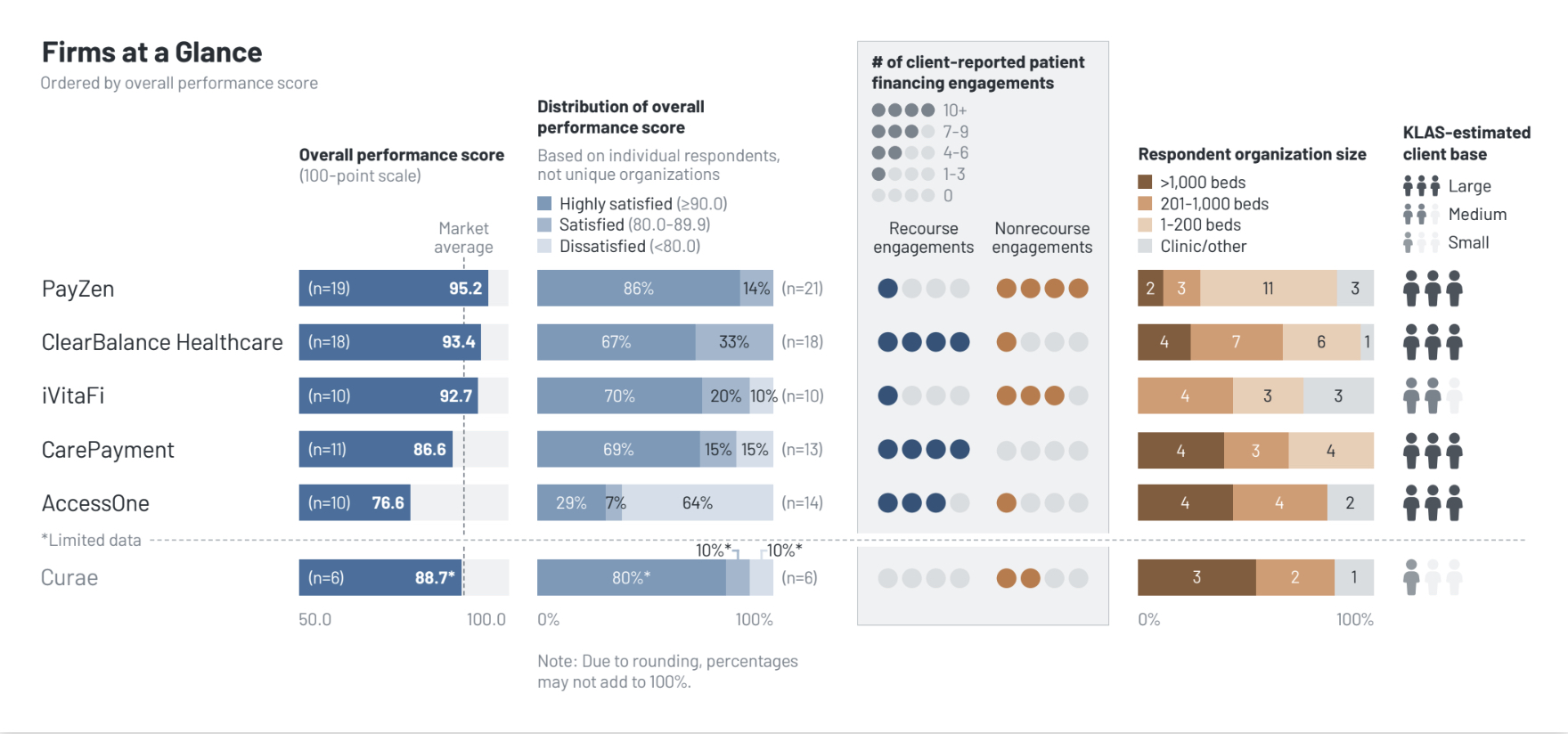
According to the KLAS report, PayZen achieved the highest overall score of 95.2, earning recognition as the 2026 Best in KLAS winner in the Patient Financing Services category. The company is noted for its nonrecourse model, which clients say delivers immediate cash flow, reduces bad debt, and provides flexible payment options. Feedback consistently highlights PayZen’s reliable technology platform, transparent reporting tools, and effective multichannel patient engagement strategies.
Other vendors recognized in the report include ClearBalance Healthcare, which scored 93.4 for its patient-centric recourse model featuring multiple plan tiers and flexible repayment terms. IVitaFi received a score of 92.7 for its nonrecourse approach, with clients citing strong system integration, hands-on implementation support, and responsive account management. Curae earned 88.7 points for its nonrecourse model, praised for eliminating financial risk and enabling quick payments, though some clients noted higher costs. CarePayment scored 86.6 for its recourse model, valued for its flexibility and high-touch partnership approach. AccessOne received the lowest score among the vendors listed at 76.6, with declining satisfaction attributed to leadership and account manager turnover, resulting in inconsistent communication and slower issue resolution.
The KLAS 2026 report underscores how financing model selection is increasingly tied to organizational priorities around risk tolerance, operational efficiency, and financial predictability. As healthcare providers continue to navigate rising patient financial responsibility and pressure to reduce administrative burdens, the distinction between recourse and nonrecourse structures remains a critical factor in vendor evaluation and contract decisions.
For healthcare administrators evaluating patient financing options, the report suggests assessing not only fee structures and eligibility requirements but too the long-term implications of risk retention versus transfer. Organizations seeking to minimize bad debt exposure and stabilize revenue streams may find nonrecourse models increasingly aligned with their operational goals, while those prioritizing broad accessibility and lower upfront costs may continue to favor recourse frameworks.
As the healthcare financial technology sector evolves, ongoing vendor performance tracking through independent assessments like the KLAS reports provides valuable benchmarking data. Stakeholders are encouraged to consult the full KLAS Patient Financing Services 2026 report for detailed methodology, vendor profiles, and comparative insights to support informed decision-making.
Stay informed about developments in healthcare financial services by following updates from KLAS Research and industry analyses covering patient payment innovation, revenue cycle management, and financial risk mitigation strategies.
Worth a look