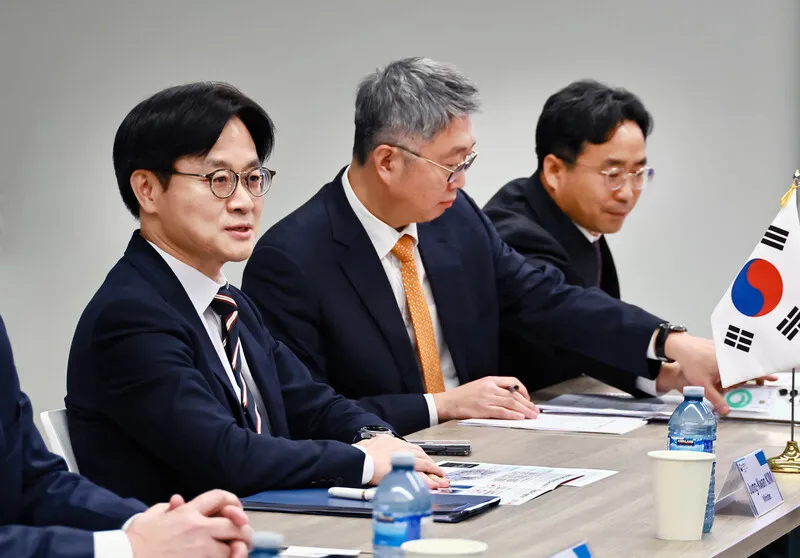
Windsor, Ontario – South Korean Industry Minister Kim Jung-kwan recently visited Canada to mark the official opening of LG Energy Solution’s NextStar Energy battery plant in Windsor, Ontario, a significant development in the North American electric vehicle (EV) supply chain. The visit coincided with discussions regarding potential industrial collaboration on Canada’s Canadian Surface Combatant (CSC) project, a major procurement initiative for new naval vessels, and underscored a growing partnership between the two nations extending beyond battery technology.
The NextStar Energy facility, representing a substantial investment of over 5 billion Canadian dollars (approximately 3.7 billion USD), is poised to become a cornerstone of battery manufacturing in North America. The plant’s opening, attended by key figures including Ontario Premier Doug Ford and Canadian Industry Minister Mélanie Joly, signifies a commitment to bolstering domestic EV production and reducing reliance on overseas suppliers. The facility will produce advanced battery cells for electric vehicles, as well as energy storage systems (ESS) for applications like artificial intelligence data centers and large-scale power grids. LG Energy Solution acquired full ownership of the facility in February 2026, after initially establishing it as a joint venture with Stellantis in 2022. The Korea Economic Daily reported on the completion of the plant.
Expanding Battery Production and Economic Impact
NextStar Energy is not only Canada’s first large-scale battery manufacturing facility but also a crucial element in the development of a robust Canadian advanced manufacturing ecosystem. The plant currently employs approximately 1,300 people and is projected to increase its workforce to around 2,500 as production capacity expands. As of November 2025, the facility had already produced over one million battery cells, demonstrating its ability to meet the growing demand for ESS solutions in the North American market. The plant’s total area spans 423,000 square feet (approximately 39,000 square meters), highlighting the scale of this investment in Canadian manufacturing.
Strategic Discussions on Naval Procurement and Hydrogen Technology
Beyond the battery plant opening, Minister Kim’s visit included a meeting with Canadian Industry Minister Mélanie Joly to discuss potential collaboration on the Canadian Surface Combatant (CSC) project. According to a statement released by the South Korean Ministry of Trade, Industry and Energy, the discussions focused on identifying specific areas for industrial cooperation should Hanwha Ocean be selected as the preferred bidder for the project. Hanwha Ocean submitted a proposal for the CSCP on January 28, 2026. The CSCP aims to replace Canada’s aging Victoria-class submarines with a fleet of 12 diesel-electric submarines, representing a project valued at approximately 60 billion Canadian dollars (approximately 44.5 billion USD). Yonhap News Agency reported on the meeting between the two ministers.
Accompanying Minister Kim during the discussions were representatives from Hyundai Motor Company, who presented Canada’s potential in hydrogen resources and proposed collaborative efforts to establish a comprehensive hydrogen ecosystem encompassing production, refueling infrastructure, and mobility solutions. This highlights a broader strategic interest in diversifying energy cooperation between the two countries. Hyundai’s vision involves integrating these elements to create a sustainable and interconnected hydrogen economy within Canada.
A Long-Term Partnership in the Making
Minister Kim emphasized the importance of building a long-term partnership between South Korea and Canada, drawing a parallel to LG Energy Solution’s commitment to fulfilling its investment and employment promises. He stated that the CSC project could serve as a catalyst for a deeper and more enduring relationship. He further affirmed the South Korean government’s commitment to actively supporting Korean companies, including Hanwha Ocean, in their pursuit of the CSC contract, pledging to mobilize both public and private sector resources to maximize their chances of success. The selection of a preferred bidder for the CSC project is anticipated as early as April 2026.
The Canadian government is currently evaluating proposals from two primary contenders: a consortium led by Hanwha Ocean and HD Hyundai Heavy Industries, and Germany’s ThyssenKrupp Marine Systems (TKMS). The decision will have significant implications for Canada’s naval capabilities and its industrial base. The CSC project is intended to provide Canada with a modern and capable fleet of submarines to address evolving security challenges and maintain its maritime presence.
Key Takeaways
- Strategic Investment: LG Energy Solution’s NextStar Energy plant represents a major investment in Canadian battery manufacturing, bolstering the EV supply chain.
- Naval Collaboration: Discussions between South Korean and Canadian officials focused on potential industrial cooperation related to Canada’s CSC project.
- Hydrogen Economy: Hyundai Motor Company presented a vision for a collaborative hydrogen ecosystem in Canada, leveraging the country’s resources.
- Long-Term Partnership: Both nations expressed a commitment to building a lasting economic and strategic partnership.
The opening of the NextStar Energy plant and the subsequent discussions surrounding the CSC project underscore a growing strategic alignment between South Korea and Canada. As both countries navigate the challenges and opportunities presented by the global energy transition and evolving geopolitical landscape, collaboration in areas such as battery technology, naval defense, and hydrogen energy is likely to become increasingly important. The coming months will be crucial as Canada moves closer to a decision on the CSC project, potentially paving the way for a significant industrial partnership with South Korean companies.
The next key development to watch will be the Canadian government’s announcement of the preferred bidder for the Canadian Surface Combatant project, expected in April 2026. Stay tuned to World Today Journal for continued coverage of this evolving story and its implications for the global landscape. We encourage readers to share their thoughts and perspectives in the comments section below.
Worth a look