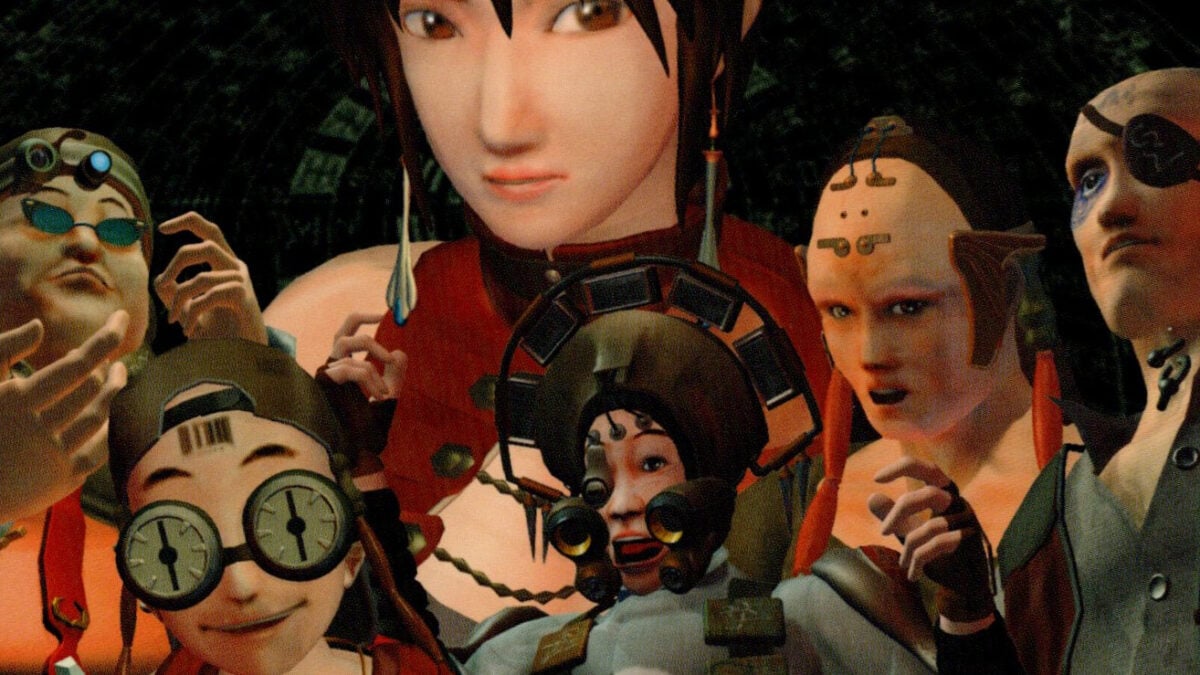
The landscape of video game preservation is shifting, with grassroots efforts increasingly tackling some of the most complex titles from the 1990s. This week, the fan translation collective Hilltop Works announced a new project targeting Kowloon’s Gate, a sprawling and surreal four-disc role-playing game originally released for the PlayStation console. For many enthusiasts of vintage gaming, this announcement represents a significant milestone in making previously inaccessible Japanese-exclusive titles available to a global audience.
Kowloon’s Gate, which debuted in 1997, is known for its dense, atmospheric depiction of the Kowloon Walled City, a former military outpost in Hong Kong that was demolished in 1993. The game combines elements of an FMV (full-motion video) adventure with the structural depth of a dungeon-crawler RPG. The project represents a formidable challenge for the translation team, as the game’s script is noted for its intricate linguistic layers, including portions of dialogue and text intended to be read as Chinese, set within a Japanese-language framework.
A Complex Legacy in Digital Form
The real-world Kowloon Walled City has long served as a touchstone for cyberpunk aesthetics and urban exploration studies. Following World War II, the site evolved into a densely populated, largely unregulated enclave. By the 1980s, the area housed approximately 35,000 residents within a footprint covering roughly five football fields, according to historical records documenting the site’s unique urban density. This environment, characterized by its labyrinthine architecture and off-the-grid existence, inspired various cultural works, ranging from the writings of William Gibson to the visual style of the 1995 film Ghost in the Shell.
In the context of the game, players assume the role of a feng shui expert employed by a shadowy organization tasked with monitoring spiritual equilibrium. The narrative centers on the city’s sudden reappearance on the outskirts of Hong Kong, prompting the protagonist to navigate temporal and spatial mazes to restore balance to the universe. Despite the game’s reputation for surrealism and its status as a “lurid” cult classic, those who experienced the actual Walled City before its demolition often describe daily life there as more grounded and mundane than the cyberpunk tropes that later defined its popular image.
The Evolution of Fan Translation Projects
The decision by Hilltop Works to pursue Kowloon’s Gate follows a trend of fan-led initiatives that focus on bringing vintage Japanese titles to Western players. These projects often involve reverse-engineering proprietary software and navigating complex copyright landscapes. While these efforts are frequently described as “booming” within enthusiast communities, they remain distinct from official re-releases or international localizations, often operating as non-profit cultural preservation endeavors.
The collective behind the project previously gained recognition for their work on Planet Laika, another title that had remained largely out of reach for non-Japanese speakers. The technical hurdle of Kowloon’s Gate is particularly high due to its four-disc distribution and the aforementioned linguistic mix of Japanese and Chinese, which requires a specialized approach to maintain the intended atmosphere and narrative consistency.
What This Means for Preservationists
For historians and video game archivists, the translation of such titles is essential to understanding the evolution of interactive media. Because Kowloon’s Gate was never officially released outside of Japan, its cultural impact in the West has been largely limited to secondary accounts and academic discussions of its visual design. By providing a translated version, the team aims to bridge the gap between the game’s original intent and its legacy in international pop culture.
The project is currently in development, and while no release date for the translation patch has been confirmed, the announcement itself has sparked renewed interest in the title among collectors and retro gaming enthusiasts. As with many fan-led preservation projects, the timeline for completion is dependent on the volunteer nature of the work and the complexity of the source material.
As of May 2026, Notice no further official updates regarding the release schedule for the patch. Interested parties can follow the official channels of Hilltop Works for future announcements regarding the project’s progress. We invite our readers to share their thoughts on the importance of fan-led game preservation in the comments section below.
Related reading