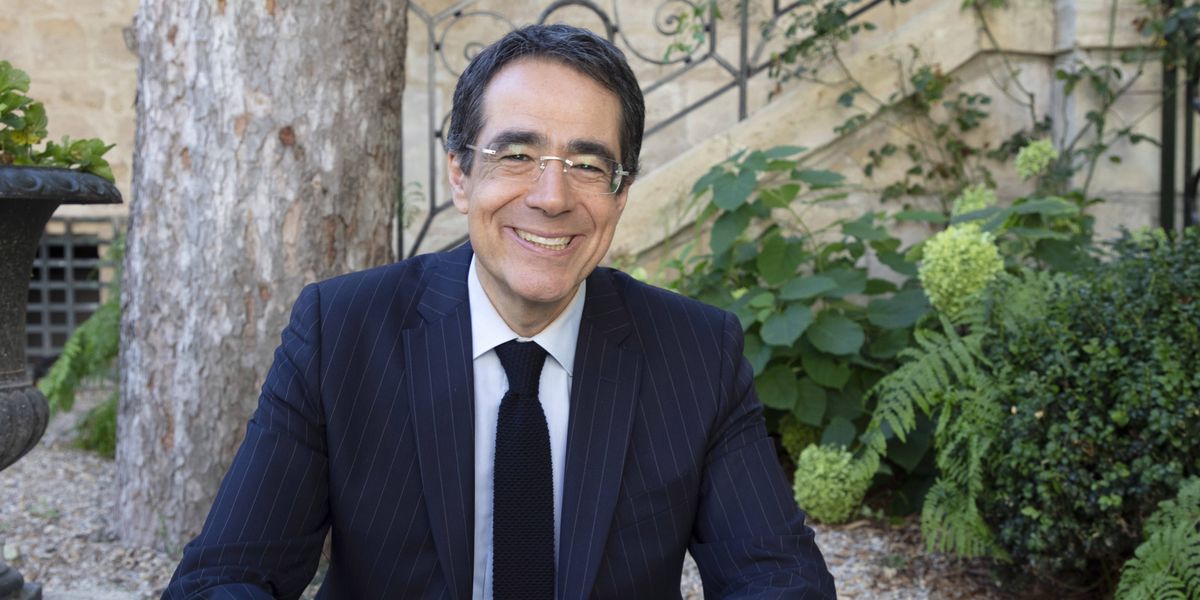
Darius Rochebin, the veteran Swiss journalist now a fixture on French television, has carved a distinct niche in the Parisian media landscape through a broadcasting style defined by what observers describe as “merciless politeness.” His approach, which combines rigorous journalistic inquiry with an unwavering, understated demeanor, has drawn significant attention from French audiences and media critics alike. Rochebin, who transitioned from decades of service at the Swiss public broadcaster RTS to LCI in France, has become a notable example of cross-border media influence.
The reception of Rochebin’s work in France highlights a broader cultural conversation regarding interview techniques and professional conduct in the era of high-stakes political debate. By maintaining a calm, almost detached courtesy while pressing guests on difficult topics, Rochebin contrasts sharply with the often more combative style frequently observed in French political talk shows. According to media analysis from outlets such as Le Temps, his ability to disarm interviewees through extreme civility allows him to extract responses that more aggressive questioning might otherwise stifle.
The Evolution of a Swiss Style in Paris
Darius Rochebin’s career shift from Geneva to Paris in 2020 marked a significant moment for French news broadcasting. After 25 years as the face of the 19:30 news program at RTS, his move to the TF1 group’s news channel, LCI, was met with curiosity. His signature method—characterized by a low-key, precise, and polite demeanor—was initially perceived by some French observers as a foreign curiosity, but it has since gained recognition as an effective tool for long-form political interviews.
This “merciless politeness” acts as a tactical instrument. By avoiding the interruptions and raised voices that characterize many French political debates, Rochebin creates a vacuum that his guests are often compelled to fill. This technique often leads to moments of candor that are rare in the polarized atmosphere of contemporary French television. The efficacy of this approach is rooted in the “Swiss” journalistic tradition, which tends to prioritize neutrality and patient inquiry over the performative conflict often favored in larger media markets, as noted in reports by Le Monde.
Why Tone Matters in Political Interviews
The fascination with Rochebin’s technique reflects a growing audience fatigue with the “clash” format, where the focus often shifts from the substance of the guest’s argument to the intensity of the presenter’s challenge. Rochebin’s presence on French television provides a case study in how tone influences the quality of political discourse. His method demonstrates that a journalist does not necessarily need to adopt an adversarial posture to hold power to account.
Critics of the “clash” format suggest that it often results in guests becoming defensive, leading to rehearsed talking points rather than genuine insights. In contrast, Rochebin’s approach—which relies on calm persistence—frequently catches guests off-guard. By maintaining a veneer of extreme formality, he establishes a professional distance that makes his follow-up questions feel more investigative and less personal. This shift has not only resonated with viewers but has also influenced how other broadcasters consider their own interview strategies in a competitive media environment.
Defining the “Rochebin Effect”
The impact of Rochebin’s style extends beyond his individual performance; it serves as a bridge between different journalistic cultures. While the French media environment is historically rooted in a tradition of intellectual debate and rigorous, often sharp, critique, the inclusion of a Swiss perspective has introduced a different rhythm to the news cycle. This cross-cultural exchange is supported by the fact that Rochebin remains a highly visible figure, frequently interviewing high-profile political figures and intellectuals who are accustomed to the standard French media treatment.
Furthermore, his success underscores a shift in viewer preferences. As audiences increasingly look for substance over spectacle, the “mercilessly polite” interviewer finds themselves in a position of strength. By avoiding the pitfalls of emotional volatility, Rochebin maintains his credibility even when the topics at hand are highly contentious. This professional consistency has made him a fixture of the French media landscape, demonstrating that, in an era of constant noise, a measured tone can be the most effective way to cut through the static.
Looking ahead, the influence of Rochebin’s style will likely remain a point of discussion as French media outlets continue to adapt their programming to meet the demands of a changing digital audience. Whether this will lead to a broader shift in the norms of French political broadcasting remains to be seen, but the attention afforded to his methods confirms that the debate over journalistic tone is far from settled. Readers interested in the evolution of these media practices can monitor updates via the LCI official news portal, where Rochebin continues to host his regular segments.
We invite you to share your thoughts on the evolution of political interviewing styles in the comments below. How do you prefer your news—confrontational or calm? Join the conversation to discuss how journalism is changing in the modern era.
Related reading