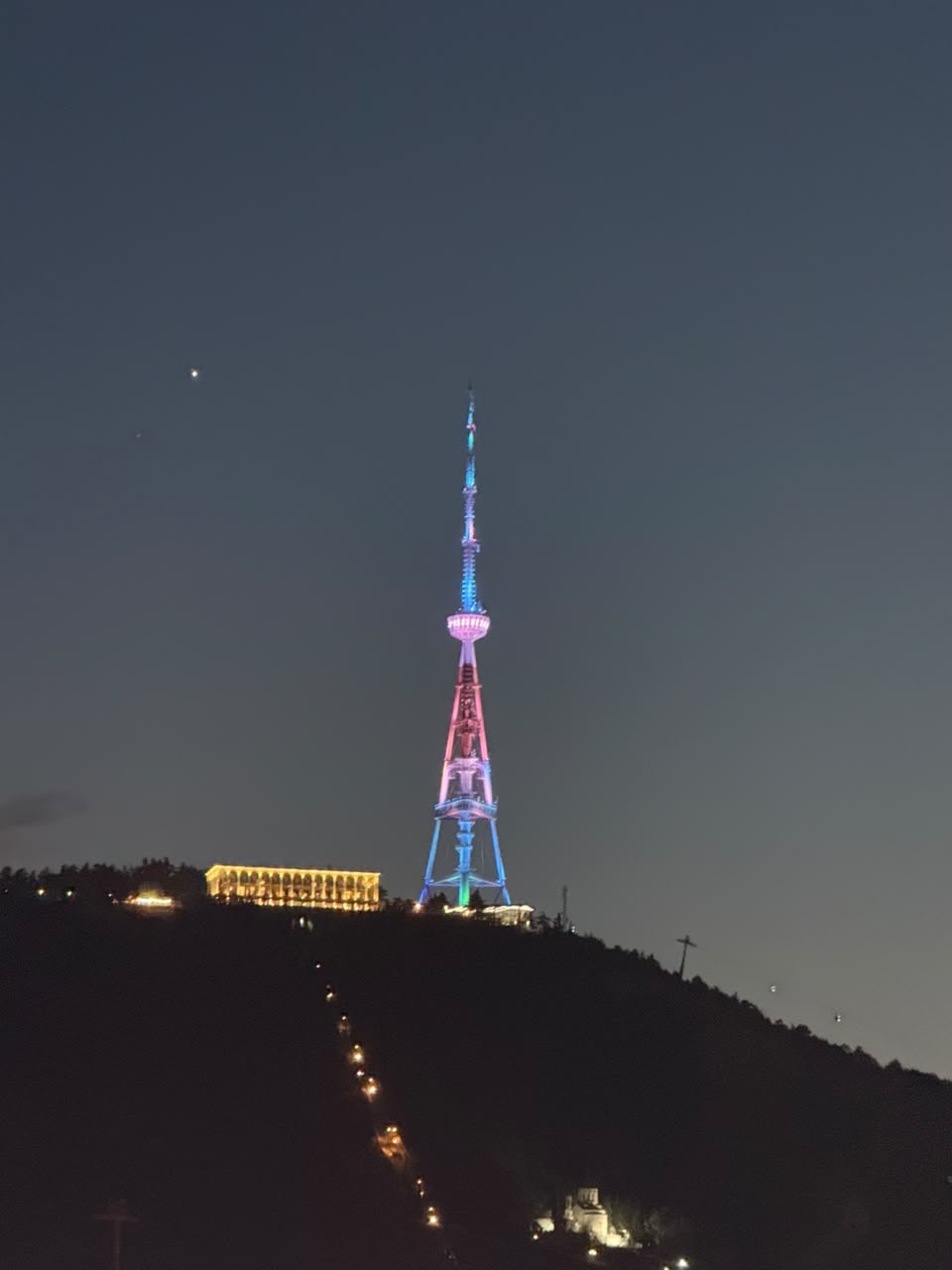
The Tbilisi TV Broadcasting Tower was illuminated in the blue and white colors of the Argentine flag this week to commemorate the 210th anniversary of the May Revolution. The display served as a symbolic gesture of diplomatic friendship between Georgia and Argentina, highlighting the historical ties celebrated on May 25, the date marking Argentina’s first independent government established in 1810.
The May Revolution, or Revolución de Mayo, remains a cornerstone of Argentine national identity. According to the Argentine Ministry of Foreign Affairs, the events of May 1810 initiated a week-long political process that culminated in the resignation of the Spanish viceroy and the formation of the Primera Junta, the country’s first autonomous government. This transition laid the groundwork for the eventual declaration of independence in 1816.
La Torre de Televisión de Tbilisi se luce albiceleste con motivo del 210° aniversario de la Revolución de Mayo. ¡Gracias a nuestros amigos georgianos por este gesto de amistad! 🇦🇷🇬🇪 pic.twitter.com/3sX8M8jG73
— Embajada de Argentina en Georgia (@EmbGeoAr) May 25, 2020
Diplomatic Ties and Symbolic Landmarks
The choice of the Tbilisi TV Tower for this commemoration underscores its status as a prominent landmark in the Georgian capital. Standing at 274.5 meters, the tower is a functional broadcasting hub and a recognizable feature of the city’s skyline, often used by municipal authorities to mark significant international observances and solidarity campaigns.
The illumination was coordinated through the efforts of the Argentine diplomatic mission in the region. The use of the national colors—the “albiceleste” or sky blue and white—reflects the standard practice of the Ministry of Foreign Affairs of Georgia in facilitating cultural and diplomatic acknowledgments for resident embassies. Such gestures are intended to foster bilateral relations and increase public awareness of national holidays among the host country’s population.
Historical Significance of the May Revolution
For Argentina, the 210th anniversary observed in 2020 was a moment to reflect on the long-term impact of the 1810 movement. While the initial events were focused on the city of Buenos Aires, the movement sparked a wider movement for self-determination across the Viceroyalty of the Río de la Plata. Historical records from the National Historical Museum of Argentina confirm that the Primera Junta, led by Cornelio Saavedra, sought to establish a government that represented the interests of the local population rather than the Spanish Crown.

This period is defined by the political debates led by figures such as Mariano Moreno and Manuel Belgrano, who advocated for liberal ideas and economic reform. The legacy of the May Revolution is central to the curriculum and state commemorations in Argentina, representing the shift from colonial administration to the formation of the modern Argentine state.
Cultural Exchange and Future Cooperation
The projection of the Argentine flag onto the Tbilisi skyline is part of a broader trend of “light diplomacy,” where capital cities use iconic infrastructure to build soft power and maintain visibility. For Georgia, which has sought to strengthen its ties with various Latin American nations over the last decade, these displays serve as a low-cost, high-impact method of maintaining active diplomatic channels.

As the international community continues to navigate complex geopolitical landscapes, the maintenance of these symbolic relationships remains a priority for both the Georgian government and the Argentine diplomatic corps. Future commemorative events will likely follow established protocols for cooperation between the two nations, contingent upon ongoing bilateral agreements and the scheduling of national days of significance.
Readers interested in the latest diplomatic updates or upcoming cultural events between the two nations are encouraged to monitor the official communications from the Argentine Chancellery and the relevant foreign ministry portals for official announcements. Comments regarding the significance of these cultural gestures are welcome below.