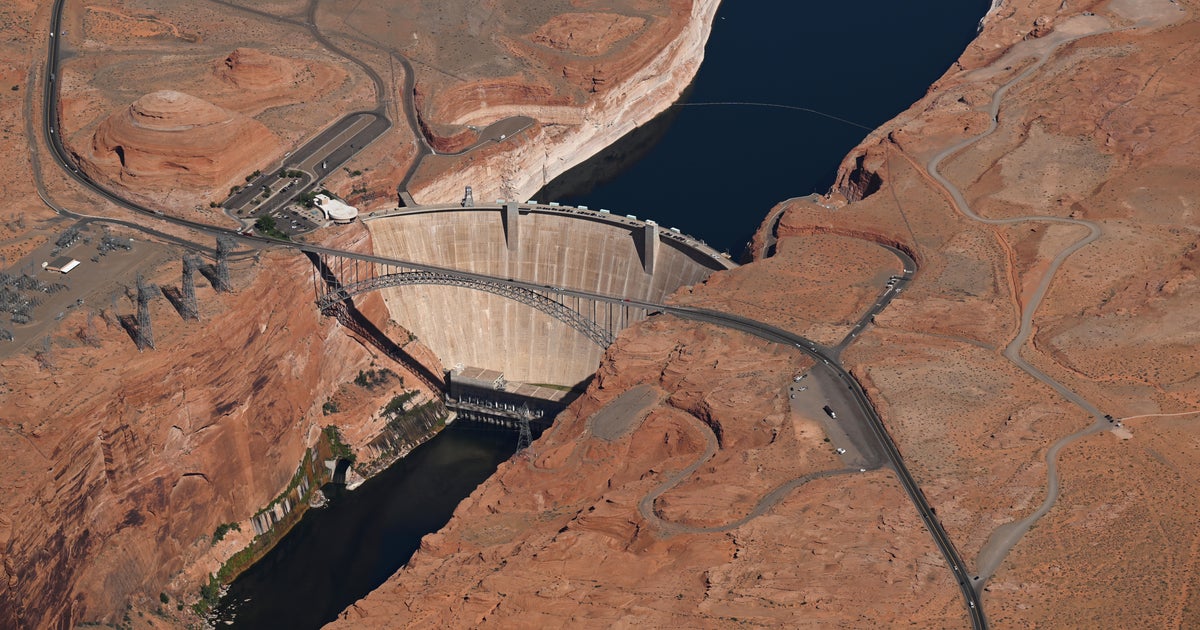
The combined water level in Lake Powell and Lake Mead has fallen to a historic low, marking a significant moment in the Colorado River crisis according to CNN. On July 12, Lake Powell stood at 3,524 feet and Lake Mead rested just under 1,043 feet, breaking a previous record set in March 2023. Together, the nation’s two largest reservoirs have not been this low since 1957, during the construction of the Glen Canyon Dam before Lake Powell even existed.
Lake Mead and Lake Powell Reach Historic Lows Amid Deepening Colorado River Crisis
Jack Schmidt, director of the Center for Colorado River Studies at Utah State University and an author of an analysis on the reservoirs, described the milestone as a reflection of the uniquely small amount of water currently stored in the basin. The Colorado River serves as a lifeline for the Southwest, supplying water to 40 million people, irrigating more than 5 million acres of farmland, and generating electricity. However, the system faces severe strain from decades of overuse, chronic drought, population growth, and climate change that has delivered hotter, drier weather and a snow drought in the Rocky Mountains, where the river’s headwaters originate.
Reservoir Depletion Threatens Hydropower and Recreation
Both reservoirs are currently operating at less than 30% capacity. Lake Powell is roughly 23% full, and Lake Mead is 27% full and sitting less than a foot from its all-time record low set in July 2022. Researchers warn that the lakes will likely set a new record low for combined water storage every day until spring runoff begins.

The plunging water levels threaten critical infrastructure. Lake Powell is about 33 feet away from reaching minimum power pool levels, the point at which the reservoir can no longer generate hydroelectric power or allow water to move through the dam into the Colorado River. At the Glen Canyon National Recreation Area, the low water has impacted tourism and access, forcing marinas to temporarily relocate to deeper waters and boat ramps to close or move.
Political Impasse and Impending Federal Action
The crisis has triggered a political standoff among the seven states dependent on the river. Under the 1922 Colorado River compact, the upper basin states—Colorado, New Mexico, Utah, and Wyoming—and the lower basin states—California, Arizona, and Nevada—share rights to the water supply. Disagreements over how to divide the shrinking supply have brought negotiations to an impasse.
Lower basin states have offered to cut their use by about 1.6 million acre-feet per year for the next two years, but federal officials controlling the water flow are considering cuts nearly twice that amount Cbsnews. Meanwhile, Kelly Shannon McNeill, managing director of LA Waterkeeper, noted that upper basin states have increased their usage over the last year and stated they cannot afford cuts. With failed negotiations persisting, the administration is poised to impose sweeping cuts that could lead to higher water costs for cities, tighter outdoor restrictions, and major changes for agricultural users.
Southwest Cities Step Up Conservation Efforts
While agriculture accounts for the majority of water diverted from the river, cities across the Southwest are ramping up conservation measures according to USA Today. Municipalities in Arizona, California, and New Mexico are recycling wastewater, limiting lawn watering, and exploring desalination.
In Phoenix, the city has invested in three water purification facilities, installed leak sensors, and adopted weather-based irrigation technology. Phoenix Mayor Kate Gallego expressed support for a collaborative agreement reducing usage across all sectors. Similarly, Tucson Water relies on stored groundwater banking to buffer potential contract shortages, while experts emphasize that agriculture must participate in conservation because cities cannot solve the crisis alone.
Related reading