
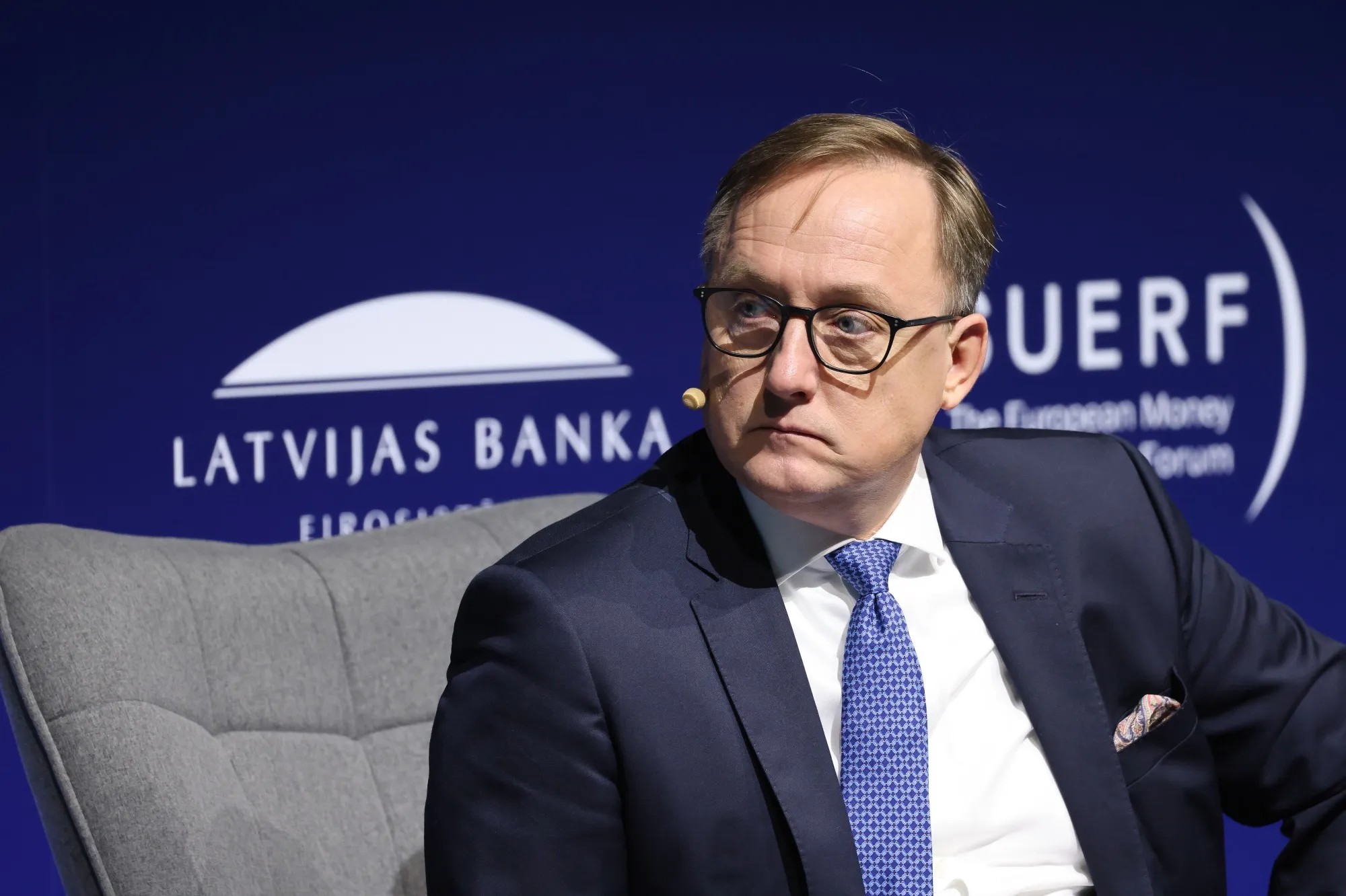
Latvian central bank governor Mārtiņš Kazāks has stated that the European Central Bank (ECB) has the “luxury” to wait before raising interest rates, even as higher energy prices driven by the Iran war continue to affect inflation across the eurozone. Speaking in an interview reported by multiple outlets on April 22, 2026, Kazāks emphasized that there is no immediate need for the ECB to respond to energy price spikes, suggesting that second-round inflation impacts have not yet become significant enough to warrant tighter monetary policy.
The remarks come amid ongoing geopolitical tensions in the Middle East, particularly following escalations in the Iran conflict that have disrupted global energy supplies and contributed to rising fuel and electricity costs. While headline inflation has picked up in several eurozone countries due to these external shocks, Kazāks noted that wage growth and domestic demand remain subdued, reducing the risk of a persistent inflationary spiral. His comments align with a broader cautious stance among some ECB policymakers who argue that premature rate hikes could harm economic growth without effectively addressing the root causes of energy-driven inflation.
According to verified reports, Kazāks made these comments during a public appearance in Riga, where he attended the bank’s macroeconomic forecast presentation. The event, held in September 2022, was previously documented by Reuters, which noted his participation in the ECB’s regional outreach efforts. However, his more recent statements were shared via CGTN and the Financial Times on April 22, 2026, reflecting his current outlook on monetary policy in light of ongoing geopolitical uncertainties.
The ECB has maintained its key interest rates at historically high levels since its last increase in September 2023, holding steady through 2024 and into 2025 as inflation gradually declined from its 2022 peak. Despite recent upticks in energy costs, inflation in the eurozone remained at 2.4% in March 2026, according to Eurostat, staying close to the ECB’s 2% target. This has given policymakers room to assess whether recent price increases are transient or indicative of deeper inflationary pressures.
Kazāks, who has been a member of the ECB’s Governing Council since 2019, is known for advocating a data-dependent approach to monetary policy. His latest comments suggest that he views the current energy price surge as primarily a supply-side shock, similar to those seen during the early stages of the Ukraine war in 2022, which the ECB ultimately looked through rather than reacted to with immediate tightening.
Analysts note that the ECB’s ability to wait hinges on its confidence that inflation expectations remain anchored. Surveys conducted by the European Commission in early 2026 showed that medium-term inflation expectations among consumers and businesses had not risen significantly, despite short-term fluctuations in energy prices. This supports the view that wage-price spirals — a key concern for central banks — are not currently taking hold.
Still, the situation remains fluid. The Iran war continues to disrupt oil shipping routes in the Persian Gulf, and European gas prices have shown volatility due to reduced flows from alternative suppliers. Any sustained increase in energy costs could eventually feed into broader inflation through higher transportation and production expenses, particularly if businesses begin passing on costs to consumers.
For now, however, Kazāks’ stance reflects a growing consensus within parts of the ECB that patience is warranted. He reiterated that the central bank will continue to monitor incoming data closely, particularly wage trends, services inflation, and corporate pricing behavior, before making any adjustments to its policy stance.
The next major opportunity for the ECB to signal its policy direction will come at its Governing Council meeting on June 10, 2026, where updated economic projections and monetary policy decisions are expected. Until then, officials like Kazāks are likely to emphasize caution, arguing that the ECB’s past tightening cycle has already done much of the operate needed to bring inflation under control.
Readers seeking official updates on the ECB’s monetary policy can follow the institution’s website, where minutes of Governing Council meetings and press conference transcripts are published regularly. The ECB also releases monthly bulletins and economic outlook reports that provide deeper insight into its assessment of inflation and growth trends.
As the eurozone navigates a complex mix of geopolitical risks and domestic economic adjustments, the debate over when — and if — to raise rates further remains open. For now, voices like Mārtiņš Kazāks’ suggest that the ECB believes it has time on its side.
If you found this analysis helpful, please consider sharing it with others interested in global economics and central banking. We welcome your thoughts in the comments below.