The Hidden History of Lead: How Ancient Exposure Shaped the Human Brain and Evolution
For centuries, lead poisoning has been recognized as a modern industrial hazard. But groundbreaking new research reveals a startling truth: exposure to this potent neurotoxin wasn’t a byproduct of the Industrial Revolution, but a pervasive force shaping human evolution for nearly two million years. This discovery, stemming from meticulous analysis of ancient teeth and cutting-edge brain organoid research, offers a compelling new perspective on the genetic divergence between modern humans and our hominid ancestors, and carries notable implications for understanding contemporary lead susceptibility.
Unearthing a Deeply Rooted Exposure
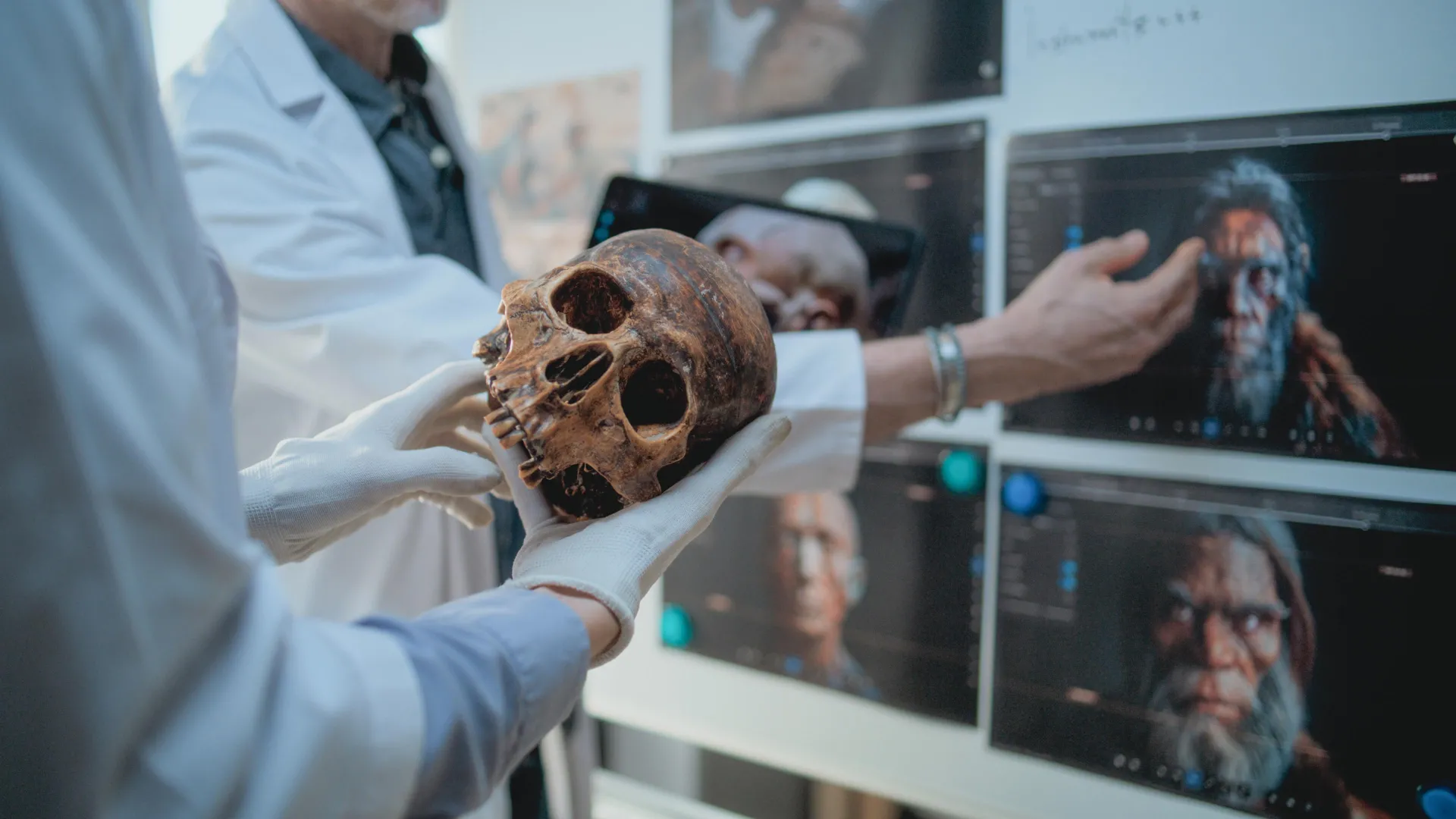
The inquiry, led by researchers at Southern Cross university, Mount Sinai, and UC San Diego, began with a detailed geochemical analysis of fossil teeth recovered from across Africa, Asia, Europe, and Oceania. Utilizing high-precision laser-ablation geochemistry at the GARG Facility, scientists identified distinct “lead bands” within the enamel and dentine of these ancient specimens. These bands represent recurring periods of lead intake during childhood, likely originating from natural environmental sources like polluted water, soil, or volcanic activity, as well as potential release from lead stored within the body during times of stress or illness.
“Our data show that lead exposure wasn’t just a product of the Industrial Revolution – it was part of our evolutionary landscape,” explains Professor Renaud Joannes-Boyau, Head of the GARG research group at Southern Cross University. This long-term exposure raises a profound question: how did this neurotoxin impact the developing brains of our ancestors?
The NOVA1 Gene: A Key to Understanding Human Cognitive Evolution
To explore this question, the team turned to human brain organoids – simplified, lab-grown models of early brain progress.Their focus centered on the NOVA1 gene, a crucial regulator of gene expression during neurodevelopment.Interestingly, the modern human version of NOVA1 differs from the variant found in Neanderthals and other extinct hominids, a difference whose evolutionary purpose remained a mystery.
The researchers tested how lead exposure affected both the modern and archaic NOVA1 variants within the organoids. The results were striking. Organoids carrying the Neanderthal-like NOVA1 variant exhibited significant disruptions in FOXP2-expressing neurons, critical for language and speech development, when exposed to lead. In contrast, organoids with the modern human NOVA1 gene showed far less disruption.
“These results suggest that our NOVA1 variant may have offered protection against the harmful neurological effects of lead,” states Professor Alysson Muotri, Professor of Pediatrics/Cellular & Molecular medicine and Director of the UC San Diego Sanford Stem cell Institute Integrated Space Stem Cell Orbital Research Center. “Its an unusual example of how an environmental pressure, in this case, lead toxicity, could have driven genetic changes that improved survival and our ability to communicate using language.”
A New Paradigm for Evolutionary medicine
Further genetic and proteomic analyses revealed that lead exposure disrupted multiple neurodevelopmental pathways in organoids with archaic gene variants, impacting interaction and social behavior. The disruption of FOXP2, a gene central to speech and language, is particularly significant. This suggests that long-term exposure to environmental toxins may have steered cognitive and communicative traits along divergent evolutionary paths, ultimately contributing to the rise of Homo sapiens.
Professor Manish Arora,Professor and Vice Chairman of Environmental Medicine,emphasizes the broader implications: “This study shows how our environmental exposures shaped our evolution. From the perspective of inter-species competition, the observation that toxic exposures can offer an overall survival advantage offers a fresh paradigm for environmental medicine to examine the evolutionary roots of disorders linked to environmental exposures.”
Relevance to Modern Lead Exposure
While modern lead exposure is primarily linked to industrial sources, it remains a serious public health concern, particularly for children. This research highlights that human susceptibility to lead may be deeply ingrained in our evolutionary history, shaped by the complex interplay between genes and environmental conditions. Individuals carrying archaic gene variants,or those with genetic predispositions,might potentially be particularly vulnerable to the neurological effects of lead.
“Our work not only rewrites the history of lead exposure,” concludes Professor Joannes-Boyau,”it also reminds us that the interaction between our genes and the surroundings has been shaping our species for millions of years,and continues to do so.”
Methodology & Expertise:
This research represents a significant advancement in the field of paleo-toxicology and evolutionary genetics. The study’s strength lies in its multi-disciplinary approach, combining:
* High-Resolution Geochemistry: Utilizing state-of-the-art laser-ablation techniques to precisely map lead exposure in ancient teeth.
* Brain Organoid Technology: Employing advanced 3D cell culture models to simulate early brain development and assess the impact of lead exposure on specific genes.
* genomic & Proteomic Analysis: Integrating extensive genetic and protein data to understand the molecular
Keep reading
- Cycling for Longevity: Prioritizing Chronic Disease Prevention Over Muscle Growth
- Daily Multivitamins May Help Older Adults Preserve Strength and Functional Health, Study Finds
- Largest Genetic Study Reveals Neurological Origin of Fibromyalgia (archyde.com)
- The Evolution of Streaming Metrics and Viewer Measurement in Argentina (archynewsy.com)