Plants Can Absorb Nutrients Through Their Leaves, New Study Reveals
In a groundbreaking discovery that challenges long-held assumptions about plant nutrition, scientists have confirmed that some plants can absorb essential nutrients directly through their leaves from airborne dust. This finding, published in the journal New Phytologist, suggests that foliar uptake—nutrient absorption through leaves—may play a far more significant role in sustaining vegetation, particularly in dry, nutrient-poor ecosystems.
The study, led by plant biologist Anton Lokshin of Ben-Gurion University of the Negev in Israel, provides the first field-based evidence that dust deposition on leaves can serve as a direct nutrient source for plants. This mechanism could reshape our understanding of how vegetation survives in arid regions, where soil nutrients are often scarce and dust storms frequent.
“Plants are not like animals; they cannot move,” Lokshin explained in an interview with Science News. “So they have to have strategies to absorb food and nutrients from the environment in whatever form they can secure them.” The research team’s findings suggest that leaves may be far more versatile in nutrient acquisition than previously believed, offering a potential lifeline for plants in harsh environments.
How the Study Uncovered Foliar Nutrient Uptake
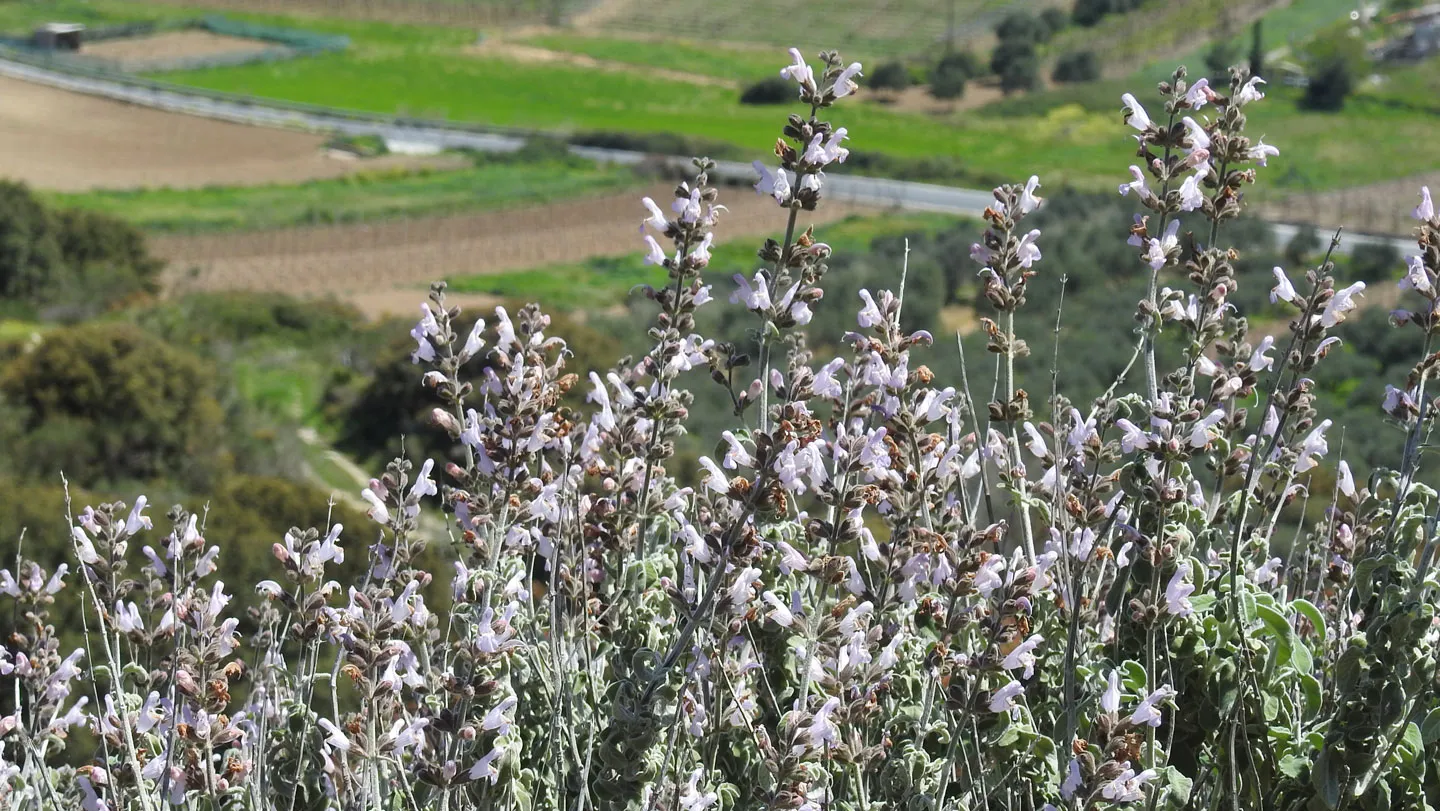
The research team focused on three common Mediterranean shrub species: pink rock rose (Cistus creticus), Greek sage (Salvia fruticosa) and headed germander (Teucrium capitatum). These species thrive in the Judean Hills of Israel, a region regularly blanketed by dust carried from the Sahara and Arabian Deserts. Over three months, the team raised 36 plants—12 of each species—dividing them into two groups: one treated with volcanic dust applied directly to their leaves, and the other left untreated as a control.
Volcanic dust was chosen for its unique chemical signature, rich in rare earth elements. This allowed the researchers to distinguish between nutrients derived from dust and those absorbed from the soil. After the treatment period, plants exposed to dust showed a marked increase in micronutrients such as iron, nickel, manganese, and copper in their shoots—while root nutrient levels remained largely unchanged. This pattern strongly suggested that the nutrients were entering the plants through their leaves rather than their roots.
To confirm their findings, the team analyzed the chemical composition of the plants’ tissues. The rare earth element profiles in the dust-treated plants shifted away from the local soil’s signature and toward that of the applied dust. This provided definitive evidence that the nutrients had been absorbed through the leaves, rather than simply adhering to their surfaces or being taken up through the soil.
Why This Discovery Matters for Ecosystems and Agriculture
The implications of this study extend far beyond the Judean Hills. Many of the world’s arid and semi-arid regions—such as the Mediterranean, parts of Africa, and the southwestern United States—are characterized by nutrient-poor soils and frequent dust storms. If plants in these areas can supplement their diets with airborne dust, it could explain how vegetation persists in environments where traditional soil-based nutrition is limited.
Current vegetation models typically assume that airborne nutrients reach plants only after being deposited in the soil. The new findings challenge this assumption, suggesting that direct foliar uptake may be an overlooked but critical pathway for nutrient acquisition. “This could change how we model plant nutrition in dry ecosystems,” Lokshin noted. “If we’ve been underestimating the role of dust, we may necessitate to rethink how we predict vegetation responses to climate change and land employ shifts.”
The study also has potential applications for agriculture. While foliar feeding—applying liquid nutrients directly to leaves—is already a common practice in farming, the idea that plants can absorb nutrients from dry dust opens new avenues for research. For example, farmers in dusty regions might explore whether natural dust deposition could reduce the need for synthetic fertilizers, or whether certain crops could be bred or engineered to maximize foliar nutrient uptake.
The Science Behind Foliar Uptake: How Dust Becomes Dinner
So how exactly do plants absorb nutrients from dust? The process appears to rely on a thin layer of moisture on the leaf surface, often formed by dew or humidity. When dust particles settle on leaves, they dissolve in this moisture, releasing nutrients that can then be absorbed by the plant’s tissues. This mechanism is particularly effective for micronutrients like iron, which are essential for plant growth but often scarce in arid soils.
The researchers observed that the nutrients absorbed through leaves remained concentrated in the shoots, rather than being transported to the roots. This localized distribution further supports the idea that the nutrients entered the plants through their foliage, rather than through the soil-root pathway.
While the study focused on Mediterranean shrubs, the team suspects that foliar nutrient uptake may be widespread among plants adapted to dusty environments. Future research could explore whether other species—including crops like wheat, barley, or olives—exhibit similar abilities, and whether this trait could be harnessed to improve agricultural resilience in drought-prone regions.
Broader Implications for Climate Change and Desertification
As climate change intensifies, many regions are experiencing increased aridity and more frequent dust storms. The new findings suggest that dust deposition could play a dual role in these changing ecosystems: while excessive dust can harm plant health by blocking sunlight or clogging stomata (the pores on leaves), it may also provide a vital nutrient subsidy in areas where soil fertility is declining.
This could have particularly important implications for efforts to combat desertification. Traditional reforestation and land restoration projects often focus on improving soil quality, but the study suggests that airborne dust could be an additional factor in supporting plant survival. Understanding how plants interact with dust could help scientists design more effective strategies for restoring degraded landscapes.
the research highlights the interconnectedness of global nutrient cycles. Dust from the Sahara, for example, is known to fertilize the Amazon rainforest by carrying phosphorus and other nutrients across the Atlantic. The new findings suggest that this transcontinental nutrient transport may have even more far-reaching effects than previously realized, influencing plant growth in regions far from the dust’s origin.
Key Takeaways: What This Means for Science and Society
- Plants can absorb nutrients through their leaves: A new study confirms that foliar uptake of dust-derived nutrients is a real and potentially significant pathway for plant nutrition, particularly in dry, nutrient-poor environments.
- Dust may be a lifeline for arid ecosystems: In regions where soil nutrients are scarce, airborne dust could provide essential micronutrients like iron, manganese, and copper, helping plants survive in harsh conditions.
- Current vegetation models may need updating: Most models assume that airborne nutrients reach plants only through soil deposition. The new findings suggest that direct foliar uptake should be incorporated into future ecological predictions.
- Agricultural applications are possible: Farmers in dusty regions might explore whether natural dust deposition can supplement traditional fertilizers, or whether crops could be optimized for foliar nutrient uptake.
- Climate change could amplify the role of dust: As aridity increases, dust storms may become more frequent, potentially altering nutrient cycles and plant survival strategies in affected regions.
What’s Next for Foliar Uptake Research?
The study opens several avenues for further investigation. Lokshin and his team are already planning follow-up research to explore whether foliar nutrient uptake varies among different plant species, and how factors like leaf structure, waxiness, or hairiness might influence the process. They are also interested in studying whether plants can absorb nutrients from other types of airborne particles, such as pollution or wildfire ash.

Another key question is whether foliar uptake can be harnessed to improve crop yields in nutrient-poor soils. If certain plants are naturally better at absorbing nutrients through their leaves, breeders might select for these traits to develop more resilient crop varieties. Alternatively, farmers could experiment with applying nutrient-rich dust or powders to leaves as a low-cost alternative to traditional fertilizers.
For now, the discovery serves as a reminder of nature’s ingenuity. In a world where resources are often limited, plants have evolved creative strategies to survive—and thriving on dust may be one of the most unexpected yet effective of all.
As the research community digs deeper into foliar nutrient uptake, the next major milestone will likely be a broader survey of plant species to determine how widespread this ability is. Until then, scientists and farmers alike will be watching the skies—not just for rain, but for the invisible nutrients that might be drifting their way.
What do you think? Could this discovery change how we approach agriculture or ecosystem restoration? Share your thoughts in the comments below, and don’t forget to share this article with fellow plant enthusiasts and science lovers!
Related reading