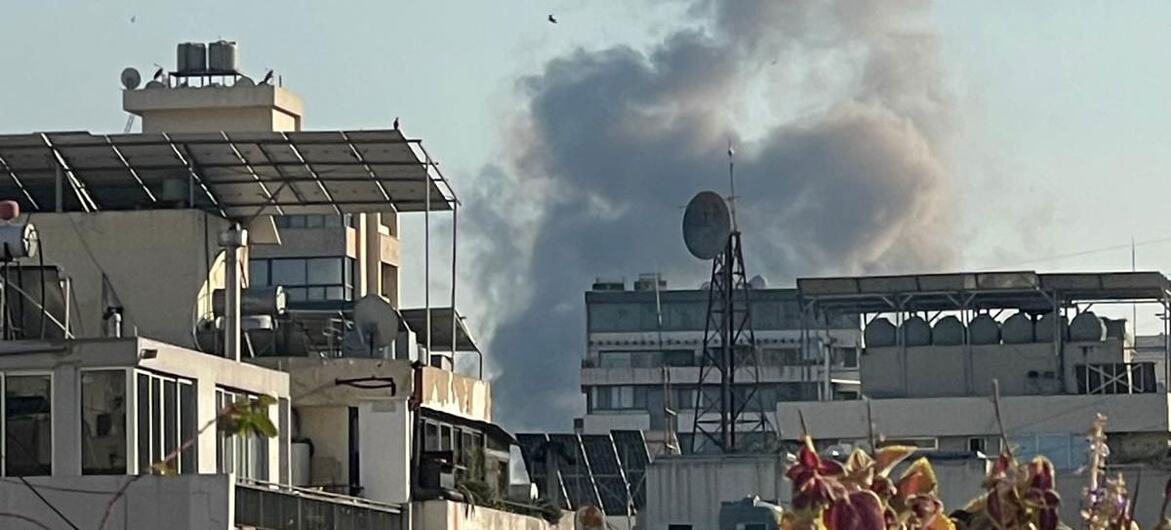
Beirut, Lebanon – A fragile sense of stability in Lebanon, just beginning to capture hold, has been shattered by a rapid escalation of violence, prompting urgent calls for restraint from the international community. Just last week, the country appeared to be on a positive trajectory, with progress on key fronts like economic reform and political stability. However, recent hostilities have plunged Lebanon back into turmoil, raising fears of a wider regional conflict and deepening the suffering of its citizens.
The shift in fortunes is stark. According to a statement released on March 7th, 2026, by UN Special Coordinator for Lebanon Jeanine Hennis-Plasschaert, Lebanon’s armed forces were actively strengthening state authority, preparations for long-awaited legislative elections were underway, and a significant World Bank loan was poised to initiate reconstruction efforts. Diplomatic relations with Syria were reportedly warming, opening fresh avenues for bilateral cooperation. This positive momentum, however, has been abruptly halted by a surge in violence that began in the early hours of Monday morning.
Escalation of Hostilities and Humanitarian Concerns
The current crisis unfolded rapidly, with reports indicating that Hezbollah launched missiles at Israel, triggering a retaliatory response. This escalation has drawn Lebanon into the broader Middle East crisis, exacerbating existing tensions and raising the specter of a prolonged conflict. Hennis-Plasschaert’s statement highlights the devastating impact on civilians, with families who had recently returned to their homes now once again displaced. Public sentiment, she noted, has shifted from disbelief to outrage as evacuation orders expand and direct hits become increasingly common.
The UN Interim Force in Lebanon (UNIFIL) has also been directly affected by the escalating violence. On Friday, three Ghanaian peacekeepers serving with UNIFIL were injured inside their position in Al Qawzah due to heavy fire, as reported by the United Nations. UN Secretary-General António Guterres swiftly condemned the incident, emphasizing the need to respect UN personnel and installations and urging all parties to adhere to their obligations under UN Security Council Resolution 1701. Guterres stated, according to a spokesperson, that “UN personnel and installations must be respected at all times.”
The Shadow of Resolution 1701
The UN Special Coordinator underscored the critical importance of returning to the framework established by UN Security Council Resolution 1701, adopted in 2006. This resolution, intended to finish the cycles of violence between Lebanese and Israeli citizens, has been only partially implemented and largely “mothballed by a mutual lack of trust,” according to Hennis-Plasschaert. Resolution 1701 remains the internationally recognized formula for achieving a lasting cessation of hostilities, but its effectiveness hinges on the commitment of all parties to fully adhere to its provisions.
The resolution called for a full cessation of hostilities, the withdrawal of Israeli forces from Lebanon, the deployment of the UNIFIL peacekeeping force, and the establishment of a demilitarized zone between the Blue Line – the border demarcation – and the Litani River. While UNIFIL has been present in southern Lebanon since 1978, its mandate has been repeatedly extended, and the implementation of Resolution 1701 has faced numerous challenges over the years. The UNIFIL website provides further information on its mission and the Blue Line. Learn more about UNIFIL and the Blue Line here.
A Looming Humanitarian Crisis and Regional Implications
The current escalation threatens to exacerbate Lebanon’s already dire humanitarian situation. The country has been grappling with a severe economic crisis for years, compounded by the devastating Beirut port explosion in 2020. The renewed violence is likely to further strain already limited resources and displace more civilians, creating a greater need for humanitarian assistance. The World Bank had been preparing a loan to support reconstruction, but the current instability casts doubt on its timely implementation.
Beyond the immediate humanitarian consequences, the escalating conflict carries significant regional implications. The involvement of Hezbollah, a powerful political and military actor in Lebanon, raises concerns about a potential wider confrontation. The situation is further complicated by the broader geopolitical dynamics in the Middle East, including ongoing conflicts in Syria and Yemen. The UN News website provides ongoing coverage of the Middle East crisis. For more of our coverage of the situation in the Middle East, click here.
The Urgency of De-escalation
Hennis-Plasschaert’s warning is stark: continuing military action will not yield a lasting victory for any party involved. Instead, it will only deepen instability and inflict further suffering on the Lebanese people. She emphasized that the choice is clear: “stay on a path of death and destruction, or commit to restraint, engagement and dialogue.” The international community is urging all sides to exercise restraint and prioritize a peaceful resolution to the conflict.
The UN Security Council has been briefed on the situation and is expected to discuss potential measures to de-escalate the violence. However, the effectiveness of any UN action will depend on the willingness of all parties to engage in constructive dialogue and abide by international law. The UN Security Council website provides information on its work and resolutions. Learn more about the UN Security Council here.
The situation in Lebanon remains highly volatile and unpredictable. The coming days and weeks will be critical in determining whether the country can avert a full-scale conflict and return to a path of stability and recovery. The international community must redouble its efforts to support Lebanon and facilitate a peaceful resolution to the crisis. The next key development to watch will be the UN Security Council’s response to the escalating violence, expected within the next 72 hours.
World Today Journal will continue to monitor the situation closely and provide updates as they become available. We encourage readers to share their thoughts and perspectives in the comments section below.